
MODULE 2
Music and movement methods

Using music and movement for fostering inclusion
Using music and movement in youth work offers numerous health benefits—both physical and mental—which can support the overall well-being and development of young people, making them feel more included. Music and movement methods can provide a creative and engaging way to foster personal development, build social skills, and enhance learning experiences. Collective singing and listening to music, as well as moving and dancing together, require physical engagement of the body and serve to create an immersive learning experience that goes beyond intellectual understanding, encompassing emotional and physical growth.
Whether through singing, songwriting or dance improvisation, engaging with music and movement encourages creativity and a deeper understanding of self and others. It is through these forms of creative engagement that young people can explore their identity, build empathy, and nurture personal and collective growth.
Movement and dance allows youth to embody different emotions and narratives, explore cultural traditions, and learn collaboration and respect within a group. Similarly, music exposes them to a variety of styles, encourages emotional expression, and fosters teamwork in group performances. Together, these artistic forms can help youth understand others’ experiences, value cultural diversity, and build social-emotional skills through creative, shared expression. Thus, in non-formal education, music and movement can be powerful tools for promoting inclusion by supporting learning, personal growth, and meaningful social interaction.
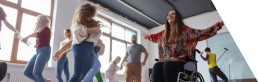
Many young people with fewer opportunities face prejudice and discrimination due to their diverse backgrounds and abilities, often resulting in marginalisation and social exclusion. Since music and movement offer powerful means of fostering group cohesion and collaboration, it allows participants to connect through shared creation beyond words. These activities cultivate understanding, empathy, tolerance, and compassion.
Communal singing and music-making release endorphins, boost happiness, and improve the immune system. They create a space where people can share joy, form friendships, strengthen the feeling of togetherness and deepen their sense of community. Dance, by its very nature, is social—it encourages interaction, cooperation, and a sense of belonging, particularly important for marginalized youth who may feel isolated. It fosters trust and helps create a supportive community where everyone is valued, regardless of their background. Since dance movements often mirror everyday gestures, the emotions they convey are universally understood—both visually and through a shared kinesthetic response.[1] Through movement, youth are encouraged to be mindful of their own emotions and those of others. It fosters empathy and teaches emotional awareness, which is important for building strong, positive relationships.
In addition, music and dance can serve as powerful art forms to address important social topics in performances or choreographies, such as disability, mental health, addiction, gender-based violence, migration and more. These creative approaches help young people become more open, engaged, and actively involved in the learning process, while also promoting powerful messages of tolerance and inclusion.
A lack of free-time activities that are both educational and enjoyable, while tailored to their specific needs, is another challenge faced by young people with fewer opportunities, especially those living in under-developed and rural areas. Music and movement offer versatile tools that can be adapted to a wide range of needs, contexts, and environments. These methods can be adjusted in terms of complexity, themes, and educational goals to suit different youth groups. As universal forms of expression, music and movement do not require advanced artistic skills, making them highly accessible and effective for engaging young people from diverse backgrounds and with various challenges. These methods are often cheap compared to other educational activities, and don’t require costly equipment, making them highly accessible to youth with fewer resources. Often all that’s needed is accessible space, and the benefits are enormous, from improving physical health to enhancing mental well-being.
Singing and dancing help reduce stress, lower blood pressure, and release endorphins, improving mood and easing anxiety. Regular movement activities enhance strength, flexibility, balance, posture and coordination, while also promoting cardiovascular health and motor skills. Beyond physical fitness, making music and dancing improve cognitive function, concentration, and memory as young people learn new rhythms or choreography, making them valuable tools for mental well-being. These activities foster creativity, problem-solving, and resilience by encouraging youth to try new things and overcome challenges. They also build self-esteem and confidence through the achievement of learning and performing, while nurturing a healthier relationship with the body. Music and movement-based activities allow youth to see their own potential in action, which can be really important for their positive self-image. Successfully learning a song or expressing themselves through movement can boost confidence, which is crucial for those who may face social challenges or have limited opportunities in other areas of life. Engaging in music and movement activities can also teach youth to persevere and overcome obstacles—building resilience. This sense of accomplishment translates into a greater sense of self-worth and motivation.
Cultural differences, such as language and religion, can be significant challenges for young people, particularly those with a migrant or refugee background. These barriers often lead to social isolation, exclusion, and cultural identity struggles, as peers may react with fear or misunderstanding toward those from different cultural backgrounds. Music and movement are powerful tools for overcoming these challenges, promoting collaboration, cultural awareness, and inclusion. Through dance and creative expression, young people can explore topics like identity, social belonging, and activism. Active participation in music and movement – through singing, playing instruments, rhythmic exercises, learning traditional dances or collective movement improvisation – fosters self-expression, teamwork, and critical thinking. These methods offer a good means of engaging people from different cultures, even when there’s a language barrier.
In non-formal education, music-based activities can help foster communication and cross-cultural understanding. Workshops, group performances, and music games create engaging spaces where young people connect, learn, and grow in supportive and interactive ways. Group singing and dancing offer meaningful encounters, promoting empathy, resonance, and a sense of community.
Ultimately, music and dance serve as bridges between cultures, encouraging young people to broaden their horizons, celebrate diversity, and develop leadership and critical thinking skills that contribute to positive social change.
[1] Sheets-Johnstone, M. (2001.), “Movement and mirror neurons: A challenging and choice conversation”, Phenomenology and the Cognitive Sciences ISSN 1568-7759 Volume 11 Number 3


Contact
Iuliana Adriana PAVEL (project manager)
iuliana.pavel@a4action.ro
A4ACTION – Antim Ivireanu Culture House, Islaz Alley, Ghermănești, Snagov, Ilfov District, Romania, 077170
Co-funded by the European Union. Views and opinions expressed are however those of the author(s) only and do not necessarily reflect those of the European Union or the ANPCDEFP. Neither the European Union nor the ANPCDEFP can be held responsible for them.
The project is conducted by the following organisations: A4ACTION (Romania) – coordinator, Udruga Delta (Croatia), InterAktion (Austria), Asociación Espacio Rojo (Spain) and GAIA Museum Outsider Art (Denmark).


