
MODULE 2
Music and movement methods

Guidelines and examples of activities using music and movement methods
When applying music and movement in non-formal education—not just as artistic practices but as tools for social inclusion, cognitive development, and emotional expression—following these guidelines can help ensure the success of the activities and the achievement of educational goals, as well as the satisfaction of the participants. Here are some key ones to explore:
1.
Adapt the activity to your own needs and context
Always consider the specific needs of your target group when planning the activity. Adapt the theme and level of complexity accordingly, taking into account the number of participants, and prepare the space and materials to suit the group. If you’re working with a group you are not familiar with, using a registration form with targeted questions can help you better understand their interests, needs, and backgrounds, allowing you to tailor the activity more effectively.
2.
Preparation is important
Preparing participants before the activity is essential for creating a safe and engaging experience. Be sure to include vocal warm-ups, relaxation techniques, body-scan or grounding exercises, or even simple walking tasks to help young people ease into the activity and connect with their voice, sound, and body. Provide clear yet simple instructions, and lead by example to encourage participation.
When working with groups where participants are unfamiliar with one another, be sure to integrate name games, icebreakers, and energizers. These elements help break down barriers, promote relaxation, and increase participants’ self-awareness and connection with others.
3.
Taking care of oneself and others
Encourage participants to listen to their own needs and to feel free to step out of an exercise or modify it if necessary. Emphasize the importance of self-care and respecting the boundaries of others. When activities involve intense interactions—such as sustained eye contact, physical closeness, or touch—it is essential to address the topic of consent, especially in groups where participants do not know each other well or are unfamiliar with such practices. In addition to discussing consent, incorporate non-verbal exercises that allow participants to practice giving and receiving consent. This helps reinforce the concept in a tangible, accessible way and fosters a respectful and supportive environment.
4.
Creating a ‘brave’ space
Working with one’s voice, musical instruments or body can bring up insecurities and even feelings of shame, so it is very important to create a safe and brave space for the participants. Remind them that there is no right and wrong, that the point of this creative journey is to explore together and have fun, that this is not a competition and that there are no grades. Every voice and body is beautiful in its unique way and the point is not to be perfect or a professional. Untrained musicians and dancers can even take advantage of the qualities of natural, untutored music making and movement, connecting more easily to their authentic sounds and movements.
5.
Technical and material requirements
When preparing a venue for dance and movement activities, several technical aspects require careful consideration to ensure safety, comfort, and effective facilitation.
First, the size of the room should correspond to the number of participants, providing an open area that is free from obstructions to allow safe and unrestricted movement. The room’s ceiling height should be at least 3 to 3.5 meters to allow for full movement without restrictions.
Ensure there is sufficient lighting, whether natural or artificial, to keep the space well-illuminated. If available, mirrors can be a helpful tool for body awareness and technique.
- The flooring is crucial—it should be made of a material that absorbs impact to help prevent injuries. Ideally, use marley (a vinyl dance flooring surface) or hardwood, as both offer a good balance of support and traction. Avoid surfaces like tile, which can be cold, hard, and slippery, increasing the risk of discomfort or accidents. For participants moving with a wheelchair, carpet is not ideal due to its increased rolling resistance and potential for wheels to sink into the fibers, especially with thicker carpets. To improve wheelchair maneuverability on carpet, consider a low-pile, tightly woven carpet with a firm backing.
- Using a quality music system is essential; ideally, two speakers placed above floor level for balanced sound. Consider soundproofing measures, especially if the space is shared with neighbors, to avoid disturbance.

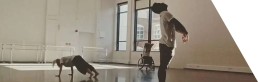
Marley dance floor , source: https://dancerents.com/what-is-a-marley-dance-floor/


Contact
Iuliana Adriana PAVEL (project manager)
iuliana.pavel@a4action.ro
A4ACTION – Antim Ivireanu Culture House, Islaz Alley, Ghermănești, Snagov, Ilfov District, Romania, 077170
Co-funded by the European Union. Views and opinions expressed are however those of the author(s) only and do not necessarily reflect those of the European Union or the ANPCDEFP. Neither the European Union nor the ANPCDEFP can be held responsible for them.
The project is conducted by the following organisations: A4ACTION (Romania) – coordinator, Udruga Delta (Croatia), InterAktion (Austria), Asociación Espacio Rojo (Spain) and GAIA Museum Outsider Art (Denmark).


