
Mixed media collage
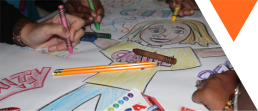
This mixed media collage workshop invites participants to explore the meaning of inclusion through creative expression using photos, drawings, newspapers, thread, and recycled materials. Through brainstorming, collage-making, and optional stitching, participants reflect on identity, belonging, and connection while creating personal or collective artworks. The activity encourages self-expression, dialogue, and collaboration in an inclusive and accessible environment where all forms of participation and creativity are valued equally.


THEME
Inclusion, self-expression, cultural identity

COMPLEXITY
Beginner

GROUP SIZE
5-15
participants

AGE
15+

TIME
90-120
min
Step-by-Step Instructions:
- Introduction (10-15 min)
Briefly introduce the theme: Begin with a short brainstorming session. Ask:
- Do you know what “inclusion” means?
- What words or ideas come to mind when you hear it?
Write down their answers on a flipchart or board. After a few minutes, sum up by explaining the term: e.g.: “Inclusion means that everyone belongs and feels valued. It’s about making sure that all people – no matter their background, abilities, or differences – have equal opportunities to take part and be respected.”
- Demonstration and brainstorming (10-15 min)
- Share examples of collage art that use mixed media and thread.
- Encourage participants to express their identity, experiences, and hopes.
Let participants explore the materials.
- Demonstrate safe use of scissors, needles, and glue.
- Show how to sew or stitch through paper (optional for those interested).
Ask participants to sketch or brainstorm their collage idea.
- Prompt questions:
- What makes you feel included?
- What do you want others to understand about you?
- What could your threads connect to? People, ideas, feelings?
- Collage Creation (30 min)
Invite the participants to start creating their collage. The following indications can be mentioned, but not obligatory, mostly if you feel that the participants are unsure how to start.
- Choose and cut photos, newspaper clippings, or shapes.
- Use markers to draw or write on the photos.
- Sew or glue threads to connect elements or highlight areas.
- Combine materials to create depth and meaning.
- Offer help with sewing or cutting if needed.
- Closing (20 min)
- Invite participants to share their collage and the story behind it.
- Encourage respectful listening and affirming feedback.
- Option: Create a collective wall or gallery of all collages.

Debriefing and Evaluation:
- What was your favorite part of making your collage?
- Was there anything that surprised you while creating your artwork?
- Did you try something new today? How did it feel?
- What does your collage say about inclusion?
- Is there a part of your collage that feels especially important to you? Why?
- How did using thread, photos, or newspapers help you tell your story?
- For the variation of making one big collage as a group: How was it to do the collage as a team? Was it easy? Was it difficult?
- How did you decide in your group on the things you wanted or not to include in your collage?
Tips for Facilitators:
- Use inclusive language and be mindful of different abilities.
- Offer alternatives (e.g., glue instead of sewing).
- Provide visual and verbal instructions.
- Pair participants for peer support if appropriate.
- Celebrate all forms of expression—there’s no “wrong” way to collage.
- Encourage self-expression and autonomy—participants should feel free to interpret the theme of inclusion in their own way.
- Celebrate all contributions equally.
- Avoid pressuring anyone to share personal stories or explain their artwork unless they volunteer to do so.
- Ensure that all materials and tools are accessible to participants with physical, sensory, or cognitive disabilities.
- Check in regularly to see if anyone needs assistance or adaptations.
- Use clear, simple language and visual aids when possible.

Variations and adjustments:
- Participants can work in small groups, pairs or individually
- The topics can be different, for example: pairs tell each other about themselves and each makes a collage for the other person
- Also possible to create a bigger collage all together, about what inclusion means to the whole group, but would need a few more steps, such as facilitating a discussion at the beginning and collecting common and not so common answers and then asking the group to choose which ones they want to focus on
- Offer the option of breaking paper, instead of cutting for people with various disabilities
- Offer alternatives (e.g., pre-cut shapes, glue instead of sewing, verbal instructions alongside visuals).
- If participants speak different languages, consider using translation tools, visual instructions, or peer support.

Disclaimer:
Some images or themes may unintentionally trigger difficult memories or emotions. Be prepared to offer support or allow participants to step away if needed.
Visual arts activities




MODULE 1 NEEDS ANALYSIS
Needs analysis activities
MODULE 2 MUSIC AND MOVEMENT

Contact
Iuliana Adriana PAVEL (project manager)
iuliana.pavel@a4action.ro
A4ACTION – Antim Ivireanu Culture House, Islaz Alley, Ghermănești, Snagov, Ilfov District, Romania, 077170
Co-funded by the European Union. Views and opinions expressed are however those of the author(s) only and do not necessarily reflect those of the European Union or the ANPCDEFP. Neither the European Union nor the ANPCDEFP can be held responsible for them.
The project is conducted by the following organisations: A4ACTION (Romania) – coordinator, Udruga Delta (Croatia), InterAktion (Austria), Asociación Espacio Rojo (Spain) and GAIA Museum Outsider Art (Denmark).