


Working With Specific GroupsWhat Facilitators Should Pay Attention To
Young People with Disabilities
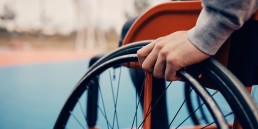
Young people with disabilities form a very diverse group, and their needs can vary widely depending on the type of disability—physical, sensory, intellectual, cognitive, psychosocial, or invisible. Because of this, preparation and flexibility are very important, as well as not assuming what someone can or can not do and creating the conditions where every participant has equal access to the activity. (CAST, 2018)
- Use clear, simple instructions and demonstrate whenever possible
- Provide clear instructions in different formats (verbal, visual, written)
- Ensure there are at least two facilitators (or more, depending on the group) in case some participants need extra support.
- Adapt the complexity of the activity based on the needs of the group, without presuming someone’s abilities in advance (base your adaptations on ad hoc observations rather than prejudice)
- Offer alternatives for movement-based or fine-motor activities
- Adapt the pace, as some participants may need more time to complete tasks
- Break tasks into smaller steps and avoid long explanations
- Be mindful of sensory overload (lighting, noise, touch)
- Encourage collaboration but do not pressure participants to socialize
- Avoid speaking to carers or support persons instead of addressing the young person directly
- Support autonomy: ask participants how they prefer to participate rather than deciding for them
- Consider using assistive technology if necessary.
- Ensure there is a “quiet place/space” where participants can go in case of feeling overwhelmed.
Youth with migrant or refugee backgrounds

This group of participants includes newly arrived migrants, refugees, asylum seekers, unaccompanied minor refugees, and young people who are second or third generation. They may face language barriers, cultural differences or trauma related to displacement, war, family separation, violence, uncertainty about the future, as well as discrimination and racism. Participants may face challenges such as housing insecurity, limited transportation, irregular schedules, or legal appointments that make attendance difficult.
To support them, you should pay attention to:
- Use simple, plain language, avoid metaphors or culturally specific language
- Support the spoken language with visuals, gestures and demonstrations
- Be aware that norms around gender, touch, eye contact, or emotional expression may differ
- Be sensitive to topics that may evoke painful memories (war, migration, family separation, home, loss, borders)
- Offer choices in every activity—never force physical proximity, role‑play, or personal sharing
- Avoid activities that risk reinforcing cultural stereotypes
- Encourage expression in multiple languages and cultural exchange or expressions
- Be patient; gaining trust can take time, especially for newly arrived young people
- Avoid conducting activities that involve blindfolding or being in a dark room without proper preparation or consulting with the participants
Youth from rural areas
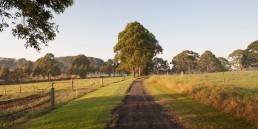
Young people living in rural areas often face a different kind of disadvantage: social isolation, lack of services, limited cultural opportunities, unstable digital access, and fewer youth programs. Creative workshops might feel unfamiliar or intimidating and their participation might be limited by lack of public transport connections, strong community norms and limited exposure to arts. You should:
- Introduce artistic methods gradually and explain their purpose
- Focus on play, discovery and process
- Use low‑cost, easily accessible materials
- Avoid activities that rely heavily on technology unless alternatives are offered
- Encourage creativity through found materials, nature-based activities, or upcycling
- Privacy is extra important—confidentiality must be clear
- Sensitive topics (mental health, identity, diversity) may feel uncomfortable to discuss openly
- Be aware of possible low self-esteem or fear of “not being creative enough”
- Give space for local identities, traditions, or ways of expression to emerge organically
MODUL 2
Musik og bevægelse

Kontakt
Iuliana Adriana PAVEL (projektleder)
iuliana.pavel@a4action.ro
A4ACTION – Antim Ivireanu Kulturhus, Aleea Islaz, Ghermănești, Snagov, Ilfov, Rumænien, 077170
Medfinansieret af Den Europæiske Union. De synspunkter og holdninger, der kommer til udtryk, er dog alene forfatterens/forfatternes og afspejler ikke nødvendigvis Den Europæiske Unions eller ANPCDEFP’s synspunkter. Hverken Den Europæiske Union eller ANPCDEFP kan holdes ansvarlige for dem.
Projektet gennemføres af følgende organisationer: A4ACTION (Rumænien) – koordinator, Udruga Delta (Kroatien), InterAktion (Østrig), Asociación Espacio Rojo (Spanien) og GAIA Museum Outsider Art (Danmark).