


MODUL 3
Metode vizualne umjetnosti

Korištenje metoda vizualne umjetnosti za poticanje inkluzije
Inkluzija kroz umjetničke metode
Metode vizualnih umjetnosti posebno su korisne u radu s mladima jer im pružaju kreativan i neverbalan način samoizražavanja, istovremeno omogućujući zabavu i opuštanje. Metode vizualnih umjetnosti mladima pružaju mogućnost slobodnog izražavanja, izgradnje samopouzdanja i jačanja osjećaja pripadnosti zajednici. Istraživanje različitih umjetničkih pristupa može im pomoći u otkrivanju osobnih interesa i dubljem povezivanju sa samima sobom.
Naglasak pri korištenju (vizualnih) umjetnosti u radu s mladima u svrhu poticanja socijalne uključenosti stavlja se na razvijanje osjećaja pripadnosti, izgradnju odnosa i osiguravanje da svi imaju jednaku priliku podijeliti svoje perspektive i iskustva kroz smislene grupne rasprave (Vijeće Europe, 2020).
Zajednički jezik
Baš kao i pokret tijela, vizualna umjetnost je jezik kojim se svi služe. Budući da se ne oslanja u velikoj mjeri na govorni jezik, ona je dostupna grupama bez obzira na jezične razlike i različite sposobnosti. Pruža platformu ljudima iz različitih sredina, kultura i s različitim načinima komunikacije da se međusobno povežu. U svakoj grupi ljudi mogu imati različite načine verbalnog izražavanja, a te razlike ponekad mogu dovesti do nesporazuma. Vizualna umjetnost premošćuje jaz koji verbalna komunikacija ponekad ne može prevladati, potičući razumijevanje i povezivanje (Freire, 1970).
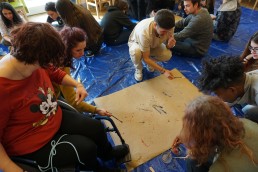
Alati vizualnih umjetnosti mogu se koristiti ne samo za individualno izražavanje, već i za timski rad. Primjerice, rad na muralu, skulpturi ili zajedničkoj slici zahtijeva od osoba komunikaciju, razmjenu ideja i poštivanje doprinosa drugih. Ovaj suradnički proces potiče timski rad, jača sposobnosti donošenja odluka i prilagodljivost te pomaže u razvoju vještina rješavanja problema, dok osobe zajednički rade prema ostvarivanju zajedničkog cilja (OECD, 2013; Bishop, 2012).
Osim razvoja praktičnih vještina, vizualna umjetnost može potaknuti dijalog o društvenim pitanjima, stvarajući prostor za razgovore koji se možda inače ne bi dogodili. Sam čin zajedničkog stvaranja omogućuje osobama dijeljenje iskustava i izražavanje misli, pružajući uvid u potrebe, perspektive i emocije drugih.
Na taj način rad s mladima koji koristi vizualnu umjetnost potiče suradnju i stvara prilike da se svaki član grupe osjeća viđenim i saslušanim, uz iskrenu znatiželju i interes za njegovu perspektivu. To može biti jedinstveno i osnažujuće iskustvo, posebno za mlade s manje mogućnosti, pomažući im u razvoju samopouzdanja i osjećaja pripadnosti (OECD, 2013).
Kada se alati umjetnosti koriste u radu s mladima, kvaliteta, estetika ili sofisticiranost nastalog umjetničkog djela nisu ono što je najvažnije, već proces otkrivanja, stvaranja, igre i usmjeravanja pažnje na nešto drugo osim svakodnevne užurbanosti. Umjesto težnje za stvaranjem nečega „vrijednog“, ovakav pristup potiče mlade da kroz umjetnost istražuju nove vještine i ideje. (Camnitzer, 2009; Bishop, 2012).
Važno je napomenuti da se ova sloboda istraživanja ne događa uvijek spontano. Budući da uobičajena percepcija vizualne umjetnosti naglašava tehničku vještinu i estetsku vrijednost, mladi se mogu osjećati frustrirano ili samokritično. Stoga bi osoba koja radi s mladima, trebala svjesno poticati pristup usmjeren na proces, usmjeravajući smlade da cijene eksperimentiranje i osobni izraz više od savršenog konačnog rezultata.
Ove bi radionice trebale biti usmjerene na stvaranje prostora u kojem se svatko, bez obzira na umjetničke sposobnosti ili poznavanje jezika, osjeća dobrodošlo i cijenjeno. Ovakav pristup omogućuje mladima slobodno izražavanje, smanjuje strah od osude i potiče veće sudjelovanje. Takve aktivnosti izgrađuju samopouzdanje mladih jer primjećuju vlastiti napredak i često dobivaju dodatnu motivaciju kroz podršku voditelja/ice i drugih mladih.
Uključivanje znači pravedno postupanje prema svima i stvaranje prostora u kojem se različitosti ne samo prihvaćaju, već i cijene. Umjetničke metode otvaraju vrata različitim perspektivama i daju glas onima koji se često ne čuju. Metode vizualnih umjetnosti podržavaju uključivanje omogućujući osobama da istražuju i izraze svoje identitete, iskustva i emocije na neverbalne načine, u sigurnom i podržavajućem okruženju. Budući da nisu utemeljeni na verbalnoj komunikaciji, vizualni alati osnažuju one koji se možda teško izražavaju kroz tradicionalne govorne oblike.
Oni stvaraju prilike za povezivanje, suradnju i međusobno razumijevanje ljudi iz različitih sredina, jačajući osjećaj zajedništva i pripadnosti. Bilo kroz slikanje, crtanje, skulpturu, fotografiju ili kolaž, zajedničko stvaranje, praćenje i slušanje procesa i radova drugih pomaže u izgradnji razumijevanja, empatije i međusobnog poštovanja među pojedincima i grupama. Sve to doprinosi osjećaju pripadnosti, potiče prihvaćanje različitih emocija, doprinosi razvoju uključivih zajednica i stvaranju okruženja koje odgovara potrebama svih.
Prema našem “State of Art report”, istraživanju provedenom na početku projekta među osobama koje rade s mladima, socijalnim radnicima/ama i edukatorima/cama, više od 70 % ispitanika već koristi metode vizualnih umjetnosti u radu s mladima. One se lako mogu uključiti u njihov rad kao podrška uključivanju, budući da su mnogi umjetnički alati lako dostupni svima. Nisu nam potrebni skupi ili teško dostupni materijali kako bismo ih mogli istraživati gotovo u bilo kojem trenutku i na bilo kojem mjestu.
Primjerice, reciklirani materijali poput kartona, plastičnih boca i časopisa mogu se jednostavno ponovno upotrijebiti za umjetničke projekte. Osnovni pribor poput olovaka, flomastera, bojica, papira, gline koja se suši na zraku i šarenih reklamnih časopisa pristupačne su i povoljne opcije. Uz naše pametne telefone i besplatne aplikacije za uređivanje također možemo jednostavno snimiti kvalitetne fotografije ili videozapise.
Još jedna velika prednost korištenja vizualnih umjetnosti jest da se radionice i grupne aktivnosti temeljene na njima mogu prenijeti u različite društvene kontekste. Ove aktivnosti pomažu u pristupanju društvenim ili osobnim temama, ovisno o trenutačnim potrebama skupine mladih s kojom radimo. Umjetnički radovi mogu podizati svijest o društvenim pitanjima (poput pitanja zaštite okoliša, socijalne uključenosti, rodne ravnopravnosti, mentalnog zdravlja i mnogih drugih) te poslužiti kao temelj za društvene razgovore među osobama.
Refleksivna pitanja koja potiču na razmišljanje mogu podržati ove procese i omogućiti mladima povezivanje s drugima. U takvim je praksama važno uključiti različite članove zajednice, ostati otvoren i omogućiti da se čuju i izraze različite perspektive (Vijeće Europe, 2020).
Na kraju, ali ne manje važno, umjetničke metode mogu služiti i kao oblik podrške s terapijskim učinkom, potičući emocionalno izražavanje i prevladavanje psiholoških prepreka. One mogu pomoći u nošenju sa stresom, obradi traumatskih iskustava i dubljem upoznavanju sebe, što pozitivno utječe na sposobnost povezivanja s drugima i time doprinosi boljoj grupnoj dinamici. Dijeljenje iskustava potiče međusobno razumijevanje i uključivanje unutar grupe (Svjetska zdravstvena organizacija, 2019).
Literatura
Council of Europe. (2020). Compass: Manual for human rights education with young people (2nd ed.).
https://www.coe.int/en/web/compass
Freire, P. (1970). Pedagogy of the oppressed. Herder and Herder.
OECD. (2013). Art for Art’s Sake? The Impact of Arts Education.
https://www.oecd.org/content/dam/oecd/en/publications/reports/2013/06/art-for-art-s-sake_g1g21e09/9789264180789-en.pdf
World Health Organization. (2019). What is the evidence on the role of the arts in improving health and well-being? A scoping review.
https://www.euro.who.int/en/publications/abstracts/what-is-the-evidence-on-the-role-of-the-arts-in-improving-health-and-well-being-a-scoping-review-2019
Visual arts activities
Nothing found.

Contact
Iuliana Adriana PAVEL (project manager)
iuliana.pavel@a4action.ro
A4ACTION – Antim Ivireanu Culture House, Islaz Alley, Ghermănești, Snagov, Ilfov District, Romania, 077170
Co-funded by the European Union. Views and opinions expressed are however those of the author(s) only and do not necessarily reflect those of the European Union or the ANPCDEFP. Neither the European Union nor the ANPCDEFP can be held responsible for them.
The project is conducted by the following organisations: A4ACTION (Romania) – coordinator, Udruga Delta (Croatia), InterAktion (Austria), Asociación Espacio Rojo (Spain) and GAIA Museum Outsider Art (Denmark).