


Die Wichtigkeit von Eisbrecher- und Aufwärmübungen sowie Beispiele
Eisbrecher und Aufwärmübungen sind ein wesentlicher Bestandteil jeder nichtformalen Bildungsaktivität und noch wichtiger, wenn man mit benachteiligten Jugendlichen arbeitet. Diese Aktivitäten bereiten die Teilnehmenden emotional, mental und manchmal auch körperlich darauf vor, sich in die Gruppe und das Thema der Aktivität einzubringen und sich mit den Räumlichkeiten und ihren Mitstreitern vertraut zu machen. Gleichzeitig bieten sie einen angenehmen mentalen Übergang vom Alltag in den Workshop-Raum.
Für viele junge Menschen mit geringeren Chancen kann der Einstieg in eine neue Gruppe oder das Ausprobieren einer neuen Aktivität stressig sein. Deshalb helfen diese Aktivitäten ihnen, sich auf spielerische und unterhaltsame Weise zu öffnen und zu entspannen. Ein guter Eisbrecher hilft den Teilnehmenden, sich auf sanfte Weise und ohne Druck kennenzulernen, baut Spannungen ab und sorgt dafür, dass jeder eine erste positive Erfahrung mit der Teilnahme bekommt.
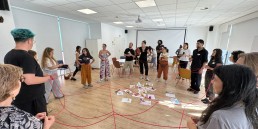
Zunächst gibt’s Aufwärmübungen. Darauf aufbauend bereitest du Geist, Körper und Gefühle auf die kreative Erkundung vor, indem du Aktivitäten auswählst, die mit den Hauptaktivitäten in Verbindung stehen – entweder durch eine ähnliche Methodik oder indem du die Grundlage für die Hauptaktivität schaffst. Diese Übungen können die Gruppe anregen oder beruhigen, helfen, die Aufmerksamkeit zu bündeln, die Sinne und die Fantasie anzuregen und einen gemeinsamen Rhythmus zu schaffen, in dem sich die Teilnehmenden sicher fühlen und offen dafür sind, neugierig an der Hauptaktivität teilzunehmen.
Für junge Menschen mit geringeren Chancen, vor allem für diejenigen, die vielleicht Ausgrenzung, Isolation oder Lücken in ihrer Bildung erlebt haben, sind diese kleinen Momente der Verbundenheit besonders wertvoll. Die richtigen Aktivitäten auszuwählen bedeutet, auf unterschiedliche Fähigkeiten, kulturelle Hintergründe und das jeweilige Wohlbefinden einzugehen. Wenn man das gut hinbekommt, helfen diese ersten Momente den jungen Menschen, sich willkommen und einbezogen zu fühlen und bereit zu sein, zusammenzuarbeiten.

Die Auswahl der richtigen Eisbrecher und Aufwärmübungen
Bei der Auswahl oder Gestaltung von Eisbrechern und Aufwärmübungen für junge Menschen mit geringeren Chancen – insbesondere für Menschen mit Behinderungen, bei denen es sich um Migrant*innen oder Geflüchtete handelt, oder aus ländlichen Gebieten – solltest du Folgendes berücksichtigen:
- Barrierefreiheit – können alle unabhängig von ihren Fähigkeiten teilnehmen?
- Emotionale Sicherheit – bekommt die Aktivität plötzlich einen persönlichen Charakter und muss Persönliches geteilt werden, oder bringt sie die Teilnehmenden zu früh aus ihrer Komfortzone heraus?
- Relevanz – bereitet sie die Gruppe auf eure Hauptaktivität vor, hat sie in irgendeiner Weise mit Tanz, Musik, bildender Kunst oder Theater zu tun? Versucht immer, Aktivitäten zu wählen, die bereits künstlerische Methoden nutzen, aber in einer einfacheren Form, um die Teilnehmenden langsam an die Methoden heranzuführen.
- Energielevel – denk daran, wie energiegeladen oder ruhig die Teilnehmenden für die Hauptaktivität sein müssen; musst du die Gruppe anregen oder ihnen helfen, sich besser zu konzentrieren?
- Kulturelle Sensibilität – sind die Anweisungen klar, inklusiv und frei von kulturellen Vorurteilen?
Können alle mitmachen, egal welche Fähigkeiten sie haben, welches Energielevel sie haben, welcher Kommunikationsstil bei ihnen vorherrscht oder welcher kultureller Hintergrund sie haben?
Eine Aktivität gilt als barrierefrei, wenn jeder daran teilnehmen kann, ohne sich unter Druck gesetzt, ausgeschlossen oder herausgegriffen zu fühlen. Das gilt besonders für junge Menschen mit Behinderungen, neurodiverse Teilnehmende, Menschen mit eingeschränkter Mobilität oder solche, die in neuen Gruppen schüchtern sind.
Wähle Aktivitäten aus, die:
- verschiedene Arten der Teilnahme ermöglichen (sich bewegen, beobachten, zeichnen, sprechen, Gesten einsetzen)
- keine fortgeschrittenen körperlichen Fähigkeiten oder komplexe Koordination erfordern,
- keine Reizüberflutung verursachen
- einfach und leicht zugänglich sind
Führt die Aktivität plötzlich dazu, dass persönliche Dinge geteilt werden müssen, oder bringt sie die Teilnehmenden zu früh aus ihrer Komfortzone heraus?
Aktivitäten, bei denen die Teilnehmenden von Anfang an im Mittelpunkt stehen, bei denen sie zu früh persönliche Details oder Informationen preisgeben müssen oder vor den anderen auftreten sollen, sorgen dafür, dass sich die Teilnehmenden unwohl und gestresst fühlen – besonders diejenigen aus schutzbedürftigen Gruppen. Emotional sichere Aktivitäten sollten die Teilnehmenden nicht aus ihrer Komfortzone drängen, bevor Vertrauen aufgebaut wurde.
Wähle Aktivitäten, die:
- einfach sind und Aktivitäten mit geringem Druck beinhalten (Bewegung, Geräusche, Zeichnen)
- spielerisch sind und kein Teilen persönlicher Informationen erfordern
- eher gruppenbasiert als individuell sind, bei denen nicht ein Teilnehmender vor den anderen auftritt
Einer der wichtigsten Aspekte bei der Auswahl einer Eisbrecher- oder Aufwärmübung ist der Übergang und die Verbindung zur Hauptaktivität. Aufwärmübungen sollten sich wie eine natürliche Brücke zwischen einer kleinen, einfachen Aktivität mit geringer Intensität und der Hauptaktivität anfühlen.
Zum Beispiel:
- Wähle vor einer Bewegungs- oder Tanzaktivität eine Aufwärmübung, die den Körper langsam aktiviert und auf intensivere Bewegungen vorbereitet
- Baue vor einer Theateraktivität Spiele zu Präsenz, Konzentration und Fantasie, Stimmübungen oder einfache Gruppenbewegungen ein
- Nutze vor einer bildnerischen Aktivität etwas aus demselben Bereich, um die Fantasie, die Hände und die Sinne aufzuwärmen
Wie muss die Energie eurer Gruppe für die Hauptaktivität sein – aktiv, ruhig, geerdet oder verbunden?
Die Jugendlichen kommen mit unterschiedlichen Energieniveaus zu den Aktivitäten/Workshops, die von verschiedenen Faktoren beeinflusst werden: Sie können müde, überfordert, abgelenkt oder unruhig und nervös sein. Die Wahl der richtigen Eisbrecher- und Aufwärmaktivität kann ihnen helfen, den gegenwärtigen Moment zu erleben und die Energie der Gruppe zu bündeln.
- Nutze belebende Aktivitäten, wenn die Gruppe ruhig, schüchtern oder unverbunden wirkt.
- Nutze beruhigende Aktivitäten, wenn die Gruppe überreizt oder ängstlich wirkt.
- Nutze erdende Aktivitäten, um den Teilnehmenden zu helfen, im Raum anzukommen – besonders nach einer Anreise oder langen Tagen.
- Nutze verbindende Aktivitäten, wenn du spürst, dass sich die Leute noch nicht wohl miteinander fühlen.
Manche Teilnehmende haben vielleicht einen anderen kulturellen Hintergrund, sprechen andere Sprachen, haben andere Kommunikationsnormen – und was für uns normal ist, ist für sie ein absolutes No-Go. Deshalb musst du all diese Aspekte berücksichtigen.
Wähle Aktivitäten aus, die:
- kulturspezifische Witze, Redewendungen oder Anspielungen vermeiden
- auf universelle Formen der Beteiligung setzen (Bewegung, Farbe, Rhythmus, Klang, Vorstellungskraft)
- einfache und visuell unterstützte Anweisungen verwenden
- keine Vorkenntnisse über lokale Lieder, Traditionen oder Kunstformen erfordern
Bewegungs- und theaterbasierte Kennenlernaktivitäten (Namensspiele, Eisbrecher, Energizer, Aufwärmübungen)
Die Teilnehmenden stellen sich im Kreis auf und werden gebeten, ihren Namen zu nennen und eine Bewegung oder Geste zu machen (z. B. einen Sprung, ein Winken, eine Verbeugung, einen Klatsch). Die ganze Gruppe wiederholt den Namen und die Geste gemeinsam und „spiegelt“ so jeden Teilnehmenden wider. Außerdem kann in der nächsten Runde jeder die Namen und Bewegungen aller vorherigen Teilnehmer wiederholen, bis ein vollständiger Kreis entstanden ist. Diese Übung verwandelt das Kennenlernen von einem rationalen, mentalen Prozess in einen körperlichen, „verkörperten“ Vorgang, was später den kreativen Fluss fördert.
Die Teilnehmenden stellen sich in einem gemütlichen Kreis auf. Der*die Moderator*in erklärt, dass wir durch das Nennen unserer Namen einen unsichtbaren Vertrag „unterzeichnen“, bei dem wir uns verpflichten, präsent zu sein und uns gegenseitig zu unterstützen. Nacheinander sagen die Teilnehmenden (optional: während sie in die Mitte treten) ihren Namen deutlich und mit einer bestimmten Stimmlage (flüsternd, rufend, singend oder mit tiefer Bassstimme). Die gesamte Gruppe wiederholt den Namen des Teilnehmenden mit derselben Stimmlage und Energie. Das dient als „körperliche“ Begrüßung, bei der die Stimme genutzt wird, um das Eis zu brechen und eine gemeinsame Präsenz zu schaffen.
Die Teilnehmenden sitzen im Kreis, wobei eine Person in der Mitte steht. Die Person in der Mitte sagt: „Der Wind weht für alle, die …“, gefolgt von einer Aussage – zum Beispiel „… schwarze Schuhe tragen“ oder „… blaue Augen haben“. Alle, auf die die Aussage zutrifft, müssen sich schnell bewegen und einen neuen Platz im Kreis suchen. Ein Platz bleibt immer frei, und die Person, die als Letzte einen Platz findet, rückt in die Mitte und macht die nächste Aussage. Diese Aktivität hilft den Teilnehmenden, lockerer zu werden, sich zu bewegen und ein bisschen was über einander zu erfahren.
Ein*e Freiwillige*r verlässt den Raum. Die Gruppe bestimmt einen Anführer, der zu der vom*der Moderator*in gespielten Musik bestimmte Bewegungen ausführen oder sogar tanzen muss, während der Rest der Gruppe ihm oder ihr folgen muss. Der Freiwillige kommt zurück in den Raum und muss erraten, wer der Anführer ist. Das wird noch 1–2 Runden lang wiederholt.
Die Teilnehmenden sitzen im Kreis (auf Stühlen oder auf dem Boden) und jeder nennt seinen Namen (falls sie sich noch nicht kennen) und beschreibt, wie er sich körperlich fühlt – tut etwas weh oder ist es verspannt, fühlt sich der Körper entspannt, steif oder müde an, gibt es alte Verletzungen …). Nach dieser Einstimmung lädt der*die Moderator*in die Teilnehmenden dazu ein, „ihrem Körper das zu geben, was er braucht“ – sei es eine sanfte Dehnung, eine Selbstmassage oder eine andere kleine Bewegung. Daraus kann ganz natürlich eine kurze Einheit entstehen, die vom Moderator*in geleitet und optional durch Bewegungen bereichert wird, die von Teilnehmenden vorgeschlagen werden, die sich dabei wohlfühlen, diese mitzuteilen.
Die Teilnehmenden laufen frei im Raum herum und der*die Moderator*in gibt verschiedene Anweisungen: Versucht, die leeren Stellen im Raum auszufüllen … geht schneller/langsamer (passt das Schritttempo auf einer Skala von 1 bis 10 an) … geht so, als wärt ihr auf dem Mond … ihr seid zu spät zur Arbeit … der Boden brennt … euch ist eiskalt usw.
Du kannst eine kurze Achtsamkeitsübung einbauen, indem du die Gruppe anhältst und sie bittest, die Augen zu schließen. Bitte sie dann, in die Richtung bestimmter Gegenstände im Raum zu zeigen, zum Beispiel: „Wo sind die gelben Vorhänge?“, „Zeig auf den Computer“ oder „Wo ist der rote Tisch?“
Die Teilnehmenden stellen sich im Kreis auf. Eine Person versucht zunächst, den Platz einer anderen Person einzunehmen, muss dafür aber zuerst deren nonverbale Zustimmung einholen. Das kann durch Augenkontakt, ein dezentes Nicken oder eine beliebige stille Geste der Zustimmung geschehen. Wenn die ausgewählte Person keine Zustimmung gibt, muss der Teilnehmende es bei jemand anderem versuchen. Sobald jemand seinen Platz abgibt, ist er als Nächster an der Reihe, um nonverbale Zustimmung zu erbitten und auf einen anderen Platz zu wechseln. Wurde keine Zustimmung erteilt, suchen die Teilnehmenden weiter bei anderen nach Zustimmung. Diese Übung legt den Schwerpunkt auf den Respekt vor persönlichen Grenzen, Achtsamkeit und Kommunikation ohne Worte.
Die Teilnehmenden stellen sich in einer Reihe auf, die je nach dem Anfangsbuchstaben ihres Namens das Alphabet bildet – von A bis Z –, ohne miteinander zu sprechen. Der*die Moderator*in überprüft vom Anfang der Reihe aus, ob das Alphabet richtig angeordnet ist – alle Teilnehmenden sagen ihren Namen laut und treten einen Schritt aus der Reihe heraus, damit es jeder sehen kann. Die anderen wiederholen dann den Namen und die Bewegung. Alternativ kann die Reihe auch nach dem Geburtsmonat im Jahr (Januar–Dezember) gebildet werden, falls die Teilnehmenden die Namen der anderen bereits kennen.
Anschließend bittet der*die Moderator*in die Teilnehmenden, sich alle in dieselbe Richtung zu drehen. Die Personam Ende der Reihe, die zu den anderen hinblickt, muss sich eine Bewegung ausdenken und sie nur der Person neben sich zeigen, indem sie sie auffordert, sich zu ihr umzudrehen und hinzuschauen. Diese Person zeigt dann dieselbe Bewegung der nächsten Person und so weiter, bis zur letzten Person in der Reihe. Ähnlich wie beim Spiel „Stille Post“ zeigt die letzte Person am Ende die Bewegung der ganzen Gruppe, und dann zeigt die erste Person die ursprüngliche Bewegung. Der Vergleich der Bewegungen sorgt oft für lustige Situationen. Das Ganze kann in die andere Richtung wiederholt werden.
Für diese Aktivität wird ein roter Wollknäuel benötigt. Die Teilnehmenden stellen sich im Kreis auf. Die erste Person, die das Ende des Garns in der Hand hält, nennt ihren Namen und eine „sichtbare Eigenschaft“, die sie besitzt oder in der Gruppe beobachtet. Während sie ihr Stück Garn festhält, wirft sie den Knäuel zu jemandem auf der anderen Seite des Kreises, und so geht es mit allen Teilnehmenden weiter, bis ein komplexes physisches Netz alle im Raum miteinander verbindet. Diese Übung hebt Verbindungspunkte und den „kollektiven“ Charakter der Gruppe hervor und macht die Gruppeneigenschaften sichtbarer.
Um die „objektiven Eigenschaften“ und die Vielfalt der Gruppe visuell darzustellen, bilden die Teilnehmenden „menschliche Landkarten“, indem sie sich im Raum positionieren. Der*die Moderator*in definiert den Raum als eine physische Karte (z. B. Norden, Süden, Osten, Westen oder eine Skala von 1 bis 10) und gibt dann verschiedene Aufgaben vor (z. B. „Stellt euch so hin, wie es eurem Geburtsort entspricht“ oder „Wie weit seid ihr gereist, um hierherzukommen?“). Die Teilnehmenden begeben sich an die Stelle auf der „Karte“, die ihrer Antwort entspricht. So kann die Gruppe ihre gemeinsame Zusammensetzung – wo sich die Teilnehmenden überschneiden und wo sie sich unterscheiden – auf rein visuelle und physische Weise erkennen.
Die Teilnehmenden stellen sich in einer Reihe auf und schauen alle in dieselbe Richtung. Die erste Person in der Reihe ist die „Lokomotive“ und bestimmt die Geschwindigkeit des Zuges, seine Richtung und gibt verschiedene Bewegungen vor, denen die anderen im Zug folgen müssen. Nach einer Weile geht diese Person wieder in die Reihe zurück und die nächste Person übernimmt die Führung des fahrenden Zuges.
Ein Teilnehmender geht um einen Kreis aus Paaren herum und fragt jedes Paar: „Versteht ihr das Spiel?“ Jedes Paar schickt ihn weiter und tauscht gleichzeitig die Plätze mit anderen im Kreis. Der Umhergehende darf sich jeden freien Platz aussuchen, und wer ohne Platz zurückbleibt, wird zum neuen Umhergehenden. Der*die Moderator*in gibt später das Kommando „Chaos!“, woraufhin alle Teilnehmenden hektisch nach neuen Partnern suchen, als würden sie vor einer plötzlichen Katastrophe fliehen. Die letzte Runde wird in Zeitlupe durchgeführt. Die Übung fördert Anpassungsfähigkeit, Gruppenbewusstsein und die Fähigkeit, schnelle Veränderungen anzunehmen.
Ihr arbeitet zu zweit: Eine Person übernimmt die Rolle des „Bewegenden“, die andere die des „stillen Zeugen“. Der „Bewegende“ beginnt in einer vollständig zusammengekauerten Haltung, streckt langsam die Wirbelsäule, lässt den Kopf sich heben und streckt die Arme weit aus, bevor er in die Ausgangsposition zurückkehrt. Dieser Zyklus wird mehrmals wiederholt. Die Übung hat ihren Ursprung im Tanz und im physischen Theater und legt den Schwerpunkt auf verkörperte Präsenz, Körperbewusstsein und den zyklischen Charakter des Wachstums. Anschließend werden die Rollen getauscht.
Der*die Moderator*in gibt nacheinander jede Stunde des Tages über den gesamten 24-Stunden-Zyklus hinweg bekannt. Die Teilnehmenden stellen ihre typischen Aktivitäten zu jeder angekündigten Uhrzeit pantomimisch dar und werden dazu aufgefordert, darauf zu achten, wann diese Aktivitäten ihnen Energie geben oder sie erschöpfen und wann sie Offenheit oder Rückzug fördern. Die Übung, die vom „Theater der Unterdrückten“ adaptiert wurde, regt zum Nachdenken über Alltagsroutinen und verinnerlichte Gewohnheiten an. Sie eignet sich gut als sanfte Aufwärmübung oder als einleitende Reflexionsübung.
Zu zweit halten zwei Teilnehmende ihre Handflächen ein paar Zentimeter vor das Gesicht ihres Partners. Der Partner muss sein Gesicht stets im gleichen Abstand zur Handfläche halten und ihr folgen, wohin sie sich auch bewegt – nach oben, unten, zur Seite, nah am Boden, hoch in die Luft –, ohne dabei berührt zu werden. Der Leiter bewegt sich zunächst langsam, dann mit zunehmender Komplexität. Nach 5 Minuten werden die Rollen getauscht. Die von Augusto Boal als grundlegende Übung des „Theaters der Unterdrückten“ entwickelte „Kolumbianische Hypnose“ fördert Körperbewusstsein, Vertrauen, nonverbale Kommunikation und konzentrierte Aufmerksamkeit. Eignet sich gut als Vorbereitung auf das Bildertheater oder jede andere Übung, bei der körperliche Präsenz gefragt ist.
Zwei Teilnehmende geben sich die Hand und bleiben in einer zufälligen Position stehen. Einer geht weg. Ein neuer Teilnehmender kommt hinzu und positioniert sich körperlich in Bezug auf die verbleibende Person, um ein neues Bild zu „vervollständigen“ – und ihm so eine neue Bedeutung, Beziehung oder einen neuen Kontext zu geben. Diese Person bleibt dann stehen, und der Zyklus geht weiter: Einer geht weg, einer kommt hinzu. Die Übung sollte zügig ablaufen, ohne Zeit zum Grübeln. „Complete the Image“ ist eine Adaption von Boals Bildertheater und fördert Spontaneität, räumliches Bewusstsein sowie die Fähigkeit, Körpersprache zu deuten und neu zu interpretieren. Es ist eine hervorragende Einstiegsübung vor einer vollständigen Bildertheater-Einheit.
Eine Person tritt in die Mitte des Raums und beginnt mit einer einfachen, rhythmischen, sich wiederholenden Bewegung und einem Klang. Nacheinander schließen sich die anderen Teilnehmenden der „Maschine“ an – indem sie sich körperlich an sie anlehnen oder in ihrer Nähe bleiben – und fügen ihre eigenen sich wiederholenden Bewegungen und Klänge hinzu, die mit dem bereits Vorhandenen interagieren oder darauf reagieren. Der*die Moderator*in kann die „Maschine“ dann auffordern, schneller oder langsamer zu werden, zu überhitzen oder kaputtzugehen. In einer zweiten Runde baut die Gruppe eine Maschine, die ein Konzept repräsentiert (z. B. Ausgrenzung, Gemeinschaft, Macht). „Die Maschine“ hat ihren Ursprung in Boals Arbeit und fördert den Gruppenzusammenhalt, Rhythmus, Kreativität und kollektives Bewusstsein. Sie eignet sich sowohl als Aufwärmübung als auch als Reflexionswerkzeug, wenn sie thematisch auf ein bestimmtes Thema ausgerichtet ist.
Die Teilnehmenden bewegen sich frei im Raum. Jeder kann jederzeit einen Vorschlag machen, der mit „Lasst uns …“ beginnt (z. B. „Lasst uns Astronauten sein!“, „Lasst uns durch Honig schwimmen!“, „Lasst uns feiern!“). Die ganze Gruppe antwortet sofort mit „Ja, los geht’s!“ und spielt das gemeinsam 20–30 Sekunden lang nach, bevor jemand anderes einen neuen Vorschlag macht. Der*die Moderator*in macht voll mit, um Begeisterung vorzuleben und das Energieniveau zu bestimmen. Basierend auf Viola Spolins Improvisationsspielen fördert „Ja, lasst uns!“ Spontaneität, Gruppenenergie und die „Ja, und“-Einstellung, die die Grundlage für gemeinsames kreatives Schaffen bildet. Ideal als Aufwärmübung zu Beginn oder zwischen anspruchsvolleren Übungen.
Die Teilnehmenden bewegen sich im Raum auf einer Statusskala von 1 bis 10: Bei 1 bewegen sie sich mit maximaler Unterwürfigkeit – Blick nach unten, zusammengekauerte Haltung, zögerliche Schritte, jedem nachgebend; bei 10 bewegen sie sich mit maximaler Dominanz – aufrecht, ausladend, den Raum einnehmend, niemals nachgebend. Der*die Moderator*in ruft verschiedene Zahlen aus und die Teilnehmenden passen ihre Körperhaltung, ihren Blick, ihr Tempo und ihre Raumnutzung entsprechend an. In einer zweiten Phase wählen die Teilnehmenden eine Zahl und interagieren kurz mit anderen – dabei nehmen sie wahr, wie der Status jede noch so kleine Interaktion beeinflusst. Diese Übung, die auf Keith Johnstones Arbeiten zum Thema Status in der Improvisation basiert, zeigt, wie Macht und Hierarchien über den Körper vermittelt werden. Sie dient sowohl als körperliches Aufwärmtraining als auch als konzeptioneller Einstieg in Diskussionen über Macht, Inklusion und Beziehungsdynamiken.
Die Teilnehmenden stellen sich im Kreis auf und geben Energie weiter, indem sie nacheinander die Wörter „Zip“, „Zap“ und „Zop“ sagen. Jeder nimmt Augenkontakt auf, klatscht in Richtung eines anderen Teilnehmenden und schickt die Energie weiter. Der Rhythmus sollte sich allmählich beschleunigen, was die Konzentration und schnelle Reaktionen fördert. Diese Übung stärkt die Konzentration, das Gruppenbewusstsein und die Verbundenheit durch den gemeinsamen Rhythmus.
Die Teilnehmenden arbeiten zu zweit und stehen sich gegenüber. Eine Person beginnt, sich langsam zu bewegen, während die andere ihre Bewegungen so genau wie möglich nachahmt. Nach einer Weile könnt ihr die Rollen tauschen oder versuchen, euch gemeinsam zu bewegen, ohne dass es einen klaren Anführer gibt. Diese Übung, die aus dem physischen Theater stammt, fördert Konzentration, Vertrauen und nonverbale Kommunikation.
Die Teilnehmenden stellen sich im Kreis auf und reichen sich gegenseitig einen imaginären Ball weiter. Bei jedem Weiterreichen können sich die Eigenschaften des Balls ändern (Größe, Gewicht, Temperatur), und der Empfänger muss entsprechend reagieren. Das Spiel sollte fließend ablaufen und so Kreativität und Reaktionsfähigkeit fördern. Diese Übung fördert die Vorstellungskraft, die Anpassungsfähigkeit und die Interaktion in der Gruppe.
Die Teilnehmenden stellen sich im Kreis auf und folgen einem Rhythmus, während sie einen „Hasen“ mit bestimmten Lauten und Gesten weiterreichen. Das Tempo steigt nach und nach an, was Koordination, Aufmerksamkeit und schnelle Reaktionen erfordert. Dieses rasante Spiel sorgt für mehr Energie und stärkt den Gruppenzusammenhalt – damit eignet es sich hervorragend als Abschluss der Aufwärmphase.
Die Teilnehmenden beginnen damit, ihren Körper sanft zu dehnen und Verspannungen abzuschütteln. Sie werden dazu eingeladen, zu erkunden, wie sie sich im Raum bewegen – indem sie in unterschiedlichem Tempo gehen, die Höhe wechseln (hoch/tief) und sich ihrer Körperhaltung und Präsenz bewusst werden. Der*die Moderator*in kann sie mit einfachen Anweisungen anleiten (z. B. „Nimm dir mehr Raum“, „Beweg dich langsamer“, „Achte auf deine Atmung“). Diese Übung hilft den Teilnehmenden, eine Verbindung zu ihrem Körper herzustellen, Verspannungen loszulassen und im Raum präsenter und achtsamer zu werden.
Die Teilnehmenden arbeiten zu zweit. Einer hat die Augen verbunden, während der andere ihn sanft nur durch Berührung durch den Raum führt (z. B. indem er seine Hand hält oder ihn an den Schultern führt). Der Führende ist für die Sicherheit und das Wohlbefinden seines Partners verantwortlich. Nach ein paar Minuten tauschen die Teilnehmenden die Rollen. Am Ende bittest du um eine kurze Reflexion darüber, wie es sich angefühlt hat, zu vertrauen, zu führen und die Kontrolle loszulassen. Diese Übung fördert Vertrauen, Einfühlungsvermögen und nonverbale Kommunikation.
Die Teilnehmenden verteilen sich im Raum. Der*die Moderator*in nennt verschiedene Emotionen (z. B. Freude, Angst, Wut, Hoffnung, Verwirrung, Kraft), und die Teilnehmenden frieren sofort ein, um diese Emotion darzustellen – wie eine Statue. Ermutige sie, ihren ganzen Körper, ihren Gesichtsausdruck und ihre Körperhaltung einzusetzen. Der*die Moderator*in kann die Gruppe dazu einladen, sich gegenseitig zu beobachten oder kurz darüber zu sprechen, was sie sehen. Diese Übung fördert den körperlichen Ausdruck, die Vorstellungskraft und das emotionale Bewusstsein.
Die Teilnehmenden erkunden, wie Schatten entstehen, indem sie ihre Hände und ihren Körper einsetzen. Sie stellen sich vor eine Lichtquelle und probieren frei herum, wobei sie beobachten, wie ihre Bewegungen die Formen auf der Leinwand oder an der Wand beeinflussen. Der*die Moderator*in kann sie dazu anleiten, darauf zu achten, wie Abstand, Winkel und Position den Schatten verändern. Diese Aktivität hilft den Teilnehmenden, die Grundprinzipien der Schattenbildung zu verstehen.
Die Teilnehmenden probieren aus, wie sie ihre Schatten vergrößern oder verkleinern können, indem sie sich näher an die Lichtquelle heranbewegen oder sich weiter von ihr entfernen. Sie können die Ergebnisse vergleichen und mit Übertreibungen spielen. Der*die Moderator*in kann sie dazu auffordern, „riesige“ oder „winzige“ Schatten zu erzeugen. Diese Übung schärft das Bewusstsein für Raum, Perspektive und visuelle Wirkung.
Eine Person formt mit ihren Händen oder ihrem Körper einen Schatten, während die anderen versuchen zu erraten, was darin zu sehen ist. Die Formen können abstrakt oder eher gegenständlich sein (Tiere, Gegenstände, Figuren). Fördere Kreativität und vielfältige Interpretationen. Diese Aktivität fördert die Fantasie, die Beobachtungsgabe und das symbolische Denken.
Die Teilnehmenden arbeiten in der Gruppe daran, bewegte Schattenkompositionen zu gestalten. Sie können ihre Körper einsetzen, um gemeinsam Formen, Übergänge oder einfache Abläufe zu gestalten. Der Schwerpunkt liegt dabei eher auf Zusammenarbeit und Fluss als auf Choreografie. Diese Übung fördert das Gruppenbewusstsein, die Kreativität und den nonverbalen Ausdruck.

Contact
Iuliana Adriana PAVEL (project manager)
iuliana.pavel@a4action.ro
A4ACTION – Antim Ivireanu Culture House, Islaz Alley, Ghermănești, Snagov, Ilfov District, Romania, 077170
Co-funded by the European Union. Views and opinions expressed are however those of the author(s) only and do not necessarily reflect those of the European Union or the ANPCDEFP. Neither the European Union nor the ANPCDEFP can be held responsible for them.
The project is conducted by the following organisations: A4ACTION (Romania) – coordinator, Udruga Delta (Croatia), InterAktion (Austria), Asociación Espacio Rojo (Spain) and GAIA Museum Outsider Art (Denmark).