


Kako koristiti Inclusionary Toolbox?
Inclusionary TOOLBOX je zbirka metoda i aktivnosti osmišljena kako bi pomogla osobama koje rade s mladima, voditeljima/cama aktivnosti i drugim stručnjacima/kinjama u primjeni kreativnih i umjetničkih metoda s mladima s kojima rade, osobito s mladima s manje mogućnosti.
Mi, autori/ce, vjerujemo da svatko može biti osnažen za vođenje umjetnički usmjerenih radionica i aktivnosti na uključiv način uz odgovarajuće alate i smjernice, bez obzira na prethodno znanje i iskustvo u području umjetnosti.
Ovaj TOOLBOX namijenjen je voditeljima aktivnosti svih razina iskustva – bilo da imaju višegodišnje formalno umjetničko obrazovanje, bilo da su tek na početku svog puta u radu s mladima ili su mladi koji žele postati voditelji aktivnosti.
Aktivnosti i metode bit će korisne svima koji žele stvoriti uključivo okruženje u kojem sve osobe imaju jednake mogućnosti za potpuno sudjelovanje, neovisno o svojem podrijetlu, sposobnostima ili životnim okolnostima. Nadamo se da će vam ovaj TOOLBOX pružiti odgovarajuće alate za stvaranje sigurnih i odvažnih prostora u kojima je svatko dobrodošao.
Što se tiče strukture TOOLBOX-a, on je podijeljen u 4 modula:
- Analiza potreba
- Metode glazbe i pokreta
- Metode vizualnih umjetnosti
- Metode temeljene na kazalištu
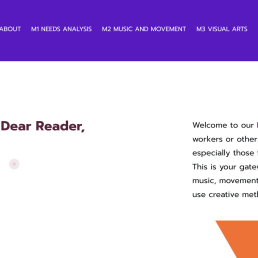
Koristite gornji izbornik za kretanje kroz uvod, module i sve aktivnosti.
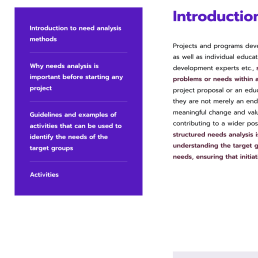
Svaki modul također ima dodatni izbornik koji vam pomaže u kretanju kroz različite odjeljke unutar njega.
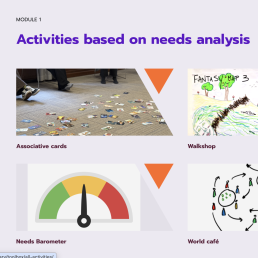
Ako želite pregledati samo aktivnosti, sve ih možete pronaći zajedno u izborniku „Sve aktivnosti”.
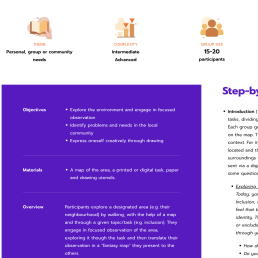
Svaka pojedinačna aktivnost sadrži simbole i prilagođene odjeljke koji će vas voditi kroz proces učenja.

Priručnik započinje modulom Analiza potreba, u kojem možete pronaći različite metode koje će vam pomoći u procjeni potreba vaše skupine kroz različite pristupe – od klasičnih anketa i fokusnih skupina do kreativnijih metoda, poput photovoice pristupa.
Nakon toga slijede 3 modula usmjerena na različite umjetničke metode iz tri različita umjetnička područja: glazbu i pokret, vizualne umjetnosti te kazališne metode. Sve su metode osmišljene i prilagođene za rad s mladima s manje mogućnosti, različitih podrijetla, sposobnosti i životnih okolnosti.
Svaku aktivnost možete odabrati samostalno, ovisno o potrebama vaše skupine, potrebnim materijalima, složenosti ili temi aktivnosti.
Za sve aktivnosti dostupne su i varijacije koje vam omogućuju da aktivnosti koristite i prilagodite osobama s kojima radite, njihovim potrebama te ciljevima radionice.
U našem projektu usmjerili smo se na tri glavne prepreke s kojima se suočavaju mladi s kojima naše organizacije i institucije rade, a to su osobito invaliditet, kulturne razlike i geografske prepreke.
Teme, simboli i oblici aktivnost
Sljedeće poglavlje donosi pregled svih kategorija i simbola uključenih u našu zbirku praktičnih aktivnosti kako bi osobe koje rade s mladima, voditelji/ce aktivnosti i drugi stručnjaci/kinje mogli brzo prepoznati ono što im je potrebno te odabrati aktivnosti koje najbolje odgovaraju njihovim sudionicima/ama, okruženju u kojem rade i ciljevima koje žele postići.
Svaka aktivnost slijedi istu jasnu strukturu kako biste lako mogli razumjeti kako pripremiti, organizirati i prilagoditi metode različitim skupinama:

Tema
Ova kategorija odnosi se na tematsko područje i svrhu korištenja aktivnosti, kako biste mogli odabrati vrstu aktivnosti kojom se želite detaljnije baviti. Teme mogu obuhvaćati različita područja, od samoizražavanja do uključivanja, izgradnje tima, identiteta, različitosti, pripadnosti, zajednice i međukulturnog dijaloga.

Razina
Aktivnosti su kategorizirane prema složenosti za sudionike, odnosno prema tome koliko je aktivnost zahtjevna za njih, zahtijeva li prethodno iskustvo ili znanje o određenoj temi ili metodi te je li aktivnost više vođena ili osobe same trebaju preuzeti inicijativu i odgovornost za proces.
Ova kategorizacija pomaže vam odabrati najprikladniju aktivnost za vašu ciljnu skupinu i planirane ishode učenja. Međutim, sve aktivnosti mogu se prilagoditi i pojednostaviti, a različite varijante navedene su u uputama za provedbu.

Početna razina
Namijenjeno mladima s malo ili nimalo prethodnog iskustva. Upute su jednostavne, zadaci jasno formulirani, a za provedbu aktivnosti potrebne su minimalne vještine ili prethodno znanje. Naglasak je na zabavi, istraživanju i stjecanju samopouzdanja u sigurnom okruženju.

Srednja razina
Prikladno za mlade koji imaju određeno prethodno znanje ili su upoznati s temom aktivnosti. Zadatak može zahtijevati nešto više kreativnosti, suradnje ili rješavanja problema. Iako voditelji/ce aktivnosti pružaju podršku i smjernice, osobe se potiče na preuzimanje inicijative i slobodnije izražavanje vlastitih ideja.

Napredna razina
Zahtjevnije aktivnosti namijenjene mladima koji već imaju određene vještine, znanje ili iskustvo povezano s temom aktivnosti ili korištenim metodama. Zadaci mogu uključivati složenije promišljanje, kritičku refleksiju ili timski rad. Osobe preuzimaju veću odgovornost za proces, dok voditelji/ce aktivnosti imaju ulogu onoga koji usmjerava. Prilagodljivost i samoizražavanje imaju ključnu ulogu.

Broj osoba
Ova kategorija pomaže vam steći uvid u preporučeni broj osoba koje mogu sudjelovati u aktivnosti. Kod nekih aktivnosti moguće je uključiti i manji broj osoba, ali ne i veći.

Dob
Preporučena dob osoba za ovu aktivnost. Iako se aktivnosti mogu provoditi s različitim ciljnim skupinama, usmjerili smo se na dobnu skupinu od 13 do 30 godina, što je raspon koji se u okviru Europske unije smatra dobi mladih osoba.

Trajanje aktivnosti
Ovo je preporučeno trajanje aktivnosti, no ovisno o skupini može potrajati kraće ili duže. Stoga ovu kategoriju treba shvatiti kao preporuku, a ne kao strogo određeno vremensko ograničenje.
Potrebni materijali
Za neke aktivnosti bit će potrebni određeni materijali, od kojih su neki specifičniji od drugih. Međutim, budući da smo željeli aktivnosti učiniti što dostupnijima svima, nastojali smo predložiti materijale koji su cjenovno pristupačni i lako dostupni.

Varijacije i prilagodbe
Ova kategorija nudi različite načine na koje se aktivnost može provesti kako bi vam pomogla u stvaranju uključivog prostora za različite skupine. Ponekad se predlažu alternativni materijali radi veće pristupačnosti ili se nude potpuno drugačiji pristupi provedbi aktivnosti.

Napomena
Ovaj odjeljak pojavljuje se kada postoji nešto na što trebate posebno obratiti pozornost i pažljivo uzeti u obzir potrebe ranjivih skupina s kojima planirate provoditi aktivnost. Upozorava vas na teme ili elemente koji bi mogli biti osjetljivi za određenu skupinu osoba.
Ovaj je odjeljak uglavnom osmišljen s posebnim naglaskom na mlade iz ruralnih područja, mlade migrantskog ili izbjegličkog podrijetla te mlade s različitim vrstama invaliditeta.

Contact
Iuliana Adriana PAVEL (project manager)
iuliana.pavel@a4action.ro
A4ACTION – Antim Ivireanu Culture House, Islaz Alley, Ghermănești, Snagov, Ilfov District, Romania, 077170
Co-funded by the European Union. Views and opinions expressed are however those of the author(s) only and do not necessarily reflect those of the European Union or the ANPCDEFP. Neither the European Union nor the ANPCDEFP can be held responsible for them.
The project is conducted by the following organisations: A4ACTION (Romania) – coordinator, Udruga Delta (Croatia), InterAktion (Austria), Asociación Espacio Rojo (Spain) and GAIA Museum Outsider Art (Denmark).