


The Gold in the Wound

The Gold in the Wound
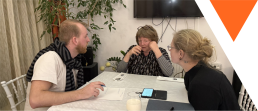
With eyes closed, a participant locates areas of bodily tension or numbness and assigns each a shape, a colour, and a name, while the group symbolically “holds” these representations. The participant voices the stories carried in each area, then reframes them — what strength, insight, or resource lives inside the difficulty? — before releasing the symbols.

THEME
Resilience, Transformation, and Emotional Integration

COMPLEXITY
Advanced

GROUP SIZE
8–15 participants

AGE
16 +

TIME
60–90 minutes
Objectives
- To reframe personal challenges as potential sources of strength and resilience
- To develop body awareness in relation to emotions and physical tension
- To support participants in moving from pain to agency through storytelling and imagination
- To create a safe space for vulnerability and mutual group support
Materials
- Quiet, private space;
- Comfortable floor mats or cushions;
- Optional: paper and pens for written reflection
Overview
With eyes closed, a participant identifies areas of bodily tension or numbness and assigns each a shape, colour, and name. The group supports by symbolically “holding” these representations. The participant then voices the stories carried in these areas, before reframing them: what strength, insight, or resource lives within the wound? Finally, the symbolic shapes are released. Drawing on therapeutic frameworks including Internal Family Systems (IFS), somatic awareness, and narrative therapy, the exercise integrates imagination, embodied storytelling, and transformation.
Step-by-Step Instructions:
- Preparation and consent (10 min): Establish a clear, safe container for the exercise. Explain the process step by step. Emphasise voluntary participation — participants may choose to observe or stop at any time without explanation. Obtain explicit verbal consent from anyone who will work in the centre.
- Body scan and mapping (15 min): Invite participants to close their eyes and conduct a slow scan from head to feet, noticing areas of tension, heaviness, numbness, or discomfort. Each area is given a shape, colour, texture, and a short name. Participants may work with one or two areas at most.
- Voicing the wound (15 min): The participant who has volunteered to work shares the story of their area — not an explanation, but the felt sense: where does it come from? What has it carried? What has it protected? The group listens in silence.
- Finding the gold (15 min): The facilitator gently invites the participant to explore: what strength, wisdom, or resource has this wound also created? What has it taught you? What has it made possible? This is not forced optimism — it is a careful, honest inquiry.
- Group witnessing and release (10 min): The group briefly offers words of witness — not advice, but acknowledgement. The participant then symbolically releases the shape: lets it dissolve, float away, or transform. A brief grounding moment closes the exercise.
- Integration and closure (10 min): Offer quiet individual reflection time. Close the session with a grounding activity (e.g. breathing, gentle movement, a shared gesture).

Debriefing and Evaluation:
Reflection Questions:
- What did it feel like to give your wound a shape or colour?
- Was there a moment of recognition when exploring the gold within it?
- How did it feel to be witnessed by the group?
- What do you want to remember from this experience?
- For evaluation, observe the participant’s engagement with the process, the group’s quality of witnessing, and the facilitator’s ability to hold the space with care.
Tips for Facilitators:
- Only use this activity with groups that have a solid foundation of trust — not suitable for first sessions.
- Move slowly and follow the participant’s pace — do not push towards the reframing phase.
- Have mental health support available, either within the team or accessible after the session.
- Do not attempt this activity without training in trauma-informed facilitation or therapeutic theatre.

Variations:
- Can be done as an individual written reflection without the group witnessing component.
- For less experienced groups, simplify to a body-mapping exercise without the storytelling phase.

Disclaimer:
This activity involves deep psychological and somatic work. It must only be facilitated by practitioners with training in therapeutic theatre, trauma-informed practice, or somatic work. It is not a substitute for therapy. Ensure informed consent, clear boundaries, and access to mental health support. Participants must always retain the right to stop without explanation. This activity should never be used as a first exercise with a new group: begin only after significant safety, trust, and warm-up work has taken place. It should not be offered to participants in acute crises, and facilitators must be able to offer (or refer to) appropriate mental-health support if unexpected reactions arise. If in doubt, choose a gentler variation or skip this method.
Theatre activities


Contact
Iuliana Adriana PAVEL (project manager)
iuliana.pavel@a4action.ro
A4ACTION – Antim Ivireanu Culture House, Islaz Alley, Ghermănești, Snagov, Ilfov District, Romania, 077170
Co-funded by the European Union. Views and opinions expressed are however those of the author(s) only and do not necessarily reflect those of the European Union or the ANPCDEFP. Neither the European Union nor the ANPCDEFP can be held responsible for them.
The project is conducted by the following organisations: A4ACTION (Romania) – coordinator, Udruga Delta (Croatia), InterAktion (Austria), Asociación Espacio Rojo (Spain) and GAIA Museum Outsider Art (Denmark).


Sensory Poem — Synaesthesia in six lines
Sensory Poem — Synaesthesia in six lines
Participants answer a short sensory questionnaire that evokes synaesthetic associations — colours that sound like something, textures that hold a memory, smells that carry a feeling — and turn these responses into a short poem. Each person then performs their poem from a marked square on the floor, holding eye contact with the audience until the applause ends.
THEME
Creative Expression, Presence, and Performance
COMPLEXITY
Advanced
GROUP SIZE
8–20 participants
AGE
16 +
TIME
60–90 minutes
Objectives
- To develop creative writing and poetic expression through sensory associations
- To practise presence, eye contact, and physical stillness in performance
- To explore the connection between senses, language, and emotional memory
- To build confidence in sharing personal creative work with an audience
Materials
- Sensory questionnaire sheets (prepared in advance), pens, floor tape or markers to define individual squares for performance
Overview
Participants complete a short sensory questionnaire designed to evoke synaesthetic associations — colours that sound like something, textures that remind them of a moment, smells that carry an emotion. Using these responses as raw material, each participant composes a short poem. In the performance phase, each person reads their poem from a designated square on the floor, maintaining eye contact with the audience and remaining in place until the applause finishes. The activity combines creative writing with performance practice, reinforcing presence, vulnerability, and expressive clarity.
Step-by-Step Instructions:
- Introduction (5 min): Introduce the concept of synaesthesia — when one sense triggers associations with another (a colour that sounds like something, a sound that has a texture). Explain that the questionnaire will invite them to explore this territory.
- Sensory questionnaire (15 min): Distribute the questionnaire. Sample questions: What colour sounds the loudest? What texture reminds you of a memory? What smell makes you feel safe? What sound has a colour? What emotion has a taste? What sound describes your childhood? Participants answer freely and quickly — first instinct, not analysis.
- Writing the poem (20 min): Using their questionnaire answers as the raw material, participants write a short poem of any form — it does not need to rhyme or follow a structure. It can be as long or short as feels right. Encourage them to stay close to the sensory images rather than explaining them.
- Performance preparation (5 min): Mark out individual squares on the floor — one per participant. Explain that each person will stand in their square, make eye contact with the audience before starting, read their poem, and then remain still in their square until the applause finishes. Stillness after the poem is part of the performance.
- Performances (15–25 min): Each participant performs their poem in turn. The rest of the group acts as the audience. Facilitators encourage attentive, respectful watchingA short group discussion follows the performances.
Debriefing and Evaluation:
Reflection Questions:
- What was it like to write from the senses rather than from ideas or arguments?
- How did it feel to perform and hold eye contact with the audience?
- What did you notice about other participants’ poems — what surprised you?
- What did the exercise reveal about how you experience the world through your senses?
For evaluation, observe participants’ engagement with the writing process, the quality of presence during performance, and the group’s capacity to witness each other with attention and respect.
Tips for Facilitators:
- Prepare the sensory questionnaire in advance — test it on yourself to check that the questions evoke genuine images.
- Reassure participants that there is no ‘good’ or ‘bad’ poetry here — only honest responses.
- Model the performance format yourself first: stand in a square, make eye contact, read, and stay still after.
- Remind the audience of their role: active, respectful, generous attention.
Variations:
- For participants with language barriers, allow the poem to incorporate words from their native language or to use images and drawings instead.
- For more advanced groups, experiment with collective poems built from one line contributed by each participant.
- Can be combined with the Storytelling activity (sensory exploration through touch and smell) as a two-part session.
Disclaimer:
The synaesthesia questionnaire can surface personal memories and emotions — writing and sharing the poem are always voluntary, and participants can keep their work private. The final performance (standing in a square, eye contact, stillness) is an invitation, not a requirement: any participant who prefers to read from their seat, to have the facilitator read for them, or to skip performing entirely is fully participating. Check in briefly with the group before the performance round, and remind them that witnessing others with attention is also an act of participation.
Theatre activities
Contact
Iuliana Adriana PAVEL (project manager)
iuliana.pavel@a4action.ro
A4ACTION – Antim Ivireanu Culture House, Islaz Alley, Ghermănești, Snagov, Ilfov District, Romania, 077170
Co-funded by the European Union. Views and opinions expressed are however those of the author(s) only and do not necessarily reflect those of the European Union or the ANPCDEFP. Neither the European Union nor the ANPCDEFP can be held responsible for them.
The project is conducted by the following organisations: A4ACTION (Romania) – coordinator, Udruga Delta (Croatia), InterAktion (Austria), Asociación Espacio Rojo (Spain) and GAIA Museum Outsider Art (Denmark).

Sensory Walk
Sensory Walk — Five minutes outside
Working in pairs, one participant is blindfolded while the other guides them through a curated sensory experience (textures, sounds, smells, temperatures) with almost no spoken words. Roles are then switched. The exercise trains attention, trust, and a non-visual relationship with the environment.
THEME
Sensory Awareness, Trust, and Creative Exploration
COMPLEXITY
Beginner to Intermediate
GROUP SIZE
6-24 participants
AGE
16 +
TIME
30–50 minutes
Objectives
- To develop sensory awareness through guided embodied experiences
- To build trust and non-verbal communication between participants
- To encourage creative interaction with the surrounding environment
- To explore how limiting one sense can enhance the others
Materials
- Blindfolds (one per pair), a variety of textures, objects, sounds, and scents for the guide to offer, an open indoor or outdoor space that can be safely navigated
Overview
Working in pairs, one participant is blindfolded while the other curates a guided sensory experience using textures, sounds, smells, and other environmental elements — but not sight. Verbal communication is minimised to encourage embodied, non-verbal interaction. Roles are then reversed. Drawn from immersive theatre methods, this practice cultivates heightened sensory awareness and a creative, attentive relationship with the environment.
Step-by-Step Instructions:
- Introduction (5 min): Explain the exercise structure and emphasise consent: the blindfolded participant is always in control and can stop at any time. Discuss how to guide safely — keeping the partner moving at a gentle pace, offering their arm or hand for support, and presenting sensory elements without explanation.
- First round (15 min): Participant A is blindfolded. Participant B leads them on a slow sensory journey through the space, offering textures to touch, sounds to listen to, scents to smell, and surfaces to feel underfoot. Guides should avoid narrating — let the senses speak. After 10–12 minutes, guide A safely back to the starting point.
- Role reversal (15 min): Participants swap roles. Participant B is now blindfolded and Participant A becomes the guide.
- Sharing and reflection (10 min): Pairs briefly share their experiences with each other, then come together as a group for a short reflection.
Debriefing and Evaluation:Reflection Questions:
- What did you notice when you could not see? Which senses became stronger?
- How did it feel to trust someone to guide you?
- What did you experience as a guide — what did you want to offer your partner?
- What did this exercise reveal about how we usually move through the world?
- For evaluation, observe the quality of non-verbal communication between pairs, signs of trust, and the depth of sensory engagement.
Tips for Facilitators:
- Walk the route yourself in advance to identify any obstacles or hazards.
- Remind guides: slow down, be patient, check in silently with their partner’s comfort.
- Have a few interesting textures and objects ready to offer participants (tree bark, fabric, smooth stones, leaves).
- Be sensitive to participants with anxiety or sensory processing differences — offer them the choice to observe first.
Variations:
- For participants uncomfortable with blindfolds — including those who have experienced trauma, confinement, or loss of control — offer clear alternatives: keeping eyes closed, covering the eyes with their own hands, or simply looking downward at the ground. Never insist on blindfolds; the sensory experience is equally valid through any of these alternatives.
- Outdoors version: conduct the walk in a natural setting — a garden, park, or wooded area.
- For participants with visual impairments, adapt the focus to other sensory layers, including auditory landscapes and textures.
Disclaimer:Always obtain clear consent before blindfolding any participant. Ensure the physical environment is safe and free of hazards. Be especially attentive to participants who may have trauma related to confinement or loss of control; offer alternatives at all times. This exercise involves physical closeness and trust — respect personal and cultural boundaries throughout.
Theatre activities
Contact
Iuliana Adriana PAVEL (project manager)
iuliana.pavel@a4action.ro
A4ACTION – Antim Ivireanu Culture House, Islaz Alley, Ghermănești, Snagov, Ilfov District, Romania, 077170
Co-funded by the European Union. Views and opinions expressed are however those of the author(s) only and do not necessarily reflect those of the European Union or the ANPCDEFP. Neither the European Union nor the ANPCDEFP can be held responsible for them.
The project is conducted by the following organisations: A4ACTION (Romania) – coordinator, Udruga Delta (Croatia), InterAktion (Austria), Asociación Espacio Rojo (Spain) and GAIA Museum Outsider Art (Denmark).
Journey to Now — A life map on the floor
Journey to Now — A life map on the floor
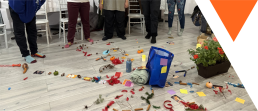
Sitting around a large circle marked on the floor, participants use natural materials (stones, leaves, twigs, shells) to build a silent visual map of their life journey, from birth at the outer edge to the present moment at the centre. Each person then walks their path and shares it, while the group listens and, afterwards, walks the paths of others.

THEME
Self-Reflection and Personal History
COMPLEXITY
Intermediate
GROUP SIZE
6-24 participants
AGE
16 +
TIME
90–120 minutes
Objectives
- To facilitate deep self-reflection through visual and spatial expression
- To support participants in sharing personal experiences beyond verbal language
- To develop empathy by witnessing and connecting with others’ stories
- To encourage non-verbal storytelling and symbolic thinking
Materials
- Different materials from nature (leaves, feathers, sticks, pine cones, flowers, stones, etc.)
- Different photos or cards with pictures
- Tape and scissors
Overview
Participants sit around a large circle marked on the floor and use natural materials to create a visual representation of their life journey. The outer edge of the circle represents birth, while the centre represents the present moment. Instead of using words, participants express meaning through symbols made from natural objects.
Once the circle is complete, each participant shares their journey by walking along their path and explaining it. Afterwards, everyone is invited to walk around the circle to observe and reflect on the journeys of others.
This activity supports self-reflection and encourages non-verbal expression of personal experiences.
Step-by-Step Instructions:
- Introduction (10 min): Explain the structure of the circle: the outer edge represents birth, the centre represents where we are now. Invite participants to think of their lives as a journey and to represent key moments, turning points, and experiences using natural materials — not words. Stress that there is no right or wrong way to do this.
- Creating the journey (25–35 min): Participants mark with natural materials their journey on their section of the circle. Encourage them to work in silence and use the materials to represent events, emotions, and transitions. Facilitators circulate quietly and offer encouragement without directing content.
- Sharing your path (15–20 min): Each participant traces their path from the outer edge to the centre, briefly narrating what each symbol means to them. Sharing is voluntary — participants may share as much or as little as they wish.
- Witnessing others (10 min): Participants walk slowly around the full circle, observing each other’s journeys in silence. Encourage them to approach this as a moment of witness and respect.
- Group reflection (10 min): Bring the group together for a brief discussion about what they noticed, what surprised them, and what they would like to take away.
Debriefing and Evaluation:
Reflection Questions:
- What was it like to represent your life in images rather than words?
- What did you notice when you walked around and saw others’ journeys?
- Were there patterns or similarities across different journeys?
- What does your journey tell you about where you are now?
- For evaluation, observe the depth of engagement with the creative process, willingness to share, and the quality of witnessing and listening within the group.
Tips for Facilitators:
- Create a calm, focused atmosphere — consider playing soft instrumental music during the creation phase.
- Make clear that sharing is optional — no one should feel pressured to explain their journey.
- Allow extra time if participants are deeply engaged; this activity can run longer than expected.
- Be prepared for emotional responses — have a quiet space available and be ready to offer support.
Variations:
- For participants who find visual art challenging, allow any form of representation: written words, cut-out images, or abstract marks.
- For shorter sessions, reduce the circle to individual sheets of paper and skip the walk-around phase.
- Can be done digitally using drawing apps for remote or hybrid sessions.
Disclaimer:
This activity may surface deep personal memories and emotions. Facilitate with care and ensure participants know they are in control of what they share. Have emotional support available during and after the session. This is not a therapy exercise; if sensitive content arises, be prepared to acknowledge it respectfully and refer to professional support if needed.
Theatre activities
Contact
Iuliana Adriana PAVEL (project manager)
iuliana.pavel@a4action.ro
A4ACTION – Antim Ivireanu Culture House, Islaz Alley, Ghermănești, Snagov, Ilfov District, Romania, 077170
Co-funded by the European Union. Views and opinions expressed are however those of the author(s) only and do not necessarily reflect those of the European Union or the ANPCDEFP. Neither the European Union nor the ANPCDEFP can be held responsible for them.
The project is conducted by the following organisations: A4ACTION (Romania) – coordinator, Udruga Delta (Croatia), InterAktion (Austria), Asociación Espacio Rojo (Spain) and GAIA Museum Outsider Art (Denmark).

Dropping the Balloon — Presence, desire, integration
Dropping the Balloon — Presence, desire, integration
In three connected phases, participants move from playful group improvisation with an imaginary balloon, to personal reflection on three questions: What do you really want? What stops you? What can you do about it? — worked through short paired scenes, and finally to a guided meditation. The arc of play, inquiry, and stillness lets insights surface without pressure to explain them.

THEME
Presence, self-inquiry, and embodied integration
COMPLEXITY
Intermediate
GROUP SIZE
6-24 participants
AGE
16 +
TIME
90–120 minutes
Objectives
- To develop presence, spontaneity, and creative play within the group
- To support participants in exploring personal desires, obstacles, and possible actions through embodied theatrical methods
- To encourage reflection and self-awareness through experiential learning
- To create a safe space for expression and experimentation without judgment
- To integrate the experience through a guided meditation, supporting emotional grounding and closure
Materials
- Open space for movement;
- Paper and pens for each participant;
- Optional real balloons (as accessibility backup for Phase 1);
- Optional soft background music and a comfortable surface (yoga mats, blankets) for Phase 3.
Overview
A three-phase standalone activity that takes participants from embodied spontaneity, through personal self-inquiry based on Transactional Analysis, into contemplative integration. Phase 1 uses a playful imaginary-balloon exercise (drawn from improvisation and Image Theatre) to build presence, creativity, and group awareness. Phase 2 invites participants to work with three guiding questions — What do you really want? What stops you? What can you do about it? — first in writing and then in short paired theatrical scenes. Phase 3 closes with a guided meditation that lets the body integrate what play and inquiry have surfaced. The arc of play → inquiry → stillness is itself the method.
Step-by-Step Instructions:
Phase 1 – The Balloon (20–30 minutes)
Welcome participants and briefly explain the arc of the session: play → inquiry → stillness. Emphasise that each phase is voluntary and that participants can step out at any moment.
- Invite participants to stand in an open space. Ask them to close their eyes briefly and imagine they are holding a deflated balloon. They will mime picking it up, blowing it up, and giving it a specific size, colour, and shape.
- Each participant blows up their imaginary balloon and introduces it to a partner or to the group — colour, size, texture, personality. This activates imagination and playfulness.
- Participants now keep their imaginary balloon floating in the air at all times, using any part of their body, while simultaneously completing simple group tasks set by the facilitator: introduce yourself to three people; find a common interest with someone; move across the room together. The constraint of keeping the balloon afloat adds playfulness and reveals how the mind manages competing demands.
Phase 2 – The Three Questions (45–60 minutes)
Introduce the three guiding questions on a board or flipchart:
- What do you really want?
- What stops you from having it?
- What can you do about it?
Explain that these questions come from Transactional Analysis and are used as a practical tool to support reflection and personal agency. They are not a form of therapy — participants are the experts in their own answers.
Participants should keep their imaginary balloon floating in the air at all times during the exercise.
Then, participants form pairs. They take turns asking and answering each question, one by one. The person asking the question should repeat it several times before switching roles, to allow their partner to go deeper and respond more honestly.
Phase 3 – Meditation (15–20 minutes)
Invite participants to sit or lie down comfortably. Dim the lights if possible. Offer the meditation slowly, with long pauses between sentences. Below is a suggested script facilitators can adapt:
“ Find a comfortable position, either sitting or standing, and gently close your eyes or soften your gaze. Take a slow breath in… and out, bringing your attention to your body and noticing how you feel in this moment, without trying to change anything. Now, imagine the balloon you were holding during the activity — its color, its shape, the way it was moving. Notice how it felt to keep it in the air, the effort, the attention, maybe even the distraction. Slowly, allow the balloon to come closer to you, and gently let it rest — you don’t need to keep it floating anymore. Take a breath. Now imagine that you are letting the balloon go, watching it drift away, higher and higher, until it disappears. Bring your attention back to your breath, to your body, and to the space around you. Gently ask yourself: What do you really want? There is no need to find a perfect answer — just notice what comes. Take one more deep breath in… and slowly exhale. When you’re ready, gently open your eyes.”
Debriefing and Evaluation:
Reflection Questions:
- What did it feel like to move from playfulness, through inquiry, into stillness?
- Which phase was easiest for you? Which was hardest? Why?
- What did you notice about the balloon — how your attention to it changed across the three phases?
- When your partner repeated the question the third or fourth time, did something shift in your answer?
- How did it feel to let the balloon go in meditation?
Tips for Facilitators:
- Respect the arc. Do not shorten Phase 1 to rush into Phase 2 — the play is what makes the inquiry safe.
- In Phase 2, the repetition of each question is essential. Resist the temptation to stop at the first answer; repetition is what moves the response from habitual to authentic.
- Protect the container in Phase 2. The method clarifies desire; it is not therapy. If a participant’s material feels heavy, acknowledge it briefly, affirm their autonomy, and gently continue.
- In Phase 3, speak slowly. Allow silence. Many facilitators speak too fast when they read a meditation script for the first time.
- Participation is voluntary in every phase. Stepping out is a legitimate form of participation.
- End on time. The meditation is the end, not a stop before more processing.
Variations:
- Short version (45–60 min): Phase 1 + one round of the three questions + shorter meditation. Useful as an opening or closing segment of a longer training day.
- Real balloons as backup: For participants who find it hard to hold an imaginary object (very young participants, some participants with cognitive disabilities), provide real balloons for Phase 1.
- Multilingual groups: Partners in Phase 2 may ask/answer in their first language when useful.
- Accessibility: Seated Phase 1 for participants who cannot stand long. Eyes-open or semi-open meditation for anyone uncomfortable closing their eyes. For participants uncomfortable with the word “meditation,” call Phase 3 “guided rest” or “body check-in.”
- Extended inquiry: In longer or more experienced groups, add a fourth question — “Who are you when you have what you want?” — to explore emerging identity.
Disclaimer:While this activity is not therapy, the three-question inquiry can surface emotionally significant material. Facilitators should be prepared to hold strong feelings compassionately, to refer participants to additional support if needed, and to respect absolute boundaries around sharing. Participation in each phase must always remain voluntary; never insist. The method is grounded in Transactional Analysis as a framework for understanding personal agency — it is not a substitute for therapy for participants living with unresolved trauma, active mental health crises, or acute life events.
Theatre activities
Contact
Iuliana Adriana PAVEL (project manager)
iuliana.pavel@a4action.ro
A4ACTION – Antim Ivireanu Culture House, Islaz Alley, Ghermănești, Snagov, Ilfov District, Romania, 077170
Co-funded by the European Union. Views and opinions expressed are however those of the author(s) only and do not necessarily reflect those of the European Union or the ANPCDEFP. Neither the European Union nor the ANPCDEFP can be held responsible for them.
The project is conducted by the following organisations: A4ACTION (Romania) – coordinator, Udruga Delta (Croatia), InterAktion (Austria), Asociación Espacio Rojo (Spain) and GAIA Museum Outsider Art (Denmark).

Inclusive Storytelling Circle — The Feeler
Inclusive Storytelling Circle — The Feeler
Working in pairs, participants explore touch and smell — with one sense temporarily limited — to shape a character and a setting from sensory impressions, then negotiate these elements into a shared story. The story is finally transformed into a comic strip, blending imagination, collaboration, and visual expression.
THEME
Sensory exploration, creativity, and collaborative storytelling.
COMPLEXITY
Beginner
GROUP SIZE
8–30 participants, divided into pairs.
AGE
16+
TIME
90–120 minutes
Objectives
- To stimulate creativity and imagination through sensory exploration
- To develop storytelling and narrative-building skills
- To encourage cooperation, communication, and negotiation within pairs
- To increase awareness of how different senses influence perception and meaning
- To support self-expression through visual and narrative forms
Materials
- Blindfolds (one per pair)
- A selection of small objects with different textures
- Scents or fruits (e.g. citrus, spices, herbs)
- Paper and pens for note-taking
- Drawing paper or comic templates
- Markers, pencils, or crayons
Overview
Storytelling invites participants to explore creativity through touch and smell while working in pairs. By temporarily limiting one sense at a time, participants create a character and a setting based on sensory impressions. These elements are then combined into a shared story through discussion and negotiation. The final step transforms the story into a comic strip, encouraging visual storytelling and group sharing. The activity supports collaboration, imagination, and reflective learning in a safe and engaging environment.
Step-by-Step Instructions:
1. Group Setup:
Divide the large group of participants into pairs. Explain that the activity focuses on imagination, sensory exploration, and collaborative storytelling.
2. Part One: Touch and Character Creation–“The Feeler” Activity:
One participant in each pair is blindfolded. This participant is given an object to hold and explore using only their sense of touch. While holding the object, they answer the following questions:
- What do you think it is made of?
- What colour do you think it is?
- If it were a man or a woman, which would it be?
- Give it a name.
- How old is it?
- What does it do? Where does it work?
- What are its passions?
- What does it dislike?
- Think of a phrase that keeps repeating.
- What would it like to achieve?
The second participant, who is not blindfolded, writes down all the answers on a sheet of paper.
3. Part Two: Smell and Setting Creation–“The Smeller”:
After all the questions for the first part are answered, the roles are switched. The second participant is blindfolded and asked to smell different scents or fruits. Based on the smell, they answer the following questions:
- Do you like the smell?
- Have you smelt this before? Where?
- Imagine you are in a place that smells like this. Where are you?
- What does the place look like?
- Who else is there?
- What is happening?
- What are you doing?
- How do you feel?
- What would you like to do?
- Why can’t you do it?
All responses are written down by the partner on a separate sheet of paper.
4. Story Creation and Negotiation:
Once both sets of questions have been answered, the pair is invited to create a shared story using the collected responses. Participants discuss and negotiate which elements they want to include and how the character and setting connect. The goal is to agree on a final version of the story that combines both perspectives.
5. Comic Strip Creation and Presentation:
After the story is finalised, the participants create a comic strip based on their narration. They illustrate key moments of the story, focusing on characters, setting, and emotions. Once completed, each pair presents their comic to the larger group and briefly shares their creative process.
Debriefing and Evaluation:
Invite participants to reflect on the activity in a group discussion. Use guiding questions such as:
- How did it feel to rely on only one sense at a time?
- What was challenging or surprising during the activity?
- How did you negotiate which ideas to keep in the final story?
- What did you learn about collaboration and communication?
- How did turning the story into a comic change the way you thought about the narrative?
Encourage participants to share both emotional reactions and practical insights. Evaluate the activity by observing levels of engagement, cooperation within pairs, creativity in storytelling, and the ability to transform abstract ideas into a visual narrative.
Tips for Facilitators:
- Explain the instructions clearly before starting, especially the blindfolded parts, to ensure participants feel safe and comfortable.
- Choose objects and scents that are neutral, familiar, and non-triggering.
- Monitor the pairs during the activity and offer support if participants get stuck or feel unsure.
- Encourage respectful listening and equal participation within each pair.
- Keep time reminders visible to help participants move smoothly from one stage to the next.
- Emphasise that there are no right or wrong answers and that imagination is more important than realism.
Variations:Adapt the activity for younger participants by reducing the number of questions or focusing only on one sense (touch or smell). For larger groups, form teams of three, adding an observer who supports note-taking and timekeeping. Replace smells with sounds or textures for a different sensory focus. Instead of a comic strip, invite participants to create a short performance, storyboard, or illustrated poster based on their story. The activity can also be used as a writing exercise by turning the final story into a short text or poem.
Disclaimer:This activity involves temporary sensory deprivation through blindfolding. Participation should always be voluntary, and participants must feel free to stop at any time. Avoid using strong, unfamiliar, or potentially allergenic scents. Clearly check for allergies or sensitivities in advance. Ensure a safe environment by keeping the space clear of obstacles and supervising all blindfolded participants at all times.
Theatre activities
Contact
Iuliana Adriana PAVEL (project manager)
iuliana.pavel@a4action.ro
A4ACTION – Antim Ivireanu Culture House, Islaz Alley, Ghermănești, Snagov, Ilfov District, Romania, 077170
Co-funded by the European Union. Views and opinions expressed are however those of the author(s) only and do not necessarily reflect those of the European Union or the ANPCDEFP. Neither the European Union nor the ANPCDEFP can be held responsible for them.
The project is conducted by the following organisations: A4ACTION (Romania) – coordinator, Udruga Delta (Croatia), InterAktion (Austria), Asociación Espacio Rojo (Spain) and GAIA Museum Outsider Art (Denmark).

Labyrinth Theatre
Labyrinth Theatre
Each participant walks alone (or in very small groups) through a sequence of transformed spaces (indoors or outdoors) where they encounter actors, objects, and carefully arranged sensory stimuli. The performance happens through personal experience rather than from a stage, making every participant the protagonist of their own journey.
THEME
Sensory exploration, self-reflection, initiation, perception, and personal meaning-making through immersive theatre.
COMPLEXITY
Advanced
GROUP SIZE
10-25 participants + audience
AGE
16+
TIME
90-120 minutes, but can be done also as a big event on more days
Objectives
- To shift participants out of everyday perception and routine thinking
- To stimulate deep sensory awareness and embodied experience
- To encourage personal storytelling and inner reflection
- To explore themes of identity, trust, choice, and transformation
- To create meaningful, individual learning experiences beyond verbal explanation
Materials
- Non-theatrical spaces (rooms, corridors, forests, outdoor paths)
- Basic scenography and symbolic objects
- Blindfolds, fabrics, textured materials
- Lighting sources (dim lights, candles, LEDs)
- Sound elements (voices, ambient sounds, music)
Overview
The Labyrinth Theatre is an interactive, site-specific, and context-orientated form of theatre in which each participant experiences the performance individually. Instead of a traditional stage, the performance takes place in non-theatrical spaces (indoors or outdoors), transformed into a fixed route or itinerary. Participants move one by one, or in tiny groups, through a sequence of spaces and encounters, engaging directly with actors, objects, and sensory stimuli.
Sensory Labyrinth Theatre (SLT) is a specific development of this method, created by Theatr Cynefin (North Wales, UK) and inspired by the work of Colombian theatre director Enrique Vargas in the early 1990s. Over time, the method has been further developed by various organisations across Europe, including BIVEDA and Epsilon III, adapting them to different cultural and educational contexts.
Step-by-Step Instructions:
1. Define the purpose and theme:
Agree on the main theme of the labyrinth (e.g., identity, trust, inclusion, life choices, memory). Choose 1–3 key questions you want participants to carry through the journey.
2. Select the location and map the route:
Choose a non-theatrical space (indoors or outdoors) that can be safely transformed into a fixed route. Map a clear sequence of “meeting points” (stations) and decide the order in which participants will experience them.
3. Design the stations and encounters:
Create short scenes or interactions for each station. Decide what each encounter aims to evoke (emotion, reflection, choice, sensory focus). Keep encounters simple, clear, and consistent with the overall dramaturgy.
4. Plan sensory elements and disorientation tools:
Decide how senses will be filtered (often by limiting vision) and which devices will be used (darkness, blindfolding, sound cues, tactile objects, smell, temperature). Ensure these elements are meaningful and not overwhelming.
5. Create the threshold and waiting area:
Set up a “waiting zone” where participants arrive and detach from everyday reality. Design a strong threshold moment that signals entry into the labyrinth world (e.g., a ritual instruction, a mysterious call, a guided entrance, or a symbolic object).
6. Assign roles and brief the team:
Assign a facilitator to manage timing and participant flow. Assign actors/facilitators to each station and clarify their role, boundaries, and the emotional tone they should hold. Brief the whole team on safety, consent, and how to respond to participant reactions.
7. Prepare scenography, props, sound, and lighting:
Set up each station using minimal but intentional materials. Test lighting and sound levels to ensure a coherent atmosphere and safe movement. Use symbolic objects that invite interpretation rather than explain meaning directly (for example, a rope can represent restriction or connection, a mirror can suggest self-reflection, a chair can become a place of waiting or authority, or a piece of fabric can create a sense of protection or transition).
It can also be helpful to include a few concrete elements to guide the experience. For example, a role can be built through a simple action, a short line, a repeated movement, or a small interaction with the participant.
You can also explore different ways of engaging the senses, such as limiting sight (e.g. using a blindfold) or working with touch, sound, or smell, depending on the atmosphere you want to create.
8. Run a full test walk-through:
Do at least one complete rehearsal with the team. Check timing, transitions, clarity of instructions, and the emotional intensity of each station. Please address any safety concerns, such as obstacles, slippery floors, or unclear directions.
9. Brief audience before entry:
Explain the process in simple terms. Emphasise consent, confidentiality, and the right to pause or stop at any time. Ask about allergies, mobility needs, sensory sensitivities, or anything that could affect safety.
10. Begin the journey (one-by-one entry of the audience):
Send participants (members of the audience) into the labyrinth individually (or in tiny groups), usually every 5–10 minutes. Keep the flow steady so participants do not meet each other inside.
11. Maintain flow and emotional safety during the experience:
The flow facilitator monitors time and spacing. Station actors adapt to each participant while staying within agreed boundaries. Keep one person available as emotional support in case a participant needs to pause or exit.
12. Close the experience and transition out:
Provide a clear ending station or exit ritual that helps participants return to normal reality. Offer water, a quiet space, and time to settle before group discussion.
13. Facilitate debriefing and reflection:
Hold a structured reflection using open questions. Offer different ways to reflect: talking, writing, drawing, and silent reflection. Encourage participants to share only what they feel comfortable with.
14. Collect feedback and document learning:
Gather short written feedback or a quick evaluation round. Document observations from facilitators and actors (what worked, what was challenging, and what should be adjusted next time).
Debriefing and Evaluation:Reflection is essential and should take place after the experience, individually or in a group. Participants may share verbally, write, draw, or remain silent. Guiding questions include:
- What stayed with you after the journey?
- What did you feel during the experience?
- Did any moment reflect something from your own life?
Evaluation focuses on depth of engagement, emotional awareness, and the ability to connect the experience to personal meaning rather than on verbal output.
Tips for Facilitators:Prepare the labyrinth carefully and test the flow in advance. Clearly explain the process and participants’ right to stop at any time. Maintain a safe, calm atmosphere. Actors should remain flexible and responsive rather than follow a fixed script. Ensure emotional support is available throughout and after the experience.
Variations:
- Indoor or outdoor labyrinths
- More theatrical or more sensory-focused formats
- Use of audio guidance instead of live actors
- Adaptation for museums, cultural heritage sites, or educational spaces
- Shorter versions with fewer stations and one central theme
Disclaimer:Labyrinth Theatre may provoke strong emotional responses. Participation must be voluntary. Avoid triggering content without proper preparation and support. Respect personal boundaries, confidentiality, and emotional safety at all times.
Theatre activities
Contact
Iuliana Adriana PAVEL (project manager)
iuliana.pavel@a4action.ro
A4ACTION – Antim Ivireanu Culture House, Islaz Alley, Ghermănești, Snagov, Ilfov District, Romania, 077170
Co-funded by the European Union. Views and opinions expressed are however those of the author(s) only and do not necessarily reflect those of the European Union or the ANPCDEFP. Neither the European Union nor the ANPCDEFP can be held responsible for them.
The project is conducted by the following organisations: A4ACTION (Romania) – coordinator, Udruga Delta (Croatia), InterAktion (Austria), Asociación Espacio Rojo (Spain) and GAIA Museum Outsider Art (Denmark).

Shadow Theatre — Silhouette stories
Shadow Theatre — Silhouette stories
Participants build simple silhouette puppets and perform short stories behind a translucent, lit screen, using shadows, movement, and sound to carry meaning. The form welcomes participants who don’t feel comfortable being physically visible on stage, letting imagination and voice lead.
THEME
Storytelling Through Light and Shadow
COMPLEXITY
Beginner to Intermediate
GROUP SIZE
5-20 participants
AGE
16+
TIME
2-3 hours (or multiple sessions)
Objectives
- Develop storytelling and narrative skills
- Explore visual and kinesthetic creativity
- Build collaboration and teamwork
- Create accessible performance for all abilities
- Connect with ancient cultural traditions
Materials
- White sheet or translucent screen (stretched taut)
- A light source such as an overhead projector, lamp, or flashlight
- Cardboard, black paper, or recycled materials
- Scissors, tape, glue, popsicle sticks or wire
- Markers and drawing materials
Overview
Shadow theatre uses light, a screen, and silhouettes to tell stories. Participants create shadow puppets and perform behind a translucent screen, making stories visible through shadows. This ancient art form originated in China/India 2000+ years ago. Accessible, creative, magical.
Step-by-Step Instructions:
1. Introduction (15 mins):
Introduce the history of shadow theatre. Explain that it originated in China and India over 2,000 years ago, spread along the Silk Road, and became a cultural tradition in many parts of the world. Present the basic principle of how shadows are created: a light source, an object, and a screen. Demonstrate a few simple hand shadows. Emphasise storytelling through shape and movement rather than words.
2. Warm-up (20 mins):
For this part, the facilitator can select relevant shadow-based activities from the additional chapter at the end of the Toolbox (e.g. shadow exploration, size experimentation, shape-guessing, or group shadow compositions) to help participants understand the basic principles of shadow formation and develop creativity and group interaction.
3. Session 1: Puppet Creation (60-90 mins):
Choose or create a story together with the participants. This can be a folk tale, a personal experience, or an original story developed by the group. Encourage the design of simple characters with clear, strong silhouettes. Draw the characters on cardboard or black paper and carefully cut them out, offering support where needed. Add movable elements, such as arms or legs, if desired, to make the puppets more expressive. Attach the puppets to sticks or wire handles and test them on the screen, allowing time for adjustments. Add simple details with markers while keeping the focus on maintaining clear, recognisable silhouettes.
Session 2: Story development and rehearsal (60 minutes)
Guide the group in structuring the story by clearly defining the beginning, middle, and end. Practice puppet manipulation, focusing on smooth and coordinated movements. Add narration, dialogue, or music to enrich the performance. Experiment with shadow effects such as layering, changing sizes, and creating entrances and exits. Rehearse scene transitions and assign clear roles within the group, including puppeteers, narrators, and sound effects coordinators. Support the group in identifying and solving technical issues, such as lighting adjustments or tangled puppets.
Session 3: Performance (30–45 minutes)
Set up the screen and lighting to ensure clear and effective shadows. Position the performers behind the screen and the audience in front. Present the shadow theatre performance, applying all the skills practiced during the rehearsal. After the performance, hold a short question-and-answer session to encourage interaction and reflection on the story and creative process.
Debriefing and Evaluation:Reflection Questions:
- How did shadows change your storytelling?
- What was challenging about performing?
- What made shadows interesting or expressive?
- How did collaboration work?
- What would you do differently next time?
- What stories are important to tell?
Evaluation:
Observe creativity, technical skill development, collaboration, problem-solving, and confidence in performance.
Tips for Facilitators:
- Test lighting before performance (angle, distance, brightness)
- Remind puppeteers: the audience sees shadows, not you!
- Use music or sound effects to enhance the story.
- Practice smooth movements—jerky movements distract
- Consider having separate narrators and puppeteers
- Safety: keep hands away from hot lights
- Respect cultural origins and diversity of shadow theatre traditions
- Allow mistakes and experimentation—it’s learning
- Provide clear technical guidance and visuals (if possible): explain where puppeteers should be positioned (e.g. behind a non-transparent barrier or below the screen), how silhouettes are manipulated (with sticks, wire, etc.), and from which angle (below, side, etc.), so participants better understand how the setup works in practice
Variations and adjustments:
- Overhead Projector Shadows: Use transparencies, cut-outs, colored gels
- Body Shadows: Perform with bodies instead of puppets
- Mixed Media: Combine puppets, body shadows, found objects
- Silent Storytelling: No words, only movement and music
- Cultural Exploration: Research shadow theatre traditions (wayang kulit Indonesia, Karagöz Turkey, Chinese shadow opera)
- Color Shadows: Use colored gels or transparencies
- Multi-screen: Use multiple screens for complex stories
Disclaimer:
Supervise use of scissors and cutting tools. Keep all participants away from hot light sources—serious burn risk. Ensure adequate ventilation if using hot lights for an extended time. Respect the cultural origins of shadow theatre traditions—acknowledge and honour the Asian heritage of this art form.
Theatre activities
Contact
Iuliana Adriana PAVEL (project manager)
iuliana.pavel@a4action.ro
A4ACTION – Antim Ivireanu Culture House, Islaz Alley, Ghermănești, Snagov, Ilfov District, Romania, 077170
Co-funded by the European Union. Views and opinions expressed are however those of the author(s) only and do not necessarily reflect those of the European Union or the ANPCDEFP. Neither the European Union nor the ANPCDEFP can be held responsible for them.
The project is conducted by the following organisations: A4ACTION (Romania) – coordinator, Udruga Delta (Croatia), InterAktion (Austria), Asociación Espacio Rojo (Spain) and GAIA Museum Outsider Art (Denmark).

Improvisation Theatre — “Yes, and…”
Improvisation Theatre — “Yes, and…”
Through a sequence of structured games and exercises, participants create scenes, characters, and stories spontaneously — without scripts, rehearsal, or a predetermined “right” answer. The practice builds trust, quick thinking, and collaboration by training participants to accept their partners’ ideas and respond in the moment.

THEME
Spontaneity, Creativity, and Trust
COMPLEXITY
Beginner to Advanced (adaptable)
GROUP SIZE
8-25 participants
AGE
16+
TIME
60-90 minutes
Objectives
- Build confidence and spontaneity
- Develop active listening and teamwork skills
- Enhance creativity and quick thinking
- Create supportive, risk-taking environment
- Practice “Yes, And” thinking in life
Materials
- Open space with cleared floor
- Optional: simple props, chairs, scarves
- Optional: prompt cards with scenarios
- Optional: music player
Overview
Improvisation involves creating scenes, characters, and stories spontaneously without scripts. The principles of improvisation are derived from Viola Spolin’s improvisation games and Keith Johnstone’s concepts of status and spontaneity. Improv builds trust, creativity, and collaboration through structured games and exercises.
Step-by-Step Instructions:
1. Introduction (10 mins):
Introduce the golden rules of improvisation: accept what your partner offers (“Yes”) and then build on it (“and”). Instead of blocking ideas or saying no, you add something new, keeping the scene moving and collaborative. Emphasise the importance of making your partner look good by offering support and cooperation. Emphasise that in improv, there are no mistakes, only opportunities, and you can utilise everything creatively. Stress the need to commit fully, as half-hearted participation limits the energy and fun of the activity. Reinforce the idea that the group is learning together, supporting one another, and that experiencing failure is a valuable part of the process.
You can also summarise these as a simple list for participants:
- Say “Yes, and…”
- Support your partner and make them look good
- There are no mistakes, only opportunities
- Be present and fully committed
- Listen and react, don’t plan ahead
- Enjoy the process and take risks
2. Warm-up Games (20 minutes):
For the warm-up, the facilitator can select appropriate exercises from the the additional chapter at the end of the Toolbox, choosing activities that support focus, connection, and group energy, depending on the group’s needs.
3. Main Activities (choose based on group level):
Beginner Exercises (20–30 minutes):
Use “One-Word Story”: Participants stand or sit in a circle. Together, they create a story by saying one word at a time, going around the circle. Each person adds only one word when it’s their turn. The goal is to build a coherent story while practising active listening, staying present, and accepting what others offer (“Yes, and…”). Encourage participants not to overthink and to keep the flow going.
Play “Freeze Tag”: Two participants start improvising a short scene. At any moment, someone from the audience can say “Freeze!”, and the two actors must stop exactly in their positions. The new person taps one of the actors, takes their place, keeps the same physical position, and starts a completely new scene inspired by that pose. This exercise helps participants think creatively and react quickly.
Try “Conducted Story”: The facilitator acts like a conductor, pointing to different participants who then continue the story. Participants can only speak when the facilitator points at them and must stop when the facilitator moves on. This encourages focus, quick thinking, and collaboration, as the story is built together in an unpredictable way.
End with “Emotional Replay”: Two or more participants improvise a simple scene. After a short time, the facilitator stops them and asks them to replay the same scene, but with a different emotion (e.g. joy, anger, fear, excitement). The situation stays the same, but the emotional tone changes. This helps participants explore how emotions influence communication and behaviour.
Intermediate Exercises (20–30 minutes):
Introduce Party Quirks, where one participant hosts a party and guests arrive with secret characters or behaviours that the host must guess. Play Slide Show, creating a story based on imaginary vacation photos, with one narrator and others posing as images. Use an Expert Panel, where participants act as experts answering audience questions on made-up topics. Try Character Swap, allowing two characters in a scene to gradually exchange personalities. Include props, encouraging participants to transform a random object into as many different items as possible.
Advanced Exercises (20–30 minutes):
Facilitate Long Form Improv, developing an extended improvised story of 10–15 minutes from a single suggestion. Introduce Harold, a structured long-form exercise using recurring themes and callbacks. Use Monologue-Scene, where one participant shares a true personal story and others improvise scenes inspired by it. Explore Status Games, focusing on power dynamics through high-status and low-status characters.
4. Cool Down and Reflection (10 minutes):
End the session with a gentle cool-down activity, followed by a group reflection. Encourage participants to share how they feel, what they have learnt, and what they find challenging or enjoyable.
Debriefing and Evaluation:Reflection Questions:
- What was challenging about “Yes, And”?
- When did you feel most creative? Most stuck?
- How did group support help you?
- What surprised you?
- How does improv relate to real-life situations?
- What did you discover about yourself?
- How can we apply “Yes, And” outside theatre?
Evaluation:
Observe spontaneity growth, listening skills, risk-taking, support of others, creativity, and confidence development.
Tips for Facilitators:
- Start simple and build complexity gradually
- Celebrate failures as learning opportunities
- Side-coach during games without stopping action
- Keep energy high and positive
- If a scene stalls, edit and start fresh
- Focus on process, not performance quality
- Adapt difficulty to the group’s confidence level
- Invite quieter participants without pressure
- Model vulnerability and playfulness yourself
- Name specific good choices you observe
Variations and adjustments:
- Musical Improv: add songs to scenes spontaneously
- Props Improv: use random objects
- Silent Improv: no words, only physical expression
- Cultural Improv: explore theatrical styles
- Therapeutic Improv: use for emotional expression and conflict resolution
- Genre Improv: horror, romance, sci-fi
- Competitive Improv: Theatresports format with teams
Disclaimer:
Improv can feel vulnerable, especially at first. Establish clear boundaries about content—avoid inappropriate material. Never pressure reluctant participants—allow observation. Some people need time to warm up. If someone is uncomfortable, they can watch, suggest ideas, or choose less exposing roles. Respect different comfort levels with spontaneity and physical expression.
Theatre activities
Contact
Iuliana Adriana PAVEL (project manager)
iuliana.pavel@a4action.ro
A4ACTION – Antim Ivireanu Culture House, Islaz Alley, Ghermănești, Snagov, Ilfov District, Romania, 077170
Co-funded by the European Union. Views and opinions expressed are however those of the author(s) only and do not necessarily reflect those of the European Union or the ANPCDEFP. Neither the European Union nor the ANPCDEFP can be held responsible for them.
The project is conducted by the following organisations: A4ACTION (Romania) – coordinator, Udruga Delta (Croatia), InterAktion (Austria), Asociación Espacio Rojo (Spain) and GAIA Museum Outsider Art (Denmark).
Forum Theatre — The anti-model in one minute
Forum Theatre — The anti-model in one minute
Forum Theatre is an interactive method in which participants first watch a short scene of oppression or injustice, then step onto the stage as “spect-actors” to replace the protagonist and test alternative ways of responding. Guided by a neutral facilitator (the “Joker”), the group collectively rehearses strategies for change in a safe theatrical space before applying them in real life.
THEME
Social Justice and Conflict Resolution
COMPLEXITY
Intermediate
GROUP SIZE
10-12 participants + audience
AGE
16+ (can be adapted for younger with appropriate scenarios)
TIME
90-120 minutes (core version). For an extended version, allow up to 150 minutes to accommodate deeper reflection.
Objectives
- Enable participants to explore different forms of oppression and practise strategies for change
- Develop critical thinking and problem-solving through theatrical intervention
- Build empathy and understanding of different perspectives
- Empower participants to become active agents of social change
- Practice collective problem-solving in safe theatrical space
Materials
- Open performance space with excellent visibility for the audience
- Chairs arranged in a semicircle for audience
- Optional: simple props, costume pieces, or set elements
- Flipchart or whiteboard for documenting insights and solutions
Overview
Forum Theatre is an interactive form of Theatre of the Oppressed developed by Augusto Boal in 1973 during a literacy project in Peru. Participants watch a short scene depicting oppression or injustice (the “anti-model”), then become “spect-actors” who can stop the action, replace the protagonist, and try alternative solutions. A facilitator called the “Joker” guides the process neutrally, ensuring realistic exploration without imposing solutions. The method was born when Boal realised that audience members wanted to not just suggest solutions but also physically test them onstage.
Step-by-Step Instructions:
0. Group preparation (20–30 mins, before the session begins):
Before the session opens to the full group, the facilitator works with everyone to prepare. Explain Forum Theatre clearly: what the anti-model is, what the Joker does, and what spect-actors are invited to do. Together, identify or confirm a topic based on participants’ real experiences.
A small sub-group (4–6 volunteers) creates and rehearses the anti-model scene with the support of the facilitator, while the rest of the group becomes spect-actors. If the group is larger (10–12 participants), you can divide them into two groups, each creating and performing a different theatre scene.
Allow time for a short rehearsal and a warm-up (choose 2–3 activities from the additional chapter at the end of the Toolbox, depending on the group’s needs). Once everyone understands their role and the scenes are ready, the formal session can begin.
1. Introduction (10 mins):
Welcome the audience (this can include both young people who are not part of the play and members of the wider community) and explain the Forum Theatre concept. Emphasise that they will see a scene where someone faces oppression or injustice. After watching it once, they can intervene by shouting, ‘STOP!’ and stepping on the scene to try different solutions. Please clarify that there are no ‘magic’ solutions, as we are collaboratively exploring realistic possibilities. The Joker facilitates but doesn’t provide answers. This work is about collective wisdom and experimentation.
Roles in Forum Theatre
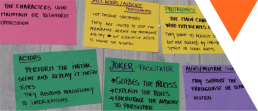
Joker (Facilitator):
The Joker guides the Forum Theatre process. They explain the rules, encourage audience participation, and keep the discussion constructive and respectful. The Joker does not give solutions but helps the group explore possibilities.
Protagonist
The protagonist is the main character who experiences oppression. They want to achieve something but are blocked by individuals, systems, or social norms. The story focuses on their struggle. IMPORTANT NOTE: Spect-actors can substitute this character, but not just change his/her personality or motivation fundamentally.
Oppressor(s):
Oppressors are the characters who maintain or reinforce oppression. They may act intentionally or unconsciously and often represent power structures (authority figures, institutions, social pressure). IMPORTANT NOTE: Spect-actors can’t substitute this character in their interventions.
Actors:
Actors perform the initial scene and replay it multiple times. They respond realistically to interventions, maintaining the logic of the situation rather than making it easy for the spectators to “win” (resolve the conflict/oppression).
Allies/Neutral Characters (optional):
These are characters who may support the protagonist or remain neutral. They help show how systems of oppression and inequality operate in daily life, and invite participants to rehearse possible actions for change in a safe environment. They can get a handle on the situation and become key figures in testing different strategies for change.
Spect-actors, also known as audience participants, are not passive spectators. They are invited to stop the performance, replace the protagonist, and try out alternative actions to change the situation. This practice turns spectators into “spect-actors”.
2. Present the anti-model (20 minutes):
Actors perform a prepared scene showing oppression or injustice. Examples may include workplace discrimination, bullying, family conflict, housing injustice, police harassment, educational barriers, and healthcare discrimination. The scene should end with the oppression unresolved and the protagonist unable to overcome the situation. Keep the scene realistic, relatable to participants’ actual experiences, and approximately 5–7 minutes long.
3. Initial Discussion – Joker’s Facilitation (10 minutes):
The Joker leads the analysis by asking: What happened in the scene? Who was oppressed? Who was the oppressor? What made it difficult for the protagonist to change the situation? What emotions did you observe? What power dynamics were at play? This critical analysis prepares participants for informed interventions.
4. Second presentation with interventions from the audience (40 minutes):
The scene is played again from the beginning. The Joker invites the spect-actors (the audience) to shout “STOP!” at any moment and step into the scene, replacing the protagonist to try a different approach. The Joker should also be ready to make the first “STOP!” if needed, to encourage participation, until the audience feels comfortable to step in and get involved.
Key rules:
- Spect-actors can only replace the oppressed character or the neutral actors, not the oppressor (we can only change ourselves, not force others to change)
- Actors stay in character and provide realistic resistance—no easy victories
- The Joker stops interventions that are ‘magical’ or unrealistic solutions (no Superman swooping in!).
- Multiple participants should try different approaches
- After each intervention (3-5 minutes), briefly discuss: What worked? What didn’t? Why? What might happen next?
- Encourage building on previous interventions
Debriefing and Evaluation:
Reflection Questions:
- What strategies worked best in the interventions? Which didn’t work? Why?
- How did it feel to intervene and be on stage trying to create change?
- What real-life situations does this story relate to?
- What barriers exist to changing the reality we saw?
- What support, resources, or solidarity would people need?
- What surprised you during the interventions?
- How can we take these rehearsals into real life?
- What did this process teach about collective action versus individual heroism?
Evaluation Criteria:
Observe and assess the level of participant engagement and willingness to intervene, the quality and realism of the interventions proposed, the depth of critical reflection on power dynamics, the ability to analyse why certain strategies work or don’t work, confidence growth throughout the session, the group’s capacity to build on each other’s ideas collectively, and understanding of the difference between individual and systemic solutions.
Tips for Facilitators:
- Choose scenarios directly relevant to participants’ lived experiences—authenticity is crucial
- Keep the initial anti-model scene short (5-7 minutes maximum) to maintain energy
- The Joker must remain genuinely neutral—resist the urge to impose your solutions or ideology
- Encourage actors to provide realistic resistance and stay in character, not give in too easily
- Make space for quieter participants—invite them specifically but don’t pressure them.
- If an intervention clearly isn’t working, the Joker can pause and ask the group, “What’s happening here? Why isn’t this strategy working? What’s the obstacle?”
- Document interventions and insights on flipchart for later reference and action planning (see Legislative Theatre in Variations)
- Build psychological safety before starting—participants should know they can choose to observe
- Consider having participants create their own anti-model scenes in subsequent sessions based on their real experiences
- Be prepared for emotional reactions—oppression is real and personal
- Connect Forum Theatre to actual organizing strategies when appropriate
Variations and adjustments:
- Issue-Specific Forum: Dedicate entire session to one specific issue (peer pressure, workplace discrimination, family conflicts, housing rights)
- Community Forum Theatre: Invite broader community members to watch and participate, not just the regular group
- Legislative Theatre: Take the most successful solutions from Forum Theatre to policymakers (see separate Legislative Theatre activity)
- Youth-Created Scenes: After learning the method, participants develop anti-model scenes from their own real experiences
- Multi-Scene Forum: Present several short scenes in one session on related themes, allowing comparison
- Forum Theatre with Professional Actors: Combine trained actors with community participants for more polished presentations
- Rainbow of Forum: Use Forum Theatre to explore not just external oppression but internal conflicts and contradictions
Disclaimer:
Some topics explored in Forum Theatre may trigger difficult emotions or traumatic memories. Establish clear safety agreements at the start of any session. All participants always have the right to observe rather than participate actively. Debrief thoroughly after sessions dealing with sensitive issues like violence, discrimination, or abuse. Be prepared to provide emotional support or referrals to professional help if participants become distressed. Ensure the space is confidential and respectful—what’s shared in Forum Theatre should stay in the room unless participants choose to take action publicly. The Joker/facilitator should have training in facilitation techniques and, ideally, trauma-informed practice. Remember that Forum Theatre can surface real pain and real conflicts—treat participants’ experiences with care and respect.
Theatre activities
Contact
Iuliana Adriana PAVEL (project manager)
iuliana.pavel@a4action.ro
A4ACTION – Antim Ivireanu Culture House, Islaz Alley, Ghermănești, Snagov, Ilfov District, Romania, 077170
Co-funded by the European Union. Views and opinions expressed are however those of the author(s) only and do not necessarily reflect those of the European Union or the ANPCDEFP. Neither the European Union nor the ANPCDEFP can be held responsible for them.
The project is conducted by the following organisations: A4ACTION (Romania) – coordinator, Udruga Delta (Croatia), InterAktion (Austria), Asociación Espacio Rojo (Spain) and GAIA Museum Outsider Art (Denmark).