


The Gold in the Wound

The Gold in the Wound
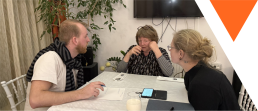
With eyes closed, a participant locates areas of bodily tension or numbness and assigns each a shape, a colour, and a name, while the group symbolically “holds” these representations. The participant voices the stories carried in each area, then reframes them — what strength, insight, or resource lives inside the difficulty? — before releasing the symbols.

THEME
Resilience, Transformation, and Emotional Integration

COMPLEXITY
Advanced

GROUP SIZE
8–15 participants

AGE
16 +

TIME
60–90 minutes
Objectives
- To reframe personal challenges as potential sources of strength and resilience
- To develop body awareness in relation to emotions and physical tension
- To support participants in moving from pain to agency through storytelling and imagination
- To create a safe space for vulnerability and mutual group support
Materials
- Quiet, private space;
- Comfortable floor mats or cushions;
- Optional: paper and pens for written reflection
Overview
With eyes closed, a participant identifies areas of bodily tension or numbness and assigns each a shape, colour, and name. The group supports by symbolically “holding” these representations. The participant then voices the stories carried in these areas, before reframing them: what strength, insight, or resource lives within the wound? Finally, the symbolic shapes are released. Drawing on therapeutic frameworks including Internal Family Systems (IFS), somatic awareness, and narrative therapy, the exercise integrates imagination, embodied storytelling, and transformation.
Step-by-Step Instructions:
- Preparation and consent (10 min): Establish a clear, safe container for the exercise. Explain the process step by step. Emphasise voluntary participation — participants may choose to observe or stop at any time without explanation. Obtain explicit verbal consent from anyone who will work in the centre.
- Body scan and mapping (15 min): Invite participants to close their eyes and conduct a slow scan from head to feet, noticing areas of tension, heaviness, numbness, or discomfort. Each area is given a shape, colour, texture, and a short name. Participants may work with one or two areas at most.
- Voicing the wound (15 min): The participant who has volunteered to work shares the story of their area — not an explanation, but the felt sense: where does it come from? What has it carried? What has it protected? The group listens in silence.
- Finding the gold (15 min): The facilitator gently invites the participant to explore: what strength, wisdom, or resource has this wound also created? What has it taught you? What has it made possible? This is not forced optimism — it is a careful, honest inquiry.
- Group witnessing and release (10 min): The group briefly offers words of witness — not advice, but acknowledgement. The participant then symbolically releases the shape: lets it dissolve, float away, or transform. A brief grounding moment closes the exercise.
- Integration and closure (10 min): Offer quiet individual reflection time. Close the session with a grounding activity (e.g. breathing, gentle movement, a shared gesture).

Debriefing and Evaluation:
Reflection Questions:
- What did it feel like to give your wound a shape or colour?
- Was there a moment of recognition when exploring the gold within it?
- How did it feel to be witnessed by the group?
- What do you want to remember from this experience?
- For evaluation, observe the participant’s engagement with the process, the group’s quality of witnessing, and the facilitator’s ability to hold the space with care.
Tips for Facilitators:
- Only use this activity with groups that have a solid foundation of trust — not suitable for first sessions.
- Move slowly and follow the participant’s pace — do not push towards the reframing phase.
- Have mental health support available, either within the team or accessible after the session.
- Do not attempt this activity without training in trauma-informed facilitation or therapeutic theatre.

Variations:
- Can be done as an individual written reflection without the group witnessing component.
- For less experienced groups, simplify to a body-mapping exercise without the storytelling phase.

Disclaimer:
This activity involves deep psychological and somatic work. It must only be facilitated by practitioners with training in therapeutic theatre, trauma-informed practice, or somatic work. It is not a substitute for therapy. Ensure informed consent, clear boundaries, and access to mental health support. Participants must always retain the right to stop without explanation. This activity should never be used as a first exercise with a new group: begin only after significant safety, trust, and warm-up work has taken place. It should not be offered to participants in acute crises, and facilitators must be able to offer (or refer to) appropriate mental-health support if unexpected reactions arise. If in doubt, choose a gentler variation or skip this method.
Theatre activities
Nothing found.

Contact
Iuliana Adriana PAVEL (project manager)
iuliana.pavel@a4action.ro
A4ACTION – Antim Ivireanu Culture House, Islaz Alley, Ghermănești, Snagov, Ilfov District, Romania, 077170
Co-funded by the European Union. Views and opinions expressed are however those of the author(s) only and do not necessarily reflect those of the European Union or the ANPCDEFP. Neither the European Union nor the ANPCDEFP can be held responsible for them.
The project is conducted by the following organisations: A4ACTION (Romania) – coordinator, Udruga Delta (Croatia), InterAktion (Austria), Asociación Espacio Rojo (Spain) and GAIA Museum Outsider Art (Denmark).


Diversity in the natural world
Diversity in the natural world
In this activity the participants are invited to look at the natural world from a different perspective and discover the connection between plants diversity and migration and that of humans. After collecting the natural materials and discussing about diversity, they will be invited to create botanical prints/paintings with the plants they collected by pressing them on a paper, overlapping them, adding text or extra colours in the process. The process encourages self-expression, intercultural understanding and celebrating diversity.
THEME
Inclusion, self-expression, diversity

COMPLEXITY
Beginner/Intermediate
GROUP SIZE
5-15
participants
AGE
15+
TIME
90-120
min
Step-by-Step Instructions:
- Introduce the theme(10-15 min):
- What can nature teach us about diversity and migration/being different?
- Explain the steps of the workshop, first we would go together for a walk in the park/nature and collect natural elements/materials and then come back and do botanical paintings together
- Emphasize respect for nature—only collect fallen or abundant items.
- Nature walk and discussion (30+ min depending how far is the place you take the participants to)
- Ask the participants to pair up and tell them that they would change their pair for each reflection question, trying to speak with people they didn’t spoken to before
- While they will be walking and talking through the park/forest, they would also look for leaves, flowers that they would later use for their painting
- Give each pair a small bag or basket to collect natural items.
Provide reflection questions to discuss during the walk:
- Look at the plants around you and observe the differences and similarities. What do you observe?
- How do plants grow together even when they are different?
- How can you make someone feel welcome in a new place?
- Have you ever moved from one place to another? What helped you feel welcome?/ If you never moved, what would you do to make someone feel welcome in your hometown/home place?
- Lead the participants back to the workshop room and while everyone is there, ask the participants:
- To share something about the things they collected and why.
- What did you notice about the diversity of plants?
- Can you make a parallel between people and plants you’ve observed today?
 Getting into botanical printing/painting (20-30 min)
- First demonstrate how to do it, would be good to have an example with you as well, looks something like this:
- On a separate piece of paper, you would use the rolling pin with paint over the leaf/flower and then arrange it and press it on your main paper. You can use another clean paper to press the plant
- Invite the participants to try and arrange their plants with the idea of migration, diversity and belonging in mind
- They can also add words or sentences with the markers around the printed plants
- Invite participants to share their artwork and what it represents. (20 min)
Ask:
- What does your print say about you or your journey?
- How do you see diversity in your artwork?
- What did you learn from nature today?
Debriefing and Evaluation:
- What did you notice about the plants you collected? In which attributes were they different or similar?
- Did anything you saw during the walk remind you of people or communities?
- How do you think nature shows us the value of diversity?
- Some plants travel far to grow in new places. How is that similar to people’s experiences?
- What helps a plant grow in a new environment? What helps a person feel at home?
- Have you ever felt like you were “planted” in a new place? What helped you adapt?
- What story does your botanical print tell?
- Did you choose certain plants for a reason? What do they represent to you?
- How did it feel to create something using natural materials?
Tips for Facilitators:
- Offer support with pressing or handling materials.
- Use visual aids and simple language.
- Encourage ethical collection: only gather fallen or abundant materials.
- Be mindful of cultural or spiritual connections participants may have with nature or specific plants.
- Avoid using plants that may cause allergic reactions or skin irritation.
Variations and adjustments:
- Ensure the walk route is accessible to all participants. Offer alternatives (e.g., collecting materials beforehand) for those with mobility challenges.
- Provide alternatives for participants with limited mobility (e.g., pre-collected items).
- The topic could be changed to diversity of people/skills/abilities, whatever it fits better to your group.
Disclaimer:
- Discussions about migration may evoke personal or painful memories. Allow participants to share only what they feel comfortable with.
- Avoid asking direct personal questions—use metaphors (like plant migration) to create emotional distance and safety.
Visual arts activities
Nothing found.
Contact
Iuliana Adriana PAVEL (project manager)
iuliana.pavel@a4action.ro
A4ACTION – Antim Ivireanu Culture House, Islaz Alley, Ghermănești, Snagov, Ilfov District, Romania, 077170
Co-funded by the European Union. Views and opinions expressed are however those of the author(s) only and do not necessarily reflect those of the European Union or the ANPCDEFP. Neither the European Union nor the ANPCDEFP can be held responsible for them.
The project is conducted by the following organisations: A4ACTION (Romania) – coordinator, Udruga Delta (Croatia), InterAktion (Austria), Asociación Espacio Rojo (Spain) and GAIA Museum Outsider Art (Denmark).

World café
World café
This methodology is a simple and flexible format for hosting large group dialogue, and it can be modified to meet a wide variety of needs. Specific context, numbers, purpose, location and other circumstances are factored into the organisation. The discussion in small groups allows each participant to have his or her opinion heard. Also, the facilitator leads and adapts the discussion to the specifics of the group.
THEME
Conversation about needs in small groups

COMPLEXITY
Intermediate
Advanced
GROUP SIZE
30-50
participants
AGE
15+
TIME
95-120
min.
Step-by-Step Instructions:
- Welcome and introduction: The host begins with a warm welcome and a short energizer activity. Then, they explain the goals and structure of the session:
“Today, you’ll have the opportunity to discuss various topics (your needs) in small groups. Each group will have a facilitator to guide the conversation. Please share what you feel comfortable with and respect what others have to say.”
The host also introduces the facilitators at each table and clarifies their role. Participants are then divided into small groups. This group division can be gamified to help participants relax and foster group cohesion. - Small-Group Rounds: The space is pre-arranged with tables spread out across the room. Each table will be dedicated to a specific topic (e.g. education, employment, housing) or to one main topic approached from different angles (e.g. feelings, frustrations, experiences, new ideas related to a particular issue).
Each table has a designated facilitator who leads the discussion and asks guiding questions. Facilitators should prepare in advance with a set of questions and, if necessary, do some background research on the topic.
Groups rotate between tables, spending around 15 to 20 minutes at each, depending on group size. Facilitators ask open-ended questions that encourage participants to express their needs and opinions. They actively listen, reflect back, and paraphrase to ensure understanding. Notes are taken throughout and will be shared during the final part of the activity.
Each table also has paper available for participants to write, illustrate, or draw—whichever form of expression feels most natural to them. - Harvest: Facilitators are invited to share insights or other results from the conversations with the rest of the large group.[1] Participants are encouraged to respond with reflections, additions, or comments to enrich the shared conclusions.
- Reflection and evaluation: Evaluation is conducted using a digital tool (e.g. Mentimeter). Questions are prepared in advance, such as:
-
- How did you feel during today’s activity?
- Did you learn something new or gain a new perspective?
- What stood out to you the most from this activity?
- What would you have liked to be different?
Responses are submitted anonymously and projected for group reflection and discussion.
Tips for Facilitators:
- When setting up the space, make sure there’s enough distance between tables to allow for undisturbed conversations.
- When selecting facilitators, it’s helpful to choose individuals who are familiar with the topic and who have strong communication skills, especially for working with young people.
Variations and adjustments:
- If the group is small, participants can rotate through all the tables.
- For larger groups, the number of tables (or discussion rounds) can be limited, and participants can choose which topics they’re most interested in.
Disclaimer:
- For large groups, provide a microphone and reliable sound equipment to ensure that all participants can hear clearly.
[1] The World Café Community Foundation. World Café Method. Retrived April 2025. https://theworldcafe.com/key-concepts-resources/world-cafe-method/.
Needs analysis activities
Nothing found.
Contact
Iuliana Adriana PAVEL (project manager)
iuliana.pavel@a4action.ro
A4ACTION – Antim Ivireanu Culture House, Islaz Alley, Ghermănești, Snagov, Ilfov District, Romania, 077170
Co-funded by the European Union. Views and opinions expressed are however those of the author(s) only and do not necessarily reflect those of the European Union or the ANPCDEFP. Neither the European Union nor the ANPCDEFP can be held responsible for them.
The project is conducted by the following organisations: A4ACTION (Romania) – coordinator, Udruga Delta (Croatia), InterAktion (Austria), Asociación Espacio Rojo (Spain) and GAIA Museum Outsider Art (Denmark).

Needs Barometer
Needs Barometer
The Barometer of Needs is a method that uses movement, physical positioning in space, and group discussion to encourage the expression of opinions, attitudes, and needs—while also promoting respect for differing perspectives. It supports group dialogue that can lead to new insights and points of view.
THEME
Discussion about needs
COMPLEXITY
Intermediate
Advanced
GROUP SIZE
15-20
participants
AGE
15+
TIME
45
min.
Step-by-Step Instructions:
- Introduction (10 min): The session begins with a short energizer to help create a pleasant and relaxed atmosphere.
The facilitator explains the rules of the activity: “When you hear a statement, take a moment to reflect on how much you agree or disagree with it. Then, position yourself in the room according to your opinion:
-
- One side of the room represents ‘I agree,’
- The opposite side represents ‘I disagree,’
- The middle represents ‘Neither agree nor disagree.’”*
Participants are reminded that everyone has the right to express their opinion without offending others and that all viewpoints should be respected.
- Needs Barometer (20 min): The facilitator prepares a series of thought-provoking statements in advance to spark reflection and discussion among young people. Examples include:
-
- Education is equally accessible to everyone.
- Everyone in our city has the same opportunities for a good quality of life.
- I believe anyone can advance in their career if they work hard enough.
After choosing their position in the room, participants are encouraged to share why they chose that spot. Open discussion between participants is facilitated, allowing for different perspectives to emerge and be explored.
- Reflection and evaluation (15 minutes): The session ends with a group reflection. Suggested guiding questions include:
-
- What did you enjoy about this activity?
- Was there anything you didn’t like or would want to change?
- How did you feel during the exercise?
- Did you learn anything new about yourself, others, or your community?
Tips for Facilitators:
- It is important to ensure that the space allows participants to move around freely.
- Place a sign reading “I agree” on one side of the room and “I disagree” on the other to help participants engage more easily in the activity.
- At the beginning, it’s essential to build group cohesion so participants feel safe and comfortable engaging in discussion.
- Prepare statements that are relevant, reflective, and likely to spark discussion. Choose wording that encourages participants to explore and understand different perspectives.
Variations and adjustments:
- Depending on the participants, the activity may involve a simple expression of needs through spatial positioning.
- The facilitator can also guide the group towards a deeper discussion, in order to gain richer insights and a more comprehensive understanding of the topic.
Disclaimer:
- At the beginning of the activity, clearly state that this is a safe and respectful space where everyone can express their needs and opinions. Remind participants of the zero-tolerance policy for hate speech, ensuring that mutual respect is maintained throughout the session.
Needs analysis activities
Nothing found.
Contact
Iuliana Adriana PAVEL (project manager)
iuliana.pavel@a4action.ro
A4ACTION – Antim Ivireanu Culture House, Islaz Alley, Ghermănești, Snagov, Ilfov District, Romania, 077170
Co-funded by the European Union. Views and opinions expressed are however those of the author(s) only and do not necessarily reflect those of the European Union or the ANPCDEFP. Neither the European Union nor the ANPCDEFP can be held responsible for them.
The project is conducted by the following organisations: A4ACTION (Romania) – coordinator, Udruga Delta (Croatia), InterAktion (Austria), Asociación Espacio Rojo (Spain) and GAIA Museum Outsider Art (Denmark).

Photovoice
Photovoice
This method provides participants an opportunity to create photographs as visual representations of personal or community concerns and needs. Presenting the photos and their meaning in group discussion empowers them to reflect on personal and community strengths, create critical dialogue, share knowledge about personal and community issues.
Participants are provided cameras (or they can use mobile or smart phones) to take photos which enables them to record and reflect their needs and concerns through photographic images. Photo discussion allows participants to share and discuss the photos they took for each photo assignment and promote critical dialogue about personal or community strengths, concerns and needs. Participants present their photos during a facilitated discussion.[1]

THEME
Personal and community needs
COMPLEXITY
Intermediate
Advanced
GROUP SIZE
15
participants
AGE
15+
TIME
120
min.
Step-by-Step Instructions:
- Introduction (15 min): To begin, guide participants through a short visualization related to the needs being explored.
For example: “Sit comfortably. If you feel comfortable, close your eyes. Focus on your breathing. Notice how the air enters and leaves your body—just observe the breath.
Now, I invite you to imagine a neighborhood you would love to live in—your ideal neighborhood. Imagine walking through it. Observe what’s happening around you. What sounds do you hear? What smells can you notice? What do you see?
What are the people like in this neighborhood? What are they doing? How do they feel?
Now pause for a moment and notice how you feel in this neighborhood.
I invite you to gently say goodbye to your ideal neighborhood and return your focus to your breath. When you’re ready, open your eyes.”- After the visualization, invite participants to individually think about:
- How does your ideal neighborhood compare to the one you currently live in?
- What are the similarities and differences?
- What would need to change for your current neighborhood to be a better place to live?
- What are some problems or unmet needs in the community that should be addressed?
Their task is to go outside—whether it’s the main street, a town square, near the school, or any other area (there are no specific boundaries)—and take photographs that capture specific problems or needs experienced by the local community, especially those affecting young people.
Each participant selects one to three photos (depending on the time designated for the discussion and/or the number of participants) they would like to present to the group and sends them to the facilitator.
- After the visualization, invite participants to individually think about:
- Taking photos in a local community (45 min): Participants go into the community to take photos on the given topic and send their selected photo(s) to the facilitator. The facilitator uploads the photos to an online platform (e.g., Padlet) and labels each photo with the name of the author. Each participant is expected to send one to three photos to the facilitator or post them directly on the platform.
- Reflection and commenting on photos (45 min): Participants whose photos are shown share their associations and interpretations of the image.
Others are encouraged to reflect on and respond to what is shared, fostering discussion and deeper understanding.- If time allows and there is interest, the group may explore potential next steps to address specific problems identified in the photos.
- Reflection and evaluation (15 min): The following questions can be asked:
-
- What did you enjoy about this activity?
- Was there anything you didn’t enjoy or would like to see done differently?
- How did you feel during the exercises?
- Did you learn something new about yourself, others and your community?
Tips for Facilitators:
- When projecting photos for the group, it’s best to show one photo at a time to ensure everyone knows which image is being discussed.
- Remind the participants about how they can use a scene they photograph in a literal way or as a metaphor.
- Make sure the space allows for open discussion and participants feel safe to share their thoughts.
Variations and adjustments:
- This activity can also be carried out over a longer period of time, allowing young people to collect photographs over several days — for example, objects from their personal lives or their journey to school.
- If there is interest, the collected photos can be turned into a local community exhibition to raise awareness about a specific issue.
Disclaimer:
- It is important to keep in mind that permission is required if people in the local community are photographed in a close-up frame.
Make sure the participants move in a safe way through the neighbourhood, reminding them to be aware of traffic and careful about dangerous places.
[1] (14) Hergenrather, K., Rhodes, S. and Pula, S. (2009). Photovoice as Community-Based Participatory Research: A Qualitative Review. American Journal of Health Behaviour.
Needs analysis activities
Nothing found.
Contact
Iuliana Adriana PAVEL (project manager)
iuliana.pavel@a4action.ro
A4ACTION – Antim Ivireanu Culture House, Islaz Alley, Ghermănești, Snagov, Ilfov District, Romania, 077170
Co-funded by the European Union. Views and opinions expressed are however those of the author(s) only and do not necessarily reflect those of the European Union or the ANPCDEFP. Neither the European Union nor the ANPCDEFP can be held responsible for them.
The project is conducted by the following organisations: A4ACTION (Romania) – coordinator, Udruga Delta (Croatia), InterAktion (Austria), Asociación Espacio Rojo (Spain) and GAIA Museum Outsider Art (Denmark).

Walkshop
Home | Toolbox | M1 Needs analysis | Walkshop
Walkshop
A walkshop is a combination of a walk and a workshop, which can be used as an educational and collaborative method held outdoors, in urban or natural settings. It integrates physical activity with focused intellectual engagement to foster new perspectives and encourage deeper understanding of a topic. The participants discuss the topic while physically moving along a predefined route.
Participants are given a map of the area and a task related to the topic. They have enough time to walk to and through the designated area while thinking together in smaller groups about the task. After the walk, they create together a “fantasy map” of the area they explored through the given task and present it to the other participants. A facilitated discussion is held after each map presentation.
THEME
Personal, group or community needs
COMPLEXITY
Intermediate
Advanced
GROUP SIZE
15-20
participants
AGE
15+
TIME
180
min.
Step-by-Step Instructions:
- Introduction (15 min): Explain the activity to the participants and hand out the maps and tasks, dividing the participants into smaller groups of 4-5 people.
Each group gets a different topic/task and a different area to explore, which is marked on the map. The topics and tasks can be anything important and relevant to your context. For instance, one group’s destination is the neighbourhood in which you are located and the topic is inclusion. By walking the area, they should observe the surroundings though the task and topic, which are explained on a handout paper or sent via a digital platform. Be sure the topic and task are explained clearly and provide some questions to help the group immerse into the topic:- Exploring inclusion in our neighbourhood
Today, you will explore your neighbourhood through the lenses of inclusion.
Inclusion, as best defined, means that the members of an environment or society feel that they are valued, respected, and included regardless of their background or identity. They have the same opportunities as others, and they are not overlooked or excluded. Think about what inclusion means to you. Observe the surrounding through your route considering the following questions:- How does this neighbourhood enhance the inclusion of different people?
- Do you feel included in this surrounding?
- Imagine you are a person moving with a wheelchair or not speaking the local language. Which elements can you observe that support or fail to support your feeling of inclusion?
- What would need to change in this neighborhood in order to create a more inclusive and pleasant environment that celebrates diversity?
- How can we support the idea of inclusion in our daily life?
Fantasy map creation
When you return to the working space, you will create an inclusion fantasy map (a map of your neighbourhood) that illustrates your observations and answers to the questions. Design your map to show how this environment could be improved to support the inclusion of different people. Illustrate what you saw already existing in the area and how you imagine it to be with the proposed improvements.
- Exploring inclusion in our neighbourhood
- Exploring the local community (60 min): Participants go for a walk through the designated area and route, exploring together the given topic and task. They can take notes, photos or just verbally answer the questions and talk about their observations and ideas.
- Creating the fantasy maps (60 min): Participants return to the working space and are given enough time to design the area they’ve explored as a fantasy map. They use a bigger piece of paper (A1, A2 or A3 sizes) and use different drawing materials (pens, colours, collage, even something they’ve collected while walking) to illustrate their observations.
- Presentation and reflection (45 min): Each group presents their fantasy map and explains their observations. Others are encouraged to reflect on and respond to what is shared, fostering discussion and deeper understanding.
After all the groups presented their maps, an overall reflection can be conducted with the following questions:- What did you enjoy about this activity?
- How was the walk – was it pleasant, hard, insightful…?
- How did the task help you see the area with a fresh perspective?
- Did you learn something new about yourself, others and your community?
If time allows and there is interest, the group may explore potential next steps to address specific problems and needs identified through the maps.
Tips for Facilitators:
- Adapt the topics and tasks to your context and your target group.
- If time allows, you can start by a brief discussion about the topic before the walk.
- You can remind the participants to take into account several elements during the walk, like the condition of the walking path, accessibility, aesthetics, safety, microclimate, human scale, the presence of public services and places for social interaction and rest.
- Make sure the space allows for open discussion and participants feel safe to share their thoughts.
Variations and adjustments:
- If you conduct the activity in a small town or village, the groups can have the same designated area with a different topic/task.
- If there is interest, the maps created can be turned into a local community exhibition to raise awareness about a specific issue.
Disclaimer:
- Take into account the weather conditions. Make sure the participants move in a safe way through the neighbourhood, reminding them to be aware of traffic and careful about dangerous places.
Needs analysis activities
Nothing found.
Contact
Iuliana Adriana PAVEL (project manager)
iuliana.pavel@a4action.ro
A4ACTION – Antim Ivireanu Culture House, Islaz Alley, Ghermănești, Snagov, Ilfov District, Romania, 077170
Co-funded by the European Union. Views and opinions expressed are however those of the author(s) only and do not necessarily reflect those of the European Union or the ANPCDEFP. Neither the European Union nor the ANPCDEFP can be held responsible for them.
The project is conducted by the following organisations: A4ACTION (Romania) – coordinator, Udruga Delta (Croatia), InterAktion (Austria), Asociación Espacio Rojo (Spain) and GAIA Museum Outsider Art (Denmark).

Associative cards
Associative cards
Associative cards can be used in many ways, both with individuals and with groups of users. The creative use of the cards has no limits except for the boundaries of the facilitator’s imagination and the goal of a particular activity. They can be used to create a safe environment in which communication skills and the sharing of thoughts, ideas, and emotions with others can be practiced. They encourage communication, creativity, and imagination. By using them, we can reach the intuitive part of a person, which fosters a more authentic expression. Likewise, for some people who find it difficult to express themselves verbally, it will be easier to express themselves through associations.
This method helps establish contact and initiate conversation. Facilitators can gain insight into the needs of young people through the use of associations and projections. It is important that facilitators avoid interpreting the cards for the participant, as this could impose their own associations rather than allowing the participant’s perspective to emerge. It is always and exclusively about needs, associations, stories, metaphors, words, and sentences that the users themselves have offered.[1]
THEME
Expression of needs through associative cards
COMPLEXITY
Intermediate
Advanced
GROUP SIZE
10
participants
AGE
15+
TIME
60
min.
Step-by-Step Instructions:
- Introduction (10 min): Young participants are informed that today they will explore their needs using associative cards:
“Associative cards are a tool that can serve many purposes—such as expressing ideas, opinions, or emotions. Today, we will use them to help you reflect on and share some of your personal needs.” - Visualisation and Associative Cards (10 min): Before the main activity, guide participants through a short visualization to help them connect with their needs:
“Sit comfortably. Feel the ground beneath your feet. Notice the points of contact between your body and the chair or floor. Feel your body. Slowly scan your body from your feet up to the top of your head.
If you notice any tension, try to gently release it, or breathe more deeply into that area.
Now, think about what you need from this workshop. What would you like to learn? What new skills would you like to gain? What kind of atmosphere would you like to experience in the group?
Bring your attention back to your breath, and take a few slow, deep breaths in and out.”
Instructions for the exercise:
Ask participants to choose a card that represents a need they have, or that reminds them of something from the visualization. Encourage them to take their time looking through the cards, but to choose the one that draws them in rather than overthinking. - Reflection on cards (30 min): Participants sit in a circle and reflect on the card they selected. Each person is invited to share their thoughts, but their privacy is respected—If someone does not wish to share their reflection with the group, they can write it down and hand it to the facilitator. It is essential to respect each person’s creativity and interpretation. It is not allowed to correct someone’s association or suggest that their interpretation is “wrong.” Each person’s experience is valid.
- Reflection and evaluation (10 min): The following questions can be asked:
-
- What did you like about this activity?
- Is there something you didn’t like and you’d like to change?
- How did you feel during the exercises?
- How do you feel now after the exercises?
- Did you learn something new about yourself?
Tips for Facilitators:
- Every interpretation of a card is valid and meaningful for the person who chose it.
- Support a safe and inclusive space where participants feel comfortable expressing themselves.
- Allow enough time for each participant to reflect on their needs before sharing.
- Let the group know in advance that each person will have a few minutes to speak, to ensure everyone has time to express themselves.
Variations and adjustments:
- If participants speak different languages, consider using translation tools, visual instructions, or peer support.
- Some participants might find it difficult to openly express needs or emotions, it may be unfamiliar or uncomfortable due to cultural norms. Offer alternatives to sharing aloud: in writing or drawing.
- If working remotely, use digital associative cards (available in apps or online platforms) and a video conferencing tool.
- Participants can keep the card they chose and write a personal letter or journal entry based on it later, deepening the reflection process.
Disclaimer:
- This activity should be used by youth workers or facilitators who know how to create a safe and friendly space for everyone.
[1] (15) Kusturin, S. and Rosandić, A. (2005) Kako kontaktirati. Udruga Igra.
Needs analysis activities
Nothing found.
Contact
Iuliana Adriana PAVEL (project manager)
iuliana.pavel@a4action.ro
A4ACTION – Antim Ivireanu Culture House, Islaz Alley, Ghermănești, Snagov, Ilfov District, Romania, 077170
Co-funded by the European Union. Views and opinions expressed are however those of the author(s) only and do not necessarily reflect those of the European Union or the ANPCDEFP. Neither the European Union nor the ANPCDEFP can be held responsible for them.
The project is conducted by the following organisations: A4ACTION (Romania) – coordinator, Udruga Delta (Croatia), InterAktion (Austria), Asociación Espacio Rojo (Spain) and GAIA Museum Outsider Art (Denmark).

Listening worlds
Listening worlds
This method is focused on developing the sense of listening both as a skill and a concept. Participants get to know each other through music and connect through different tasks involving listening. They introduce themselves with a song of their choice and then engage in group activities that invite them to fine tune their ears and use their voice to make different sounds.
THEME
Inclusion, group cohesion, listening

COMPLEXITY
Beginner
GROUP SIZE
10-15
participants
AGE
13+
TIME
110-125
min.
Step-by-Step Instructions:
- Introduction (10 mins): Explain the purpose of the activity (exploring listening as a form of fostering empathy). Ask the participants what ‘listening’ means to them.
- What’s your soundtrack? (30-45 mins): Each participant introduces him/herself by playing a part of a song that represents them. They have up to 2-3 minutes to explain why they chose this song, in which way it is important for them and so on. It’s important to let the song be played first for some time and then when the person starts talking it gets turned down as a background soundtrack. The facilitator goes first to set the pace.
- Stop ’n’ go (20 mins): Participants walk freely around the room while the facilitator plays music. Whenever the music pauses, they must freeze; when it resumes, they continue moving. After a few rounds, encourage participants to shift from walking to moving more freely or dancing. At this point, they can decide for themselves whether to move or stay still when the music plays or stops—adding up the concentration and listening.
VARIATION: If the group feels comfortable, you can add a task where participants form trios with the people nearest to them when the music stops, placing their hands on each other’s shoulders. At each stop, the facilitator gives a question for them to discuss within their trio. These can range from light and simple (‘The first thing I thought when I woke up this morning was…’ or ‘What was the last concert you attended?’) to more personal reflections (‘One thing I like about myself is…’ or ‘My best friend inspires me because…’). When the round is over, the people in the trio have to turn their backs to each other and when every trio is finished, the music is played again until the next stop with new groups’ combinations.
- The sound of silence (15 mins): The participants form a cluster and are close to each other as much as they are comfortable. If someone is uncomfortable with standing close to the others or gets overwhelmed, they can leave the circle and stand a bit apart. If they want, they can rejoin the circle when they feel like it. They close their eyes, and the facilitator leads them through an exercise of listening. It is pointed out that listening extends beyond simply hearing, it is a method of perception that is both attentive and receptive, seeking what is not readily apparent and valuing uniqueness and diversity. The participants are invited to fine tune their ears and senses through physical and bodily approaches, exploring the sounds and senses that are coming and going. They listen to their own breath and the breathing of others, the sensations of the clothes on their skin, the smells and sounds that might come from close or from far, from within and even outside the room or building. Towards the end, the facilitator encourages them to gradually start to create some sounds like humming and progressively making it louder, they open their eyes and move around the room, continuing to make the collective sound, until they find a collective end.
- Musical shower (20 min) – The facilitator points out that musical showers are very popular and asks the group if they will be willing to make a shower of their own. Everyone chooses a sound they find soothing and try it out as a group, making changes if needed. Then the facilitator asks them to make a close-knit circle (they can hug if comfortable) and asks for volunteers to stand in a circle. They can close their eyes. When they want, they can leave and ask for somebody else to take their place. Keep this up from 5 to 10 minutes.
- Reflection and evaluation (15 min): At the end, participants sit in a circle and briefly reflect on how they feel and how the exercise was for them. The group discusses listening and what it means to them.
Reflection Questions:
-
-
- How did the activities make you feel?
- What did you discover about listening? Did your understanding or perception of listening shift through these activities? How?
- How did it feel to be listened to—or to listen in a different, more intentional way?
-
For evaluation, observe participant engagement and their willingness to share. Collect feedback verbally or via a quick survey.
Tips for Facilitators:
- Create a welcoming and non-judgmental atmosphere.
- Be mindful of participants’ sensitivities and adapt some activities if needed.
- Provide extra support to participants that need it.
Variations and adjustments:
- If participants don’t feel comfortable forming a close-knit circle, the same activity can be conducted with participants standing whenever they feel comfortable in the room.
- If the group is shy or not familiar with each other, you can skip the sound-making part and focus more on listening and the reflective activities.
- If you plan to conduct the workshop with participants who have physical disabilities, provide additional support—such as extra chairs for those who may have difficulty standing.
- Remind the participants that any kind of movement and voice is welcomed.
- If the group struggles with speaking in front of others, allow them to share their reflections in writing or in small groups instead of in the full circle.
- If there are language barriers, allow participants to share songs from their own cultures or in their own language, and ask them to explain their meaning with the help of a facilitator if needed.
- For shorter sessions, choose 2 or 3 parts of the full activity to focus on instead of doing all the steps.
- Use headphones and a shared playlist if the space doesn’t allow playing music out loud.
Music and movement activities
Nothing found.
Contact
Iuliana Adriana PAVEL (project manager)
iuliana.pavel@a4action.ro
A4ACTION – Antim Ivireanu Culture House, Islaz Alley, Ghermănești, Snagov, Ilfov District, Romania, 077170
Co-funded by the European Union. Views and opinions expressed are however those of the author(s) only and do not necessarily reflect those of the European Union or the ANPCDEFP. Neither the European Union nor the ANPCDEFP can be held responsible for them.
The project is conducted by the following organisations: A4ACTION (Romania) – coordinator, Udruga Delta (Croatia), InterAktion (Austria), Asociación Espacio Rojo (Spain) and GAIA Museum Outsider Art (Denmark).

The sound and us
The sound and us
The method involves an exploration of sound and voice that is produced ad hoc as a group. The conductor exercise brings the group together as a choir in which each person finds his/her own sound of choice and produces it collectively, while the music improvisation is a fun way to be creative with everyday objects and explore the sounds they can produce. Emotion radio brings together these previous exercises focusing on the connection of sounds and certain emotions.
THEME
Making music together, exploring sound and voice, expressing emotions
COMPLEXITY
Beginner
GROUP SIZE
10-15
participants
AGE
13+
TIME
90
min.
Step-by-Step Instructions:
- Introduction (5 mins): Explain the purpose of the activity (self-expression through voice, exploring sound and listening together).
- Sound circle (15 min): The group sits or stands in a circle and each person says her/his name and makes a sound. The next person repeats this and makes her/his own sound and so on, until the end of the circle. The task can omit the names if the participants already know each other. The name can be said in a normal tone before making the sound or the task can be to “sing” one’s name. If one can’t vocalise, it’s OK to write the name out and make a sound using the body or objects/instruments in the room.
- The conductor exercise (15 min): Participants should choose their own sound using their voice or body parts, different from the previous exercise (e.g. humming, whistling, singing, babbling, clicking, tongue clicking, clapping). They can try it out while walking around the room, then standing with closed eyes, or sitting down. The facilitator then places the group in the form of a choir and explains the rules of the exercise. The facilitator shows hand movements for starting and stopping the sound, as well as making it louder (raising hand) or quieter (lowering hand). The facilitator “conducts” first and then calls upon another person to try. It is done for around 5 to 10 minutes, with 3 to 4 people conducting respectively.
- Unusual jamming (20 min): The facilitator now invites the participants to find everyday objects in the room, like pencils, cups, papers etc. that can produce a sound. They are divided into two groups and each group organizes their sounds together as a band. They can choose rhythm, volume, and explore them like in a jam session. If needed, the facilitator explains the concept of jamming – freely experimenting with rhythm, volume, and timing to create something together without fixed rules. The groups should listen to each other, explore patterns, and organize their sounds into a short performance. After a bit of “rehearsing”, one group performs with their sound to the other group and vice versa.
- Emotion Radio (20 min): The group forms a circle again. Now the goal is to produce musical motifs that could represent an emotion. First participants can think a bit about what emotions sound like. The facilitator names various emotions (e.g. fear, anger, sadness, joy) and lets the group harmonize for a bit. They can hum, sing, or make sounds using the objects in the room/instruments.
- Reflection and evaluation (15 min): After the exercise, participants sit in a circle and briefly reflect on how they feel and how they experienced the exercise.
Reflection Questions:
-
- How did you like the activities?
- How did you connect to others through sound?
- What did you learn about your emotions by giving them sound?
For evaluation, observe participant engagement and reactions. Collect feedback verbally or via a quick survey.
Tips for Facilitators:
- Create a relaxed atmosphere and remind the participants to let go and have fun.
- Lead by your own example.
Variations and adjustments:
- If some participants are people who have problems with vocalizing, they can use objects/instruments instead of voice.
- For people with hearing impairments, the facilitator can direct them towards feeling the vibrations and body movement to connect with the rhythm and energy of the music.
- The facilitator can bring some simple percussion instruments like the triangle, cymbals, and shakers.
- If there is enough time and resources, some instruments can be assembled from different recycled materials, for example: a paper tube filled with some sand/cobbles and sealed on both sides can become a DIY shaker.
Music and movement activities
Nothing found.
Contact
Iuliana Adriana PAVEL (project manager)
iuliana.pavel@a4action.ro
A4ACTION – Antim Ivireanu Culture House, Islaz Alley, Ghermănești, Snagov, Ilfov District, Romania, 077170
Co-funded by the European Union. Views and opinions expressed are however those of the author(s) only and do not necessarily reflect those of the European Union or the ANPCDEFP. Neither the European Union nor the ANPCDEFP can be held responsible for them.
The project is conducted by the following organisations: A4ACTION (Romania) – coordinator, Udruga Delta (Croatia), InterAktion (Austria), Asociación Espacio Rojo (Spain) and GAIA Museum Outsider Art (Denmark).

Mirror dance
Mirror dance
The method offers a space to explore individual and collective movement. Participants engage in moving and dancing exercises in pairs and trios, with emphasis on improvisation and self-expression. Through simple, yet engaging tasks, the activities develop bodily awareness towards one self and the others using non-verbal language and contact.
THEME
Self-expression through movement, inclusion, empathy
COMPLEXITY
Beginner
GROUP SIZE
15-20
participants
AGE
13+
TIME
90
min.
Step-by-Step Instructions:
- Introduction (5 mins): Explain the purpose of the activity (dance improvisation, self-expression, celebrating diversity).
- Breaking the ice (20 min): Use 2-3 introduction activities (name game, energizer, warming-up) from the additional chapter at the end of the Toolbox, based on your needs.
- Mirror dance (25 min): The facilitator asks the group to walk around the room with different prompts (slow, fast, as the floor is on fire, made of ice etc.). Then, allows them to do a small and gentle individual improvisation dance. When ready, the participants are divided into pairs. Two lines facing each other can be formed with a fun binary question (e.g., “Pineapple on pizza—yes or no?”), so the person you’re facing is your pair. Or the participants can all come together in a close-knit circle, close their eyes and stretch their hands forward, reaching someone’s hands – the person whose hand they’ve reached is their pair.
If the number is uneven, the facilitator can join.
The pairs are asked to look each other in the eyes without talking. Gentle music is played. They try to feel each other’s presence, and while they can laugh, they should really focus on not talking—just looking at each other (2-3 minutes). If they feel comfortable, they can come one step closer, but they need to be mindful of the other person’s comfort. The facilitator emphasizes the importance of consent and paying attention to the other person that you interact with.
Then, they receive instructions for mirroring: one person leads the dance by making a movement, and the other must follow it as if they were a mirror. After a set time, they switch roles and continue with the same instruction (5-7 minutes each). At this point they can start to move around the room. Then, the next task is to make a mirroring contrast. For instance, if the leading person makes a slow movement, the other needs to make it fast, if the lead makes an upward movement, the other person goes down and so on. The goal is to find a contrast or opposite movement of our pair. They switch roles after 5 minutes. In the end, the pairs are given the task of moving together in such a way that the tips of their index fingers are constantly touching (without letting go), if they feel comfortable to do so. They improvise together for 5-7 minutes.
- The doll (25 min): The facilitator begins by breaking the pairs and asking the group to move freely around the space. While they move, the facilitator gives simple prompts such as: “stop,” “go,” “clap,” and “jump.” After a while, the meaning of the commands is reversed—“stop” now means “go,” and vice versa; then, “clap” means “jump,” and “jump” means “clap.” This playful confusion increases focus and engages participants’ attention. Next, the facilitator introduces new movement prompts, such as: “move as if your left elbow is leading,” “move from your right knee,” or “let the top of your head guide your movement.” After a few rounds, the facilitator stops the activity and asks participants to form trios with those nearest to them. In each trio, one person becomes “the doll,” while the other two act as guides, giving nonverbal instructions by gently touching parts of the doll’s body (e.g., elbow, head, knee, arm, back). The doll responds by initiating a movement that starts from the touched point, allowing the motion to unfold naturally from that impulse. After 5–7 minutes, the roles rotate so that each participant has the chance to be the doll.
A simple variation is that one person in the trio is leading the movement, and the others follow, while the roles get switched in rounds, as they feel.
To end the activity, all the trios can move freely, improvising together and moving through the whole space. - Reflection (15 min): The participants sit together in a circle and take time to reflect on the shared experience, discussing how they felt during the activity and what they are taking away from it.
Reflection Questions:
-
- How did moving with each other make you feel? Was it nice, uncomfortable, new…?
- What did you learn about yourself and others through movement?
If there is enough time, it is advised to make a small reflection after each activity.
For evaluation, observe participant engagement and mood, the way they move and react to each other in each activity. Collect feedback verbally, via a quick survey or through associative cards.
Tips for Facilitators:
- Create a welcoming and non-judgmental atmosphere. Remind the participants that any kind of body and movement is welcomed.
- Make sure the participants feel comfortable and provide extra warming up or grounding exercises if needed.
- Be mindful of participants’ sensitivities – avoid forcing anyone to participate/move more than they are comfortable.
- Remind participants that dance is not about the perfect movement, but self-discovery and a special encounter with others through non-verbal bodily communication.
- Provide extra support to participants who might struggle with movement.
Variations and adjustments:
- If you plan to conduct the workshop with participants who have physical disabilities, provide additional support—such as extra chairs for those who may have difficulty standing.
- Allow shy or anxious participants to observe the first few rounds or to join in with smaller movements they feel safe doing. Participation should always be voluntary and respectful of personal comfort.
- For groups uncomfortable with physical contact, offer alternatives such as mirroring at a distance, or doing paired movements side by side rather than face-to-face.
Music and movement activities
Nothing found.
Contact
Iuliana Adriana PAVEL (project manager)
iuliana.pavel@a4action.ro
A4ACTION – Antim Ivireanu Culture House, Islaz Alley, Ghermănești, Snagov, Ilfov District, Romania, 077170
Co-funded by the European Union. Views and opinions expressed are however those of the author(s) only and do not necessarily reflect those of the European Union or the ANPCDEFP. Neither the European Union nor the ANPCDEFP can be held responsible for them.
The project is conducted by the following organisations: A4ACTION (Romania) – coordinator, Udruga Delta (Croatia), InterAktion (Austria), Asociación Espacio Rojo (Spain) and GAIA Museum Outsider Art (Denmark).