


Image Theatre — One statue, three meanings

Billedteater – Én statue, tre betydninger
Deltagerne bruger deres kroppe som “skulptur” til at skabe levende tableauer, der repræsenterer følelser, magtrelationer eller sociale situationer. Uden ord former én person de andres positioner med berøring, hvorefter gruppen undersøger og gradvist forandrer det frosne billede for at udforske undertrykkelse og forestille sig muligheder for forandring.


TEMA
Nonverbal kommunikation og empowerment

SVÆRHEDSGRAD
Begynder til let øvet

GRUPPESTØRRELSE
8-20 deltagere

ALDER
16+

TID
100-120 minutter
Objectives
- Udforske følelser og sociale situationer uden at være afhængig af verbalt sprog.
- Udvikle kropsbevidsthed og færdigheder i nonverbalt udtryk.
- Skabe en tilgængelig teaterform for personer med sproglige barrierer, talevanskeligheder eller autismespektrumforstyrrelser.
- Undersøge magtforhold og undertrykkelse gennem fysiske billeder.
- Omsætte abstrakte begreber til konkrete visuelle fremstillinger.
Materials
- Et stort, åbent rum uden forhindringer og møbler.
- Valgfrit: Enkle stofstykker, stole eller neutrale rekvisitter, der kan understøtte de levende billeder.
- Behageligt tøj, der giver mulighed for fri bevægelse.
Overview
Billedteatret, udviklet af Augusto Boal i begyndelsen af 1970’erne til arbejde på tværs af sprogbarrierer i Peru, bruger kroppen til at skabe levende tableauer, der repræsenterer følelser, situationer eller sociale problemstillinger. Én person fungerer som “billedhugger” og former de andre deltagere (“leret”) ved hjælp af blid berøring og uden ord. Gruppen undersøger og forandrer derefter de frosne billeder for at udforske undertrykkelse og forestille sig forandring gennem et rent fysisk udtryk. Metoden opstod, da Boal havde behov for at arbejde med oprindelige folk, som ikke talte spansk.
Step-by-Step instrukser:
1. Introduktion til aktiviteten (10 minutter)
Forklar, at al kommunikation under aktiviteten udelukkende vil foregå gennem kropssprog – der må ikke bruges ord, mens billederne skabes. Én person er “billedhugger” og former de andre deltagere (“leret”) til et billede ved udelukkende at bruge blid berøring.
Det er meget vigtigt at understrege betydningen af samtykke: Alle, der er “ler”, kan til enhver tid sige nej til at blive berørt eller vælge slet ikke at deltage. Demonstrér, hvordan en blid og respektfuld måde at forme en person på ser ud, sammen med en frivillig. Vis passende berøring af skuldre, arme og hovedets placering, samtidig med at personlige grænser altid respekteres.
2. Opvarmningsaktiviteter (15 minutter)
Til denne del kan facilitatoren vælge relevante øvelser fra det supplerende kapitel sidst i værktøjskassen (f.eks. øvelser i kropsbevidsthed, tillidsøvelser eller arbejde med følelser) for at styrke gruppens samhørighed, nærvær og udtryk.
3. Individuel udforskning af billeder (15 minutter)
Før gruppen skaber fælles “skulpturer”, laver hver deltager sin egen statue, der viser en følelse eller en situation.
Lad deltagerne arbejde sammen to og to, hvor de på skift prøver at være både billedhugger og ler. Det giver tryghed i processen og vænner deltagerne til den fysiske kontakt, inden de går videre til de mere komplekse gruppeøvelser.
4. Virkelighedsbilledet – den nuværende situation (20 minutter)
Vælg en billedhugger – enten en frivillig deltager eller facilitatoren.
Billedhuggeren skaber et billede, der viser den aktuelle virkelighed omkring et problem, som gruppen på forhånd har identificeret sammen (f.eks. eksklusion i skolen, ulighed på arbejdspladsen, kontrol i familien, mobning, fattigdom eller diskrimination). Billedhuggeren former fysisk flere personer til billedet uden at tale.
Når billedet er færdigt, betragter gruppen det frosne tableau i stilhed i 1-2 minutter. Herefter drøftes følgende spørgsmål:
- Hvad ser I i dette billede? Beskriv først objektivt, hvad I ser.
- Hvor ligger magten? Hvem har den, og hvem har den ikke?
- Hvilke relationer eksisterer mellem figurerne?
- Hvilke følelser kommer til udtryk gennem kroppene?
- Hvordan afspejler billedet den virkelighed, vi kender?
5. Idealbilledet – den ønskede fremtid (15 minutter)
Den samme eller en ny billedhugger skaber et billede, der viser den ønskede fremtid – hvordan situationen kunne se ud, hvis undertrykkelsen blev overvundet. Der er ikke tale om en fantasi, men om en mulig og realistisk forandring.
Gruppen betragter billedet og taler om forskellene i forhold til virkelighedsbilledet.
- Hvad er blevet forandret?
- Hvilke nye relationer er opstået?
6. Overgangsbilleder – vejen til forandring (15 minutter)
Nu bliver processen særligt interessant: Hvilke konkrete skridt skal der til for at bevæge sig fra virkelighedsbilledet til idealbilledet?
Gruppen skaber 2-3 mellembilleder, der viser forandringsprocessen. Hvad skal der ske for at bevæge sig fra undertrykkelse til frigørelse? Disse billeder gør forandringen konkret, synlig og lettere at forstå.
7. Dynamisering (10 minutter – valgfrit, men meget virkningsfuldt)
Bring billederne til live ved at lade deltagerne bevæge sig fra virkelighedsbilledet til idealbilledet i ekstrem slowmotion (ca. 0,25x hastighed).
Deltagerne lader deres kroppe gennemleve hele forandringsprocessen og viser gradvist overgangen fra den nuværende situation til den ønskede fremtid.

Debriefing og evaluering
Refleksionsspørgsmål:
- Hvad så og følte du i de forskellige billeder, vi skabte i dag?
- Hvordan oplevede du at skabe eller deltage i billeder som ler?
- Hvad overraskede dig ved at kommunikere uden ord?
- Hvilket kropssprog udtrykker magt? Hvilket kropssprog udtrykker afmagt?
- Hvad lærte du om det emne, vi arbejdede med?
- Til jer, der var billedhuggere: Hvordan var det at forme billedet? Hvilke valg traf I?
- Afslørede det fysiske og nonverbale arbejde noget, som ord ikke kunne udtrykke?
- Hvordan kan vi bevæge os fra virkelighedsbilledet til idealbilledet i det virkelige liv? Hvilke skridt er nødvendige?
Evalueringskriterier:
Vær opmærksom på deltagernes tryghed ved nonverbalt udtryk, deres kreativitet og refleksion i arbejdet med billederne, dybden i deres observationer, evnen til at aflæse og fortolke kropssprog, villigheden til at deltage både som billedhugger og ler, kvaliteten af deres kritiske refleksion over de skabte billeder samt deres respekt for personlige grænser og samtykke gennem hele processen.
Tips til facilitatorer:
- Vis altid først, hvordan man former en person på en nænsom og respektfuld måde, før deltagerne selv prøver.
- Indhent et tydeligt samtykke, inden nogen form for berøring finder sted, og mind deltagerne om, at de til enhver tid kan trække deres samtykke tilbage.
- Begynd med individuelle statuer og øvelser i par, før I går videre til mere komplekse gruppebilleder med flere personer.
- Giv god tid til at betragte billederne – skynd jer ikke videre, men lad dem få lov til at “leve”, før I taler om dem.
- Anerkend alle fortolkninger – billeder rummer mange mulige betydninger, og der findes ikke én rigtig fortolkning.
- Hvis gruppen er utryg ved berøring, eller hvis berøring er problematisk af kulturelle årsager, kan billederne skabes uden fysisk kontakt. Billedhuggeren kan i stedet pege eller give mundtlige eller visuelle anvisninger, hvorefter deltagerne selv indtager de ønskede positioner.
- Tag gerne billeder af tableauerne (med deltagernes samtykke), så de senere kan bruges til refleksion og dokumentation.
- Vær særligt opmærksom på kulturelle normer omkring berøring, køn og personlige grænser.
- Sørg for, at alle kroppe og fysiske forudsætninger bliver mødt med anerkendelse – alle kan skabe stærke og meningsfulde billeder.
- Skab et modigt og trygt rum, hvor sårbarhed er velkommen, samtidig med at klare rammer for sikkerhed og respekt opretholdes.
- Vær opmærksom på tegn på ubehag hos deltagerne, og følg om nødvendigt op med en privat samtale i en pause.

Variationer og tilpasninger:
- Flere billeder af lykke: Hver deltager skaber sit eget individuelle billede af, hvad lykke betyder for dem. Øvelsen synliggør mangfoldigheden af perspektiver.
- Færdiggør billedet: Facilitatoren eller en deltager starter et billede, hvorefter de øvrige deltagere én efter én tilføjer sig selv, indtil billedet føles fuldendt.
- Politimanden i hovedet: Brug billedteater til at udforske indre undertrykkelse ved at synliggøre de kritiske eller undertrykkende stemmer, vi bærer med os.
- Billede og modbillede: Skab to modsatrettede perspektiver eller fortolkninger af den samme situation.
- Kalejdoskop: Vis den samme situation set fra forskellige personers synsvinkel – hvordan ser den ud fra hver enkelt persons position?
- Billede af den fremtid, vi frygter: Udforsk bekymringer og barrierer ved at skabe billeder af det, vi er bange for kan ske.
- Familiebilleder: Udforsk familiedynamikker og relationer gennem levende tableauer.
- Tilføj lyd: Når det frosne billede er skabt, kan hver figur tilføje en lyd eller et enkelt ord, der beskriver deres oplevelse eller rolle.
- Variationer af dynamisering: Bring billederne til live på forskellige måder – afspil dem baglæns, fremad i høj hastighed eller lad bevægelserne gentage sig i en løkke.

Disclaimer:
Fysisk berøring er en central del af den traditionelle metode i billedteater. Det er afgørende, at der indhentes et tydeligt samtykke, inden aktiviteten begynder. Deltagerne skal til enhver tid have mulighed for at sige nej til at være billedhugger, ler eller til at deltage overhovedet – uden pres eller fordømmelse. Ingen må nogensinde tvinges ind i fysisk ubehagelige eller smertefulde positioner. Respekter personlige og kulturelle grænser for berøring, særligt på tværs af køn.
Når der arbejdes med særligt følsomme emner som traumer, vold eller overgreb, er det vigtigt at være forberedt på, at den fysiske iscenesættelse kan vække stærke følelser. Hav derfor en plan for, hvordan deltagerne kan få følelsesmæssig støtte, hvis behovet opstår.
Alternativ tilgang: Hvis berøring ikke er hensigtsmæssig eller opleves som utryg i gruppen, kan man anvende en berøringsfri metode, hvor billedhuggeren giver mundtlige instruktioner eller demonstrerer positionerne, og deltagerne selv indtager dem. Denne tilgang er mindre intens, men stadig værdifuld.
En anden mulighed er at lade deltagerne arbejde sammen i grupper opdelt efter køn, hvis det får dem til at føle sig mere trygge. Det kan skabe et mere sikkert og velkendt rum, som gør det lettere at deltage.
Bemærk: Billedteater kan opleves som mere følelsesmæssigt intenst end en almindelig samtale, fordi kroppen bærer og udtrykker følelser. Gennemfør derfor aktiviteten med stor omsorg, opmærksomhed og respekt for deltagernes grænser.
Theatre activities
Nothing found.

Contact
Iuliana Adriana PAVEL (project manager)
iuliana.pavel@a4action.ro
A4ACTION – Antim Ivireanu Culture House, Islaz Alley, Ghermănești, Snagov, Ilfov District, Romania, 077170
Co-funded by the European Union. Views and opinions expressed are however those of the author(s) only and do not necessarily reflect those of the European Union or the ANPCDEFP. Neither the European Union nor the ANPCDEFP can be held responsible for them.
The project is conducted by the following organisations: A4ACTION (Romania) – coordinator, Udruga Delta (Croatia), InterAktion (Austria), Asociación Espacio Rojo (Spain) and GAIA Museum Outsider Art (Denmark).

Forum Theatre — The anti-model in one minute
Forumteater – Antimodellen på ét minut
Forumteater er en interaktiv metode, hvor deltagerne først ser en kort scene, der skildrer undertrykkelse eller uretfærdighed. Derefter træder de selv ind på scenen som “tilskuer-skuespillere” (spect-actors) for at overtage hovedpersonens rolle og afprøve alternative måder at handle på. Med støtte fra en neutral facilitator (“Jokeren”) udvikler og afprøver gruppen i fællesskab strategier for forandring i et trygt teatralsk rum, før de omsættes til virkelige situationer.
TEMA
Social retfærdighed og konflikthåndtering
SVÆRHEDSGRAD
Let øvet
GRUPPESTØRRELSE
10-12 deltagere + publikum
ALDER
16+ (kan tilpasses yngre, hvis scenarier tilpasses)
TIME
90-120 minutter (grundversion). For en udvidet version, der tillader dybere refleksion: 0p til 150 minutter
Objectives
- At give deltagerne mulighed for at udforske forskellige former for undertrykkelse og afprøve strategier for forandring.
- Udvikle kritisk tænkning og problemløsning gennem teatralske interventioner.
- Opbygge empati og forståelse for forskellige perspektiver.
- Styrke deltagerne til at blive aktive aktører i social forandring.
- Træne fælles problemløsning i et trygt teatralsk rum.
Materials
- Et åbent spilleområde med god plads til publikum.
- Stole arrangeret i en halvcirkel til publikum.
- Valgfrit: Enkle rekvisitter, kostumedele eller scenografiske elementer.
- Tavle eller lignende til at dokumentere indsigter og løsningsforslag.
Overview
Forumteater er en interaktiv form for De Undertryktes Teater, udviklet af Augusto Boal i 1973 under et alfabetiseringsprojekt i Peru. Deltagerne ser først en kort scene, der skildrer undertrykkelse eller uretfærdighed (“antimodellen”). Derefter bliver de “tilskuer-skuespillere” (spect-actors), som kan stoppe handlingen, overtage hovedpersonens rolle og afprøve alternative handlemuligheder.
En facilitator, kaldet “Jokeren”, leder processen på en neutral måde og sikrer, at de forskellige løsningsforslag udforskes realistisk uden at påtvinge gruppen bestemte svar. Metoden opstod, da Boal indså, at publikum ikke blot ønskede at foreslå løsninger, men også selv ville afprøve dem fysisk på scenen.
Step-by-Step instrukser:
0. Forberedelse af gruppen (20-30 minutter – inden sessionen begynder)
Inden sessionen åbnes for hele gruppen, arbejder facilitatoren sammen med deltagerne om forberedelserne. Forklar tydeligt, hvad Forumteater er: Hvad en antimodel er, hvilken rolle Jokeren har, og hvad tilskuer-skuespillere (spect-actors) inviteres til at gøre. Identificér eller bekræft i fællesskab et tema, der tager udgangspunkt i deltagernes egne erfaringer.
En mindre gruppe (4-6 frivillige) udvikler og øver antimodellen med støtte fra facilitatoren, mens resten af gruppen bliver tilskuer-skuespillere. Hvis gruppen er større (10-12 deltagere), kan den deles i to, så hver gruppe udvikler og opfører sin egen teaterscene.
Afsæt tid til en kort prøve og en opvarmning (vælg 2-3 øvelser fra det supplerende kapitel sidst i værktøjskassen, afhængigt af gruppens behov). Når alle kender deres rolle, og scenerne er klar, kan den egentlige session begynde.
1. Introduktion (10 minutter)
Byd publikum velkommen (det kan både være unge, der ikke deltager i forestillingen, og medlemmer af lokalsamfundet), og introducér konceptet bag Forumteater.
Forklar, at de skal se en scene, hvor en person udsættes for undertrykkelse eller uretfærdighed. Efter den første gennemspilning kan publikum gribe ind ved at råbe “STOP!”, gå ind på scenen og afprøve andre handlemuligheder.
Understreg, at der ikke findes nogen magiske løsninger. Formålet er i fællesskab at undersøge realistiske muligheder for forandring. Jokeren leder processen, men giver ikke svarene. Arbejdet bygger på fælles refleksion, kreativ afprøvning og gruppens samlede erfaringer.
Roller i Forumteater
Jokeren (facilitatoren)
Jokeren leder Forumteater-processen. Vedkommende forklarer reglerne, opmuntrer publikum til at deltage og sørger for, at dialogen forløber konstruktivt og respektfuldt. Jokeren kommer ikke med løsninger, men hjælper gruppen med at undersøge forskellige muligheder.
Hovedpersonen (protagonisten)
Hovedpersonen er den karakter, der oplever undertrykkelse. Vedkommende ønsker at opnå noget, men bliver hindret af personer, systemer eller sociale normer. Historien kredser om denne kamp.
Vigtigt: Tilskuer-skuespillere må gerne overtage hovedpersonens rolle, men de må ikke ændre karakterens personlighed eller grundlæggende motivation.
Undertrykkeren (eller undertrykkerne)
Undertrykkerne er de karakterer, der opretholder eller forstærker undertrykkelsen. De kan handle bevidst eller ubevidst og repræsenterer ofte magtstrukturer såsom autoritetspersoner, institutioner eller sociale normer.
Vigtigt: Tilskuer-skuespillere må ikke overtage undertrykkerens rolle under interventionerne.
Skuespillerne
Skuespillerne spiller den oprindelige scene og gentager den flere gange. De reagerer realistisk på publikums interventioner og fastholder situationens logik. De skal ikke gøre det let for tilskuerne at “vinde” eller løse konflikten.
Allierede eller neutrale karakterer (valgfrit)
Disse karakterer kan støtte hovedpersonen eller forholde sig neutrale. De synliggør, hvordan undertrykkelse og ulighed fungerer i hverdagen, og giver mulighed for at afprøve forskellige strategier for forandring. De kan blive centrale personer i arbejdet med at undersøge nye handlemuligheder.
Tilskuer-skuespillere (spect-actors)
Publikum er ikke passive tilskuere. De inviteres til at stoppe forestillingen, overtage hovedpersonens rolle og afprøve alternative handlinger for at ændre situationen. På den måde bliver tilskuere til aktive medspillere – tilskuer-skuespillere.
2. Præsentation af antimodellen (20 minutter)
Skuespillerne opfører en forberedt scene, der viser en situation med undertrykkelse eller uretfærdighed. Det kan eksempelvis være diskrimination på arbejdspladsen, mobning, familiekonflikter, uretfærdighed på boligområdet, chikane fra myndigheder, barrierer i uddannelsessystemet eller diskrimination i sundhedsvæsenet.
Scenen skal slutte, uden at undertrykkelsen bliver løst, og uden at hovedpersonen lykkes med at ændre situationen.
Scenen bør være realistisk, genkendelig for deltagerne og vare cirka 5-7 minutter.
3. Indledende refleksion – ledet af Jokeren (10 minutter)
Jokeren inviterer gruppen til at analysere scenen ved hjælp af spørgsmål som:
- Hvad skete der i scenen?
- Hvem blev undertrykt?
- Hvem udøvede undertrykkelsen?
- Hvad gjorde det svært for hovedpersonen at ændre situationen?
- Hvilke følelser lagde I mærke til?
- Hvilke magtforhold kom til udtryk?
Denne fælles analyse forbereder deltagerne på de efterfølgende interventioner.
4. Anden gennemspilning med publikums interventioner (40 minutter)
Scenen spilles igen fra begyndelsen.
Jokeren opfordrer tilskuer-skuespillerne til når som helst at råbe “STOP!”, træde ind på scenen og overtage hovedpersonens rolle for at afprøve en anden måde at handle på.
Hvis publikum tøver, kan Jokeren selv tage initiativ til det første “STOP!” for at vise, hvordan processen fungerer og gøre det lettere for andre at deltage.
Grundlæggende regler
- Tilskuer-skuespillere må kun overtage den undertrykte karakter eller en neutral karakter – aldrig undertrykkeren. (Vi kan ændre vores egne handlinger, men vi kan ikke tvinge andre til at forandre sig.)
- Skuespillerne bliver i deres roller og yder realistisk modstand. Der findes ingen lette sejre.
- Jokeren afbryder interventioner, der bygger på urealistiske eller “magiske” løsninger (ingen superhelte, der redder situationen!).
- Flere deltagere opfordres til at afprøve forskellige strategier.
- Efter hver intervention (3-5 minutter) drøftes kort:
- Hvad virkede?
- Hvad virkede ikke?
- Hvorfor?
- Hvad kunne der ske bagefter?
- Opfordr deltagerne til at bygge videre på de idéer og interventioner, der allerede er blevet afprøvet.
Debriefing og evaluering
Refleksionsspørgsmål
- Hvilke strategier fungerede bedst under interventionerne? Hvilke fungerede ikke? Hvorfor?
- Hvordan oplevede du at gribe ind og stå på scenen for at forsøge at skabe forandring?
- Hvilke situationer fra virkeligheden minder denne historie om?
- Hvilke barrierer står i vejen for at ændre den virkelighed, vi så i scenen?
- Hvilken støtte, hvilke ressourcer eller hvilken form for solidaritet ville være nødvendig for at skabe forandring?
- Hvad overraskede dig under interventionerne?
- Hvordan kan vi tage det, vi har øvet her, med ud i virkeligheden?
- Hvad lærte denne proces dig om fælles handling sammenlignet med den enkelte helts indsats?
Evalueringskriterier
Observer og vurder deltagernes engagement og villighed til at gribe ind, kvaliteten og realismen i de foreslåede interventioner, dybden i deres refleksioner over magtforhold, deres evne til at analysere, hvorfor bestemte strategier virker eller ikke virker, udviklingen af deres selvtillid gennem forløbet, gruppens evne til at bygge videre på hinandens idéer samt deres forståelse af forskellen mellem individuelle løsninger og løsninger, der adresserer de bagvedliggende strukturer.
Tips til facilitatorer
- Vælg scenarier, der tager udgangspunkt i deltagernes egne erfaringer – autenticitet er afgørende.
- Hold den indledende antimodel kort (maksimalt 5-7 minutter), så energien og engagementet bevares.
- Jokeren skal forholde sig oprigtigt neutral – modstå fristelsen til at præsentere dine egne løsninger eller holdninger.
- Opfordr skuespillerne til at yde realistisk modstand og blive i deres roller frem for at give efter for let.
- Skab plads til de mere stille deltagere – invitér dem gerne til at deltage, men uden at lægge pres på dem.
- Hvis en intervention tydeligvis ikke fungerer, kan Jokeren sætte scenen på pause og spørge gruppen:
- Hvad sker der her?
- Hvorfor virker denne strategi ikke?
- Hvad er den egentlige forhindring?
- Dokumentér interventioner, idéer og indsigter på en flipover eller et whiteboard, så de senere kan bruges til refleksion og handlingsplanlægning (se Lovgivende Teater under Variationer).
- Skab et psykologisk trygt rum, inden arbejdet begynder. Deltagerne skal vide, at de altid kan vælge blot at observere.
- Overvej i senere sessioner at lade deltagerne udvikle deres egne antimodeller med udgangspunkt i deres egne oplevelser.
- Vær forberedt på følelsesmæssige reaktioner – undertrykkelse er en reel og ofte personlig erfaring.
- Når det er relevant, så knyt Forumteater sammen med konkrete strategier for organisering og handling i virkeligheden.
Variationer og tilpasninger
- Temaspecifikt Forumteater: Dedikér hele sessionen til én bestemt problemstilling, f.eks. gruppepres, diskrimination på arbejdspladsen, familiekonflikter eller retten til bolig.
- Forumteater i lokalsamfundet: Invitér medlemmer af lokalsamfundet til at overvære forestillingen og deltage aktivt – ikke kun den faste deltagergruppe.
- Lovgivende Teater: Tag de mest lovende løsningsforslag fra Forumteater med videre til beslutningstagere og politikere (se den særskilte aktivitet om Lovgivende Teater).
- Scener skabt af unge: Når deltagerne har lært metoden, udvikler de selv antimodeller med udgangspunkt i deres egne oplevelser.
- Forumteater med flere scener: Præsenter flere korte scener i samme session med beslægtede temaer, så deltagerne kan sammenligne forskellige situationer og handlemuligheder.
- Forumteater med professionelle skuespillere: Kombinér professionelle skuespillere med deltagere fra lokalsamfundet for at skabe mere gennemarbejdede forestillinger.
- Forumteatrets regnbue: Brug Forumteater til ikke kun at undersøge ydre former for undertrykkelse, men også indre konflikter, dilemmaer og modsætninger.
Disclaimer:
Nogle af de emner, der udforskes i Forumteater, kan vække svære følelser eller traumatiske minder. Etabler tydelige tryghedsrammer og fælles aftaler i begyndelsen af enhver session. Alle deltagere har altid ret til blot at observere frem for at deltage aktivt. Sørg for grundig debriefing efter sessioner, der omhandler følsomme emner som vold, diskrimination eller overgreb. Vær forberedt på at tilbyde følelsesmæssig støtte eller henvise til professionel hjælp, hvis deltagere bliver påvirkede. Sørg for, at rummet er præget af fortrolighed og respekt – det, der deles i Forumteater, bør blive i rummet, medmindre deltagerne selv vælger at handle offentligt på baggrund af det. Jokeren/facilitatoren bør have træning i faciliteringsteknikker og gerne også viden om traumebevidst praksis.
Husk, at Forumteater kan bringe smerte og virkelige konflikter frem i lyset – mød derfor deltagernes erfaringer med omsorg, respekt og opmærksomhed.
Theatre activities
Nothing found.
Contact
Iuliana Adriana PAVEL (project manager)
iuliana.pavel@a4action.ro
A4ACTION – Antim Ivireanu Culture House, Islaz Alley, Ghermănești, Snagov, Ilfov District, Romania, 077170
Co-funded by the European Union. Views and opinions expressed are however those of the author(s) only and do not necessarily reflect those of the European Union or the ANPCDEFP. Neither the European Union nor the ANPCDEFP can be held responsible for them.
The project is conducted by the following organisations: A4ACTION (Romania) – coordinator, Udruga Delta (Croatia), InterAktion (Austria), Asociación Espacio Rojo (Spain) and GAIA Museum Outsider Art (Denmark).

Improvisation Theatre — “Yes, and…”
Improvisationsteater – "Ja, og..."
Gennem en række strukturerede lege og øvelser skaber deltagerne spontant scener, karakterer og historier – uden manuskript, forberedelse eller et på forhånd fastlagt “rigtigt” svar. Metoden opbygger tillid, hurtig tænkning og samarbejdsevner ved at træne deltagerne i at acceptere deres medspilleres idéer og reagere i øjeblikket.

TEMA
Spontanitet, kreativitet, tillid
SVÆRHEDSGRAD
Begynder til øvet (kan tilpasses niveau)
GRUPPESTØRRELSE
8-25 deltagere
AGE
16+
TID
60-90 minutter
Objectives
- Styrke selvtillid og spontanitet.
- Udvikle aktiv lytning og evner til teamwork.
- Fremme kreativitet og hurtig tænkning.
- Skabe et støttende miljø, hvor det er trygt at tage chancer.
- Træne en “Ja, og…”-tankegang i livet.
Materials
- Et åbent rum med ryddet gulvplads.
- Valgfrit: Enkle rekvisitter, stole eller tørklæder.
- Valgfrit: Kort med forslag til scenarier eller situationer.
- Valgfrit: Musikafspiller.
Overview
Improvisation handler om at skabe scener, karakterer og historier spontant uden manuskript. Improvisationens principper bygger på Viola Spolins improvisationslege og Keith Johnstones begreber om status og spontanitet. Improvisation styrker tillid, kreativitet og samarbejde gennem strukturerede lege og øvelser.
Step-by-Step Instructions:
1. Introduktion (10 minutter)
Introducér improvisationens gyldne regler: Acceptér det, din partner tilbyder (“Ja”), og byg derefter videre på det (“og…”). I stedet for at blokere idéer eller sige nej, tilføjer man noget nyt, så scenen fortsætter og forbliver samarbejdende.
Understreg vigtigheden af at få sin medspiller til at fremstå godt ved at tilbyde støtte og samarbejde. Forklar, at der i improvisation ikke findes fejl – kun muligheder – og at alt kan bruges kreativt. Fremhæv betydningen af at engagere sig fuldt ud, da en halvhjertet deltagelse begrænser aktivitetens energi og glæde.
Styrk idéen om, at gruppen lærer sammen, støtter hinanden, og at det at opleve fejl og usikkerhed er en værdifuld del af processen.
Du kan også opsummere principperne i en enkel liste til deltagerne:
- Sig: “Ja, og…”
- Støt din partner og få dem til at fremstå godt.
- Der findes ingen fejl – kun muligheder.
- Vær nærværende og engager dig fuldt ud.
- Lyt og reager – planlæg ikke på forhånd.
- Nyd processen og tør tage chancer.
2. Opvarmningslege (20 minutter)
Til opvarmningen kan facilitatoren vælge relevante øvelser fra det supplerende kapitel sidst i værktøjskassen. Vælg aktiviteter, der understøtter fokus, kontakt og gruppens energi, afhængigt af gruppens behov.
3. Hovedaktiviteter (vælg efter gruppens niveau)
Begynderøvelser (20-30 minutter)
“En-ords-historie”:
Deltagerne står eller sidder i en cirkel. Sammen skaber de en historie ved at sige ét ord ad gangen og gå rundt i cirklen. Hver person tilføjer kun ét ord, når det er deres tur.
Målet er at skabe en sammenhængende historie samtidig med, at deltagerne træner aktiv lytning, nærvær og evnen til at acceptere andres bidrag (“Ja, og…”). Opfordr deltagerne til ikke at overtænke, men i stedet holde historien i gang.
“Freeze Tag”:
To deltagere begynder at improvisere en kort scene. På et hvilket som helst tidspunkt kan en person fra publikum råbe “Frys!”, hvorefter de to skuespillere skal stoppe præcis i deres positioner.
Den nye person prikker en af skuespillerne på skulderen, overtager deres plads, beholder den samme fysiske position og starter en helt ny scene inspireret af denne kropsstilling.
Øvelsen hjælper deltagerne med at tænke kreativt og reagere hurtigt.
“Dirigeret historie”:
Facilitatoren fungerer som en dirigent og peger på forskellige deltagere, som herefter fortsætter historien. Deltagerne må kun tale, når facilitatoren peger på dem, og skal stoppe, når dirigenten går videre.
Øvelsen træner fokus, hurtig tænkning og samarbejde, fordi historien skabes i fællesskab på en uforudsigelig måde.
“Følelsesgentagelse”:
To eller flere deltagere improviserer en enkel scene. Efter kort tid stopper facilitatoren dem og beder dem spille den samme scene igen, men med en anden følelse (f.eks. glæde, vrede, frygt eller begejstring).
Situationen forbliver den samme, men den følelsesmæssige tone ændrer sig. Øvelsen hjælper deltagerne med at undersøge, hvordan følelser påvirker kommunikation og adfærd.
Øvelser på mellemniveau (20-30 minutter)
Introducér “Party Quirks”, hvor én deltager er vært for en fest, og gæsterne ankommer med hemmelige karaktertræk eller adfærdsmønstre, som værten skal gætte.
Lav “Slide Show”, hvor deltagerne skaber en historie ud fra opdigtede feriebilleder. Én person fortæller historien, mens de andre skaber billederne med deres kroppe.
Brug “Ekspertpanel”, hvor deltagerne spiller eksperter, der besvarer publikums spørgsmål om opdigtede emner.
Prøv “Karakterbytning”, hvor to karakterer i en scene gradvist overtager hinandens personligheder.
Inddrag rekvisitter, hvor deltagerne skal forvandle en tilfældig genstand til så mange forskellige ting som muligt.
Avancerede øvelser (20-30 minutter)
Facilitér lang improvisation, hvor deltagerne udvikler en længere improviseret historie på 10-15 minutter ud fra én enkelt idé eller inspiration.
Introducér “Harold”, en struktureret langform-øvelse, hvor gentagende temaer og referencer bruges gennem historien.
Brug “Monolog-scene”, hvor én deltager fortæller en sand personlig historie, og de andre skaber improviserede scener inspireret af fortællingen.
Udforsk statuslege, hvor fokus er på magtdynamikker gennem karakterer med høj eller lav status.
4. Nedkøling og refleksion (10 minutter)
Afslut sessionen med en rolig nedkølingsøvelse efterfulgt af en fælles refleksion.
Opfordr deltagerne til at dele:
- Hvordan de har det.
- Hvad de har lært.
- Hvad de fandt udfordrende.
- Hvad de nød ved aktiviteten.
Debriefing og evaluering
Refleksionsspørgsmål:
- Hvad var udfordrende ved princippet “Ja, og…”?
- Hvornår følte du dig mest kreativ? Hvornår følte du dig mest fastlåst?
- Hvordan hjalp gruppens støtte dig?
- Hvad overraskede dig?
- Hvordan hænger improvisation sammen med virkelige situationer?
- Hvad opdagede du om dig selv?
- Hvordan kan vi bruge “Ja, og…”-tilgangen uden for teatret?
Evaluering:
Observer udviklingen i deltagernes spontanitet, evnen til at lytte, villigheden til at tage chancer, støtten til andre deltagere, kreativiteten samt udviklingen af selvtillid.
Tips til facilitatorer:
- Start enkelt og øg gradvist kompleksiteten.
- Fejr fejl som muligheder for læring.
- Giv løbende støtte og vejledning under øvelserne uden at stoppe handlingen.
- Hold energien høj og stemningen positiv.
- Hvis en scene går i stå, så afslut den og start forfra med en ny tilgang.
- Fokuser på processen frem for kvaliteten af den endelige præstation.
- Tilpas sværhedsgraden efter gruppens niveau af tryghed og selvtillid.
- Invitér de mere stille deltagere til at deltage uden at presse dem.
- Vis selv sårbarhed og legende tilgang som facilitator.
- Fremhæv konkrete gode valg og handlinger, du observerer hos deltagerne.
Variationer og tilpasninger:
- Musikalsk improvisation: Tilføj spontant sange til scenerne.
- Rekvisit-improvisation: Brug tilfældige genstande som inspiration.
- Stille improvisation: Ingen ord – kun fysisk udtryk og kropssprog.
- Kulturel improvisation: Udforsk forskellige teaterstile og -traditioner.
- Terapeutisk improvisation: Brug improvisation til følelsesmæssigt udtryk og konfliktløsning.
- Genreimprovisation: Arbejd med forskellige genrer som gyser, romantik eller science fiction.
- Konkurrencebaseret improvisation: Brug formatet fra Theatresports med hold, der improviserer mod hinanden.
Disclaimer:
Improvisation kan føles sårbart, især i begyndelsen. Etabler tydelige grænser for indholdet og undgå upassende materiale. Pres aldrig deltagere, der tøver – giv dem mulighed for blot at observere. Nogle mennesker har brug for tid til at føle sig trygge og varme op. Hvis nogen føler sig utilpasse, kan de vælge at se på, komme med idéer eller tage mindre eksponerende roller.Respektér forskellige niveauer af tryghed i forhold til spontanitet og fysisk udtryk.
Theatre activities
Nothing found.
Contact
Iuliana Adriana PAVEL (project manager)
iuliana.pavel@a4action.ro
A4ACTION – Antim Ivireanu Culture House, Islaz Alley, Ghermănești, Snagov, Ilfov District, Romania, 077170
Co-funded by the European Union. Views and opinions expressed are however those of the author(s) only and do not necessarily reflect those of the European Union or the ANPCDEFP. Neither the European Union nor the ANPCDEFP can be held responsible for them.
The project is conducted by the following organisations: A4ACTION (Romania) – coordinator, Udruga Delta (Croatia), InterAktion (Austria), Asociación Espacio Rojo (Spain) and GAIA Museum Outsider Art (Denmark).

Shadow Theatre — Silhouette stories
Skyggeteater – Silhuethistorier
Deltagerne fremstiller enkle silhuetfigurer og opfører korte fortællinger bag et oplyst, gennemsigtigt lærred, hvor skygger, bevægelse og lyd formidler historien. Formen giver plads til deltagere, som ikke føler sig trygge ved at være synlige på scenen, og lader fantasi og stemme være de bærende elementer.
TEMA
Historiefortælling gennem lys og skygger
SVÆRHEDSGRAD
Begynder til let øvet
GRUPPESTØRRELSE
5-20 deltagere
ALDER
16+
TID
2-3 timer (eller spredt udover flere gange)
Objectives
- Udvikle fortælleevner og narrative kompetencer.
- Udforske visuel og kropslig kreativitet.
- Styrke samarbejde og teamwork.
- Skabe en tilgængelig scenekunstform for mennesker med forskellige forudsætninger og evner.
- Skabe forbindelse til gamle kulturelle traditioner.
Materials
- Et hvidt lagen eller et gennemsigtigt lærred, spændt stramt ud.
- En lyskilde, f.eks. en overheadprojektor, lampe eller lommelygte.
- Pap, sort papir eller genbrugsmaterialer.
- Saks, tape, lim, ispinde eller ståltråd.
- Tuscher og andre tegneredskaber.
Overview
Skyggeteater bruger lys, et lærred og silhuetter til at fortælle historier. Deltagerne fremstiller skyggefigurer og opfører fortællinger bag et gennemsigtigt lærred, hvor historierne bliver synlige gennem skyggerne. Denne ældgamle kunstform har sine rødder i Kina og Indien for mere end 2.000 år siden. Den er tilgængelig, kreativ og magisk.
Step-by-Step instrukser:
1. Introduktion (15 minutter)
Introducér skyggeteatrets historie. Forklar, at kunstformen opstod i Kina og Indien for mere end 2.000 år siden, spredte sig langs Silkevejen og siden blev en del af kulturtraditioner mange steder i verden.
Præsenter de grundlæggende principper bag skyggeteater: en lyskilde, et objekt og et lærred. Demonstrér et par enkle håndskygger. Understreg, at historiefortællingen primært formidles gennem former og bevægelser frem for ord.
2. Opvarmning (20 minutter)
Til denne del kan facilitatoren vælge relevante skyggebaserede øvelser fra det supplerende kapitel sidst i værktøjskassen (f.eks. udforskning af skygger, eksperimenter med størrelse, gættelege med skyggeformer eller fælles skyggekompositioner). Formålet er at hjælpe deltagerne med at forstå de grundlæggende principper bag skygger og samtidig udvikle deres kreativitet og samspil i gruppen.
3. Session 1: Fremstilling af figurer (60-90 minutter)
Vælg eller skab en historie sammen med deltagerne. Det kan være et folkeeventyr, en personlig oplevelse eller en original fortælling udviklet af gruppen.
Opfordr deltagerne til at designe enkle figurer med tydelige og let genkendelige silhuetter. Tegn figurerne på pap eller sort papir, og klip dem forsigtigt ud. Tilbyd hjælp, hvor det er nødvendigt.
Hvis det ønskes, kan figurerne forsynes med bevægelige dele, f.eks. arme eller ben, så de bliver mere udtryksfulde. Fastgør figurerne til ispinde eller ståltråd, og afprøv dem bag lærredet. Giv tid til justeringer undervejs.
Tilføj eventuelt enkle detaljer med tuscher, men bevar fokus på klare og let aflæselige silhuetter.
Session 2: Udvikling af historien og prøve (60 minutter)
Hjælp gruppen med at opbygge historien ved tydeligt at definere en begyndelse, en midte og en afslutning.
Øv manipulationen af figurerne med fokus på rolige og koordinerede bevægelser. Tilføj fortællerstemme, dialog eller musik for at styrke forestillingen.
Eksperimentér med forskellige skyggeeffekter, f.eks. lag på lag, ændringer i størrelse samt ind- og udgange. Øv overgange mellem scenerne, og fordel tydelige roller i gruppen, f.eks. dukkeførere, fortællere og ansvarlige for lydeffekter.
Støt gruppen i at identificere og løse tekniske udfordringer, såsom justering af lyset eller figurer, der vikler sig ind i hinanden.
Session 3: Forestilling (30-45 minutter)
Opsæt lærred og belysning, så skyggerne fremstår tydelige. Placer udøverne bag lærredet og publikum foran.
Opfør skyggeteaterforestillingen med brug af de færdigheder, der er blevet øvet under prøverne.
Efter forestillingen afholdes en kort spørgerunde, hvor publikum kan stille spørgsmål og dele refleksioner om både historien og den kreative proces.
Debriefing og evaluering
Refleksionsspørgsmål
- Hvordan påvirkede skyggerne den måde, I fortalte historien på?
- Hvad var udfordrende ved at opføre forestillingen?
- Hvad gjorde skyggerne interessante eller særligt udtryksfulde?
- Hvordan fungerede samarbejdet i gruppen?
- Hvad ville I gøre anderledes næste gang?
- Hvilke historier er vigtige at fortælle?
Evaluering
Observer deltagernes kreativitet, udviklingen af deres tekniske færdigheder, deres evne til at samarbejde og løse problemer samt deres selvtillid i forbindelse med opførelsen.
Tips til facilitatorer
- Afprøv belysningen inden forestillingen (vinkel, afstand og lysstyrke).
- Mind dukkeførerne om, at publikum ser skyggerne – ikke dem.
- Brug musik eller lydeffekter til at understøtte historien.
- Øv rolige og flydende bevægelser – hakkende bevægelser kan virke forstyrrende.
- Overvej at lade nogle deltagere være fortællere og andre dukkeførere.
- Tænk på sikkerheden: Hold hænderne på afstand af varme lyskilder.
- Vis respekt for skyggeteatrets kulturelle oprindelse og de mange forskellige traditioner, der findes.
- Giv plads til fejl og eksperimenter – de er en vigtig del af læringsprocessen.
- Giv tydelig teknisk vejledning og brug gerne visuelle eksempler (hvis muligt). Forklar, hvor dukkeførerne skal placere sig (f.eks. bag en uigennemsigtig afskærmning eller under lærredet), hvordan silhuetterne styres (med ispinde, ståltråd eller lignende), og fra hvilken vinkel de føres (f.eks. nedefra eller fra siden), så deltagerne får en konkret forståelse af, hvordan opsætningen fungerer i praksis.
Variationer og tilpasninger
- Skygger med overheadprojektor: Brug transparenter, udklip og farvede folieark.
- Kropsskygger: Lad deltagerne skabe forestillingen med deres egne kroppe i stedet for skyggefigurer.
- Blandede medier: Kombinér skyggefigurer, kropsskygger og fundne genstande i den samme forestilling.
- Ordløs historiefortælling: Fortæl historien udelukkende gennem bevægelse og musik – uden tale.
- Kulturel udforskning: Undersøg forskellige skyggeteatertraditioner, f.eks. Wayang Kulit fra Indonesien, Karagözfra Tyrkiet eller kinesisk skyggeteater.
- Farvede skygger: Brug farvede folieark eller transparenter for at skabe farverige skyggeeffekter.
- Flere lærreder: Anvend flere lærreder samtidig for at skabe mere komplekse fortællinger.
Disclaimer:
Hold opsyn med brugen af sakse og andre skærende redskaber. Sørg for, at alle deltagere holder afstand til varme lyskilder, da de kan udgøre en alvorlig risiko for forbrændinger. Sørg også for god ventilation, hvis der anvendes varme lyskilder i længere tid.
Vis respekt for skyggeteatrets kulturelle oprindelse ved at anerkende og værne om denne kunstforms asiatiske arv.
Theatre activities
Nothing found.
Contact
Iuliana Adriana PAVEL (project manager)
iuliana.pavel@a4action.ro
A4ACTION – Antim Ivireanu Culture House, Islaz Alley, Ghermănești, Snagov, Ilfov District, Romania, 077170
Co-funded by the European Union. Views and opinions expressed are however those of the author(s) only and do not necessarily reflect those of the European Union or the ANPCDEFP. Neither the European Union nor the ANPCDEFP can be held responsible for them.
The project is conducted by the following organisations: A4ACTION (Romania) – coordinator, Udruga Delta (Croatia), InterAktion (Austria), Asociación Espacio Rojo (Spain) and GAIA Museum Outsider Art (Denmark).

Labyrinth Theatre
Labyrintteater
Hver deltager bevæger sig alene (eller i meget små grupper) gennem en række omdannede rum – indendørs eller udendørs – hvor de møder skuespillere, genstande og nøje tilrettelagte sanseoplevelser. Forestillingen opleves gennem den enkeltes personlige erfaring frem for fra en scene, hvilket gør hver deltager til hovedperson i sin egen rejse.
TEMA
Sanseudforskning, selvrefleksion, personlig udvikling, perception og meningsskabelse gennem immersivt teater.
SVÆRHEDSGRAD
ØVET
GRUPPESTØRRELSE
10-25 deltagere + publikum
ALDER
16+
TIME
90-120 minutter (kan laves som event og afholdes over flere dage)
Objectives
- At hjælpe deltagerne med at bryde ud af hverdagens vante opfattelser og tankemønstre.
- At styrke sansebevidsthed og kropslig oplevelse.
- At fremme personlig historiefortælling og indre refleksion.
- At udforske temaer som identitet, tillid, valg og forandring.
- At skabe meningsfulde, individuelle læringsoplevelser, der rækker ud over det, der kan forklares med ord.
Materials
- Ikke-teatrale rum (f.eks. lokaler, gange, skove eller udendørs stier).
- Enkel scenografi og symbolske genstande.
- Øjenbind, tekstiler og materialer med forskellige overflader og strukturer.
- Lyskilder (f.eks. dæmpet belysning, stearinlys eller LED-lys).
- Lydelementer (f.eks. stemmer, baggrundslyde eller musik).
Overview
Labyrintteater er en interaktiv, stedsspecifik og kontekstorienteret teaterform, hvor hver deltager oplever forestillingen individuelt. I stedet for en traditionel scene foregår forestillingen i ikke-teatrale rum – indendørs eller udendørs – som er omdannet til en fast rute eller et forløb. Deltagerne bevæger sig én ad gangen eller i meget små grupper gennem en række rum og møder, hvor de interagerer direkte med skuespillere, genstande og sanseindtryk.
Sensory Labyrinth Theatre (SLT) er en særlig videreudvikling af denne metode. Den blev udviklet af Theatr Cynefin(Nordwales, Storbritannien) og er inspireret af den colombianske teaterinstruktør Enrique Vargas’ arbejde fra begyndelsen af 1990’erne. Siden er metoden blevet videreudviklet af en række organisationer rundt om i Europa, herunder BIVEDA og Epsilon III, som har tilpasset den til forskellige kulturelle og pædagogiske sammenhænge.
Step-by-Step instrukser:
1. Fastlæg formål og tema
Bliv enige om labyrintens overordnede tema (f.eks. identitet, tillid, inklusion, livsvalg eller minder). Vælg 1-3 centrale spørgsmål, som deltagerne skal bære med sig gennem oplevelsen.
2. Vælg stedet og planlæg ruten
Vælg et ikke-teatralt rum (indendørs eller udendørs), som kan omdannes til en fast rute. Planlæg en tydelig rækkefølge af “mødepunkter” eller stationer, og beslut i hvilken orden deltagerne skal opleve dem.
3. Design stationerne og møderne
Skab korte scener eller interaktioner til hver station. Beslut, hvad hvert møde skal vække hos deltagerne – f.eks. en følelse, en refleksion, et valg eller et særligt sansefokus. Hold møderne enkle, tydelige og i overensstemmelse med den overordnede dramaturgi.
4. Planlæg sanseelementer og desorienterende virkemidler
Beslut, hvordan sanserne skal påvirkes eller begrænses (ofte ved at reducere synssansen), og hvilke virkemidler der skal anvendes, f.eks. mørke, øjenbind, lydsignaler, genstande med forskellige overflader, dufte eller temperaturforskelle. Sørg for, at sanseoplevelserne understøtter formålet og ikke bliver overvældende.
5. Skab en overgangs- og ventezone
Indret et venteområde, hvor deltagerne kan ankomme og lægge hverdagen bag sig. Skab en tydelig overgang ind i labyrintens univers, f.eks. gennem et lille ritual, en særlig instruktion, en mystisk invitation, en guidet indgang eller en symbolsk genstand.
6. Fordel roller og forbered teamet
Udpeg en facilitator, der har ansvar for tidsstyring og deltagerflow. Fordel facilitatorer eller skuespillere på de enkelte stationer, og afklar deres roller, grænser og den stemning eller følelsesmæssige tone, de skal skabe.
Gennemgå med hele teamet retningslinjer for sikkerhed, samtykke og håndtering af deltagernes reaktioner.
7. Klargør scenografi, rekvisitter, lyd og lys
Indret hver station med enkle, men bevidst valgte materialer. Afprøv lys og lyd, så atmosfæren bliver sammenhængende, og deltagerne kan bevæge sig sikkert.
Brug symbolske genstande, der inviterer til fortolkning frem for at forklare betydningen direkte. For eksempel kan et reb symbolisere begrænsning eller forbindelse, et spejl kan invitere til selvrefleksion, en stol kan blive et symbol på venten eller autoritet, og et stykke stof kan skabe en oplevelse af beskyttelse eller overgang.
Det kan også være hjælpsomt at inddrage konkrete elementer, der guider oplevelsen. En rolle kan f.eks. formidles gennem en enkel handling, en kort replik, en gentagen bevægelse eller en lille interaktion med deltageren.
Overvej desuden forskellige måder at aktivere sanserne på, f.eks. ved at begrænse synet (med øjenbind) eller arbejde med berøring, lyd eller dufte – afhængigt af den stemning, I ønsker at skabe.
8. Gennemfør en fuld prøve
Lav mindst én komplet gennemgang med hele teamet. Kontroller tidsforløb, overgange, instruktionernes tydelighed og den følelsesmæssige intensitet ved hver station.
Vær særligt opmærksom på sikkerheden, f.eks. forhindringer, glatte gulve eller uklare ruter.
9. Forbered deltagerne inden start
Forklar forløbet på en enkel og tydelig måde. Understreg betydningen af samtykke, fortrolighed og deltagernes ret til at holde pause eller stoppe oplevelsen når som helst.
Spørg ind til eventuelle allergier, behov for fysisk tilgængelighed, sansemæssige udfordringer eller andre forhold, der kan have betydning for sikkerheden.
10. Begynd rejsen (én deltager ad gangen)
Send deltagerne ind i labyrinten én ad gangen eller i meget små grupper, typisk med 5-10 minutters mellemrum. Sørg for et jævnt flow, så deltagerne ikke møder hinanden undervejs.
11. Fasthold flow og følelsesmæssig tryghed under oplevelsen
Flowfacilitatoren holder øje med tid og afstand mellem deltagerne. Stationernes facilitatorer eller skuespillere tilpasser mødet til den enkelte deltager, samtidig med at de holder sig inden for de aftalte rammer.
Sørg for, at én person altid er til rådighed som følelsesmæssig støtte, hvis en deltager har brug for en pause eller ønsker at forlade oplevelsen.
12. Afrund oplevelsen og skab en overgang tilbage
Afslut med en tydelig slutstation eller et lille afslutningsritual, som hjælper deltagerne tilbage til hverdagen.
Tilbyd vand, et roligt område og tid til at lande, inden den fælles refleksion begynder.
13. Gennemfør debriefing og refleksion
Facilitér en struktureret refleksion med åbne spørgsmål. Giv deltagerne mulighed for at reflektere på forskellige måder – gennem samtale, skrivning, tegning eller stilhed.
Opfordr dem til kun at dele det, de føler sig trygge ved.
14. Indsaml feedback og dokumentér læring
Indsaml kort skriftlig feedback eller gennemfør en hurtig evalueringsrunde.
Dokumentér facilitatorernes og skuespillernes observationer: Hvad fungerede godt? Hvad var udfordrende? Hvad bør justeres næste gang?
Debriefing og evaluering
Refleksion er en central del af metoden og bør finde sted efter oplevelsen – enten individuelt eller i fællesskab. Deltagerne kan vælge at dele deres oplevelser mundtligt, skrive, tegne eller blot reflektere i stilhed.
Vejledende refleksionsspørgsmål:
- Hvad har du taget med dig fra rejsen?
- Hvad følte du under oplevelsen?
- Var der et øjeblik, som mindede dig om noget fra dit eget liv?
Evalueringen fokuserer på deltagernes engagement, følelsesmæssige bevidsthed og deres evne til at skabe personlig mening ud af oplevelsen – ikke på, hvor meget eller hvor velformuleret de siger.
Tips til facilitatorer
Forbered labyrinten grundigt, og gennemgå hele forløbet på forhånd for at sikre, at deltagerflowet fungerer som planlagt. Forklar processen tydeligt, og understreg, at deltagerne til enhver tid har ret til at holde pause eller stoppe oplevelsen.
Skab en tryg, rolig og støttende atmosfære gennem hele forløbet. Skuespillere og facilitatorer bør være fleksible og reagere på deltagernes behov frem for at følge et fast manuskript.
Sørg for, at der er mulighed for følelsesmæssig støtte både under og efter oplevelsen.
Variationer
- Labyrinter kan gennemføres både indendørs og udendørs.
- Forløbet kan have et mere teatralsk eller et mere sanseorienteret fokus.
- Lydguides kan anvendes som alternativ til levende skuespillere.
- Metoden kan tilpasses museer, kulturhistoriske steder eller undervisningsmiljøer.
- Der kan udvikles kortere versioner med færre stationer og ét centralt tema.
Disclaimer
Labyrintteater kan vække stærke følelsesmæssige reaktioner. Deltagelse skal altid være frivillig. Undgå at arbejde med potentielt belastende eller traumatiske temaer uden grundig forberedelse og de nødvendige støttemuligheder.
Respektér altid deltagernes personlige grænser og følelsesmæssige tryghed.
Theatre activities
Nothing found.
Contact
Iuliana Adriana PAVEL (project manager)
iuliana.pavel@a4action.ro
A4ACTION – Antim Ivireanu Culture House, Islaz Alley, Ghermănești, Snagov, Ilfov District, Romania, 077170
Co-funded by the European Union. Views and opinions expressed are however those of the author(s) only and do not necessarily reflect those of the European Union or the ANPCDEFP. Neither the European Union nor the ANPCDEFP can be held responsible for them.
The project is conducted by the following organisations: A4ACTION (Romania) – coordinator, Udruga Delta (Croatia), InterAktion (Austria), Asociación Espacio Rojo (Spain) and GAIA Museum Outsider Art (Denmark).

Inclusive Storytelling Circle — The Feeler
Inkluderende fortællecirkel – At mærke efter
Deltagerne arbejder i par, hvor de udforsker berøring og lugt – mens én sans midlertidigt er begrænset – for at skabe en karakter og et miljø ud fra deres sanseindtryk. Herefter forhandler de sig frem til en fælles historie, som til sidst omsættes til en tegneserie. Aktiviteten kombinerer fantasi, samarbejde og visuelt udtryk.
TEMA
Sanseudforskning, kreativitet og fælles historiefortælling.
SVÆRHEDSGRAD
Begynder
GRUPPESTØRRELSE
8–30 deltagere, indelt i par.
ALDER
16+
TID
90–120 minutter
Objectives
- At stimulere kreativitet og fantasi gennem sanseudforskning.
- At udvikle færdigheder inden for historiefortælling og opbygning af fortællinger.
- At styrke samarbejde, kommunikation og fælles beslutningstagning i par.
- At øge bevidstheden om, hvordan forskellige sanser påvirker vores opfattelse og meningsdannelse.
- At understøtte selvudtryk gennem visuelle og narrative udtryksformer.
Materials
- Øjenbind (ét pr. par).
- Et udvalg af små genstande med forskellige overflader og teksturer.
- Dufte eller frugter (f.eks. citrusfrugter, krydderier eller urter).
- Papir og kuglepenne til noter.
- Tegnepapir eller skabeloner til tegneserier.
- Tuscher, farveblyanter eller farvekridt.
Overview
Denne storytelling-aktivitet inviterer deltagerne til at udforske deres kreativitet gennem berøring og lugt, mens de arbejder sammen i par. Ved midlertidigt at begrænse én sans ad gangen skaber deltagerne en karakter og et miljø ud fra deres sanseindtryk. Disse elementer kombineres derefter til en fælles fortælling gennem dialog og fælles beslutningstagning. Til sidst omsættes historien til en tegneserie, hvilket giver deltagerne mulighed for at arbejde med visuel historiefortælling og dele deres fortællinger med resten af gruppen. Aktiviteten fremmer samarbejde, fantasi og refleksion i et trygt og engagerende læringsmiljø.
Step-by-Step instrukser:
1. Inddeling af gruppen
Del deltagerne op i par. Forklar, at aktiviteten har fokus på fantasi, sanseudforskning og fælles historiefortælling.
2. Del 1: Berøring og skabelse af en karakter – “Den, der mærker”
Den ene deltager i hvert par får bind for øjnene. Vedkommende får en genstand i hånden og skal udforske den udelukkende gennem berøringssansen. Mens genstanden undersøges, stilles følgende spørgsmål:
- Hvad tror du, den er lavet af?
- Hvilken farve tror du, den har?
- Hvis den var en mand eller en kvinde, hvad ville den så være?
- Giv den et navn.
- Hvor gammel er den?
- Hvad laver den? Hvor arbejder den?
- Hvad brænder den for?
- Hvad kan den ikke lide?
- Tænk på en sætning, som den hele tiden gentager.
- Hvad drømmer den om at opnå?
Den anden deltager, som ikke har bind for øjnene, skriver alle svarene ned på et ark papir.
3. Del 2: Lugtesansen og skabelse af et miljø – “Den, der lugter”
Når alle spørgsmål fra første del er besvaret, bytter deltagerne roller.
Den anden deltager får bind for øjnene og præsenteres for forskellige dufte eller frugter, som vedkommende skal udforske ved hjælp af lugtesansen. På baggrund af duften besvares følgende spørgsmål:
- Kan du lide duften?
- Har du lugtet den før? Hvor?
- Forestil dig, at du befinder dig et sted, der dufter sådan. Hvor er du?
- Hvordan ser stedet ud?
- Hvem er ellers til stede?
- Hvad sker der?
- Hvad laver du?
- Hvordan har du det?
- Hvad kunne du tænke dig at gøre?
- Hvorfor kan du ikke gøre det?
Partneren skriver alle svarene ned på et separat ark papir.
4. Skab en fælles historie
Når begge spørgerunder er gennemført, skal parret sammen skabe en fælles historie med udgangspunkt i de indsamlede svar.
Deltagerne taler sammen og bliver enige om, hvilke elementer de vil tage med, og hvordan karakteren og miljøet hænger sammen. Målet er at skabe én samlet fortælling, der forener begge deltageres perspektiver.
5. Lav en tegneserie og præsentér den
Når historien er færdig, omsætter deltagerne den til en tegneserie. De illustrerer historiens vigtigste øjeblikke med fokus på karakterer, miljø og følelser.
Til sidst præsenterer hvert par deres tegneserie for resten af gruppen og fortæller kort om deres kreative proces.
Debriefing og evaluering
Invitér deltagerne til at reflektere over aktiviteten i en fælles gruppesamtale. Brug f.eks. følgende refleksionsspørgsmål:
- Hvordan var det kun at bruge én sans ad gangen?
- Hvad var udfordrende eller overraskende under aktiviteten?
- Hvordan blev I enige om, hvilke idéer der skulle med i den endelige historie?
- Hvad lærte I om samarbejde og kommunikation?
- Hvordan ændrede arbejdet med at omsætte historien til en tegneserie den måde, I tænkte om fortællingen på?
Opfordr deltagerne til både at dele deres følelsesmæssige oplevelser og de erfaringer, de gjorde sig undervejs.
Evalueringen kan tage udgangspunkt i deltagernes engagement, samarbejde i parrene, kreativitet i historiefortællingen samt deres evne til at omsætte abstrakte idéer til en visuel fortælling.
Tips til facilitatorer
- Gennemgå instruktionerne grundigt, inden aktiviteten begynder – især de dele, hvor deltagerne har bind for øjnene – så alle føler sig trygge og godt tilpas.
- Vælg genstande og dufte, som er neutrale, velkendte og ikke risikerer at vække ubehagelige minder eller reaktioner.
- Vær opmærksom på parrene undervejs, og tilbyd støtte, hvis nogen går i stå eller bliver usikre.
- Opfordr til respektfuld lytning og lige deltagelse i hvert par.
- Sørg for synlige tidsmarkeringer eller løbende tidsbeskeder, så deltagerne let kan bevæge sig fra den ene del af aktiviteten til den næste.
- Understreg, at der ikke findes rigtige eller forkerte svar – fantasi og kreativitet er vigtigere end realisme.
Variationer
Tilpas aktiviteten til yngre deltagere ved at reducere antallet af spørgsmål eller ved kun at arbejde med én sans (berøring eller lugt).
Ved større grupper kan deltagerne arbejde i grupper på tre, hvor den tredje person fungerer som observatør og hjælper med at tage noter og holde øje med tiden.
Du kan også erstatte dufte med lyde eller forskellige overflader og teksturer for at skabe et andet sansemæssigt fokus.
I stedet for at lave en tegneserie kan deltagerne omsætte historien til en kort opførelse, et storyboard eller en illustreret plakat.
Aktiviteten kan også bruges som en skriveøvelse ved at lade deltagerne udvikle den færdige historie til en kort tekst eller et digt.
Disclaimer:
Denne aktivitet indebærer midlertidig begrænsning af sanserne gennem brug af øjenbind. Deltagelse skal altid være frivillig, og deltagerne skal have mulighed for at stoppe når som helst. Undgå at bruge stærke, ukendte eller potentielt allergifremkaldende dufte. Undersøg på forhånd, om deltagerne har allergier eller særlige følsomheder.Sørg for et sikkert miljø ved at holde området frit for forhindringer og ved altid at holde opsyn med deltagere, der har bind for øjnene.
Theatre activities
Nothing found.
Contact
Iuliana Adriana PAVEL (project manager)
iuliana.pavel@a4action.ro
A4ACTION – Antim Ivireanu Culture House, Islaz Alley, Ghermănești, Snagov, Ilfov District, Romania, 077170
Co-funded by the European Union. Views and opinions expressed are however those of the author(s) only and do not necessarily reflect those of the European Union or the ANPCDEFP. Neither the European Union nor the ANPCDEFP can be held responsible for them.
The project is conducted by the following organisations: A4ACTION (Romania) – coordinator, Udruga Delta (Croatia), InterAktion (Austria), Asociación Espacio Rojo (Spain) and GAIA Museum Outsider Art (Denmark).

Dropping the Balloon — Presence, desire, integration
At slippe ballonen – nærvær og integration
I tre sammenhængende faser bevæger deltagerne sig fra en legende gruppeimprovisation med en imaginær ballon til en personlig refleksion over tre spørgsmål: Hvad ønsker du virkelig? Hvad holder dig tilbage? Hvad kan du gøre ved det? Spørgsmålene udforskes gennem korte scener i par og afsluttes med en guidet meditation. Forløbet bevæger sig fra leg over undersøgelse til stilhed, hvilket giver plads til, at indsigter kan opstå uden et pres for at skulle forklare eller sætte ord på dem.

TEMA
Nærvær, selvrefleksion og kropslig integration.
SVÆRHEDSGRAD
Let øvet
GRUPPESTØRRELSE
6-24 deltagere
ALDER
16+
TID
90–120 minutter
Objectives
- At udvikle nærvær, spontanitet og kreativ leg i gruppen.
- At støtte deltagerne i at udforske personlige ønsker, barrierer og mulige handlinger gennem kropslige teatermetoder.
- At fremme refleksion og selvbevidsthed gennem erfaringsbaseret læring.
- At skabe et trygt rum for udtryk og eksperimenter uden fordømmelse.
- At integrere oplevelsen gennem en guidet meditation, der understøtter følelsesmæssig forankring og afrunding.
Materials
- Et åbent rum med plads til bevægelse.
- Papir og kuglepenne til hver deltager.
- Eventuelt rigtige balloner som et tilgængeligt alternativ i fase 1.
- Eventuelt rolig baggrundsmusik og et behageligt underlag (yogamåtter, tæpper) til fase 3.
Overview
En selvstændig aktivitet i tre faser, hvor deltagerne bevæger sig fra kropsligt nærvær og spontanitet gennem personlig selvundersøgelse baseret på transaktionsanalyse og videre til en kontemplativ integration. Fase 1 bruger en legende øvelse med en imaginær ballon (inspireret af improvisation og Image Theatre) til at opbygge nærvær, kreativitet og opmærksomhed på gruppen. Fase 2 inviterer deltagerne til at arbejde med tre vejledende spørgsmål: Hvad ønsker du virkelig? Hvad holder dig tilbage? Hvad kan du gøre ved det? Først reflekterer deltagerne skriftligt over spørgsmålene, og derefter udforsker de dem gennem korte teaterscener i par. Fase 3 afsluttes med en guidet meditation, hvor kroppen får mulighed for at integrere det, som leg og refleksion har åbnet op for. Forløbets bevægelse fra leg → undersøgelse → stilhed er i sig selv metoden.
Step-by-Step instrukser:
Fase 1 – Ballonen (20-30 minutter)
Byd deltagerne velkommen, og forklar kort forløbets struktur: leg → undersøgelse → stilhed. Understreg, at hver fase er frivillig, og at deltagerne til enhver tid kan træde ud af aktiviteten.
Invitér deltagerne til at stille sig i et åbent rum. Bed dem kort lukke øjnene og forestille sig, at de holder en flad ballon i hænderne. De skal mime, at de samler den op, puster den op og giver den en bestemt størrelse, farve og form.
Hver deltager puster sin imaginære ballon op og præsenterer den for en partner eller resten af gruppen – dens farve, størrelse, tekstur og personlighed. Dette aktiverer fantasi og legende tilgang.
Deltagerne skal nu hele tiden holde deres imaginære ballon svævende i luften ved hjælp af en hvilken som helst del af kroppen, samtidig med at de løser enkle gruppeopgaver, som facilitatoren stiller:
- Præsentér dig selv for tre personer.
- Find en fælles interesse med en anden.
- Bevæg jer sammen gennem rummet.
Begrænsningen med hele tiden at skulle holde ballonen svævende skaber en legende dimension og synliggør, hvordan sindet håndterer flere krav på samme tid.
Fase 2 – De tre spørgsmål (45-60 minutter)
Introducér de tre vejledende spørgsmål på en tavle eller et flipoverpapir:
- Hvad ønsker du virkelig?
- Hvad forhindrer dig i at få det?
- Hvad kan du gøre ved det?
Forklar, at spørgsmålene kommer fra transaktionsanalyse og bruges som et praktisk redskab til refleksion og styrkelse af personlig handlekraft. Det er ikke en form for terapi – deltagerne er selv eksperter i deres egne svar.
Deltagerne skal fortsat holde deres imaginære ballon svævende gennem hele øvelsen.
Herefter går deltagerne sammen i par. De skiftes til at stille og besvare hvert spørgsmål ét ad gangen. Personen, der stiller spørgsmålet, gentager det gerne flere gange, før rollerne skifter, så partneren får mulighed for at gå dybere og svare mere ærligt.
Fase 3 – Meditation (15-20 minutter)
Invitér deltagerne til at sidde eller ligge behageligt. Dæmp lyset, hvis det er muligt. Gennemfør meditationen langsomt med lange pauser mellem sætningerne.
Nedenfor er et forslag til et manuskript, som facilitatorer kan tilpasse:
“Find en behagelig position, enten siddende eller stående, og luk forsigtigt øjnene eller hvil blikket blødt. Tag en langsom indånding … og pust ud, mens du retter opmærksomheden mod din krop og lægger mærke til, hvordan du har det lige nu, uden at forsøge at ændre noget.
Forestil dig nu den ballon, du holdt under aktiviteten – dens farve, dens form og den måde, den bevægede sig på. Læg mærke til, hvordan det føltes at holde den i luften, den indsats og opmærksomhed det krævede, måske også den distraktion, den skabte.
Lad langsomt ballonen komme tættere på dig, og lad den forsigtigt hvile. Du behøver ikke længere at holde den svævende.
Tag en dyb indånding. Forestil dig nu, at du slipper ballonen og ser den svæve væk, højere og højere, indtil den forsvinder.
Vend opmærksomheden tilbage til dit åndedræt, din krop og rummet omkring dig.
Spørg dig selv stille: Hvad ønsker du virkelig? Der er ingen grund til at finde det perfekte svar – læg blot mærke til det, der dukker op.
Tag endnu en dyb indånding … og pust langsomt ud.
Når du er klar, kan du forsigtigt åbne øjnene.”
Debriefing og evaluering
Refleksionsspørgsmål:
- Hvordan føltes det at bevæge sig fra leg og spontanitet gennem refleksion og videre til stilhed?
- Hvilken fase var lettest for dig? Hvilken var sværest? Hvorfor?
- Hvad lagde du mærke til ved ballonen – og hvordan ændrede din opmærksomhed på den sig gennem de tre faser?
- Da din partner gentog spørgsmålet tredje eller fjerde gang, ændrede der sig så noget i dit svar?
- Hvordan føltes det at give slip på ballonen under meditationen?
Tips til facilitatorer
- Respektér forløbets opbygning. Forkort ikke fase 1 for hurtigt at komme videre til fase 2 – det er legen, der skaber trygheden for den efterfølgende refleksion.
- I fase 2 er gentagelsen af hvert spørgsmål afgørende. Modstå fristelsen til at stoppe ved det første svar – gentagelsen er det, der bevæger svaret fra det automatiske og vante til det mere autentiske.
- Skab og beskyt en tryg ramme i fase 2. Metoden hjælper med at tydeliggøre ønsker og mål; det er ikke terapi. Hvis en deltagers refleksioner bliver følelsesmæssigt tunge, så anerkend det kort, bekræft deltagerens egen handlekraft, og før forsigtigt processen videre.
- Tal langsomt i fase 3. Giv plads til stilhed. Mange facilitatorer taler for hurtigt, når de læser et meditationsmanuskript for første gang.
- Deltagelse er frivillig i alle faser. At træde ud af en aktivitet er også en legitim måde at deltage på.
- Afslut til tiden. Meditationen er selve afslutningen på forløbet – ikke en pause før yderligere bearbejdning.
Variationer
- Kort version (45-60 minutter): Fase 1 + én runde med de tre spørgsmål + en kortere meditation. Velegnet som en åbnings- eller afsluttende aktivitet på en længere kursusdag.
- Rigtige balloner som alternativ: For deltagere, der har svært ved at fastholde et imaginært objekt (f.eks. meget unge deltagere eller nogle deltagere med kognitive funktionsnedsættelser), kan der bruges rigtige balloner i fase 1.
- Flersprogede grupper: I fase 2 kan parrene stille og besvare spørgsmålene på deres modersmål, hvis det gør refleksionen lettere eller mere meningsfuld.
- Tilgængelighed: Fase 1 kan gennemføres siddende for deltagere, som ikke kan stå i længere tid. Meditationen kan gennemføres med åbne eller halvåbne øjne for personer, der ikke er trygge ved at lukke øjnene. For deltagere, der ikke bryder sig om ordet “meditation”, kan fase 3 i stedet kaldes “guidet hvile” eller “kropslig indtjekning”.
- Udvidet refleksion: I længere forløb eller med mere erfarne grupper kan der tilføjes et fjerde spørgsmål:
“Hvem er du, når du har det, du ønsker?”
Dette kan bruges til at udforske den identitet og de muligheder, der opstår gennem refleksionen.
Disclaimer:
Selvom denne aktivitet ikke er terapi, kan refleksionen gennem de tre spørgsmål bringe følelsesmæssigt betydningsfulde temaer frem. Facilitatorer bør være forberedt på at møde stærke følelser med omsorg, henvise deltagere til yderligere støtte, hvis det er nødvendigt, og respektere tydelige grænser for, hvad deltagerne ønsker at dele. Deltagelse i hver fase skal altid være frivillig – pres aldrig nogen til at deltage. Metoden er baseret på transaktionsanalyse som en ramme til at forstå personlig handlekraft. Den er ikke en erstatning for terapi for deltagere, der lever med uforløste traumer, aktuelle psykiske kriser eller akutte livsbelastninger.
Theatre activities
Nothing found.
Contact
Iuliana Adriana PAVEL (project manager)
iuliana.pavel@a4action.ro
A4ACTION – Antim Ivireanu Culture House, Islaz Alley, Ghermănești, Snagov, Ilfov District, Romania, 077170
Co-funded by the European Union. Views and opinions expressed are however those of the author(s) only and do not necessarily reflect those of the European Union or the ANPCDEFP. Neither the European Union nor the ANPCDEFP can be held responsible for them.
The project is conducted by the following organisations: A4ACTION (Romania) – coordinator, Udruga Delta (Croatia), InterAktion (Austria), Asociación Espacio Rojo (Spain) and GAIA Museum Outsider Art (Denmark).
Journey to Now — A life map on the floor
Rejsen til nuet – gulvet som et livskort
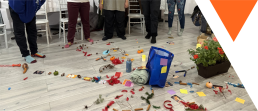
Sitting around a large circle marked on the floor, participants use natural materials (stones, leaves, twigs, shells) to build a silent visual map of their life journey, from birth at the outer edge to the present moment at the centre. Each person then walks their path and shares it, while the group listens and, afterwards, walks the paths of others.

TEMA
Selvrefleksion, integration
SVÆRHEDSGRAD
Let øvet
GRUPPESTØRRELSE
6-24 deltagere
ALDER
16+
TID
90–120 minutter
Objectives
- At facilitere dyb selvrefleksion gennem visuelle og rumlige udtryksformer.
- At støtte deltagerne i at dele personlige erfaringer ud over det verbale sprog.
- At udvikle empati gennem at lytte til og skabe forbindelse med andres historier.
- At opmuntre til nonverbal historiefortælling og symbolsk tænkning.
Materials
- Forskellige naturmaterialer (blade, fjer, grene, kogler, blomster, sten osv.).
- Forskellige fotos eller kort med billeder.
- Tape og sakse.
Overview
Deltagerne sidder omkring en stor cirkel markeret på gulvet og bruger naturmaterialer til at skabe en visuel fremstilling af deres livsrejse. Den ydre kant af cirklen repræsenterer fødslen, mens midten repræsenterer det nuværende øjeblik. I stedet for at bruge ord udtrykker deltagerne betydning gennem symboler skabt af naturlige materialer. Når cirklen er færdig, deler hver deltager sin rejse ved at gå langs sin egen sti og fortælle om de forskellige elementer. Herefter inviteres alle til at gå rundt om cirklen, observere og reflektere over de andres livsrejser. Aktiviteten understøtter selvrefleksion og opmuntrer til nonverbalt udtryk for personlige erfaringer.
Step-by-Step Instructions:
1. Introduktion (10 min)
Forklar cirklens opbygning: Den ydre kant repræsenterer fødslen, mens midten repræsenterer det sted, vi befinder os lige nu. Invitér deltagerne til at betragte deres liv som en rejse og repræsentere vigtige øjeblikke, vendepunkter og erfaringer ved hjælp af naturmaterialer – ikke ord.
Understreg, at der ikke findes en rigtig eller forkert måde at gøre det på.
2. Skab livsrejsen (25-35 min)
Deltagerne markerer deres rejse på deres del af cirklen ved hjælp af naturmaterialer. Opfordr dem til at arbejde i stilhed og bruge materialerne til at repræsentere begivenheder, følelser og overgange.
Facilitatorerne bevæger sig stille rundt blandt deltagerne og tilbyder støtte og opmuntring uden at påvirke eller styre indholdet.
3. Del din rejse (15-20 min)
Hver deltager følger sin egen sti fra den ydre kant ind mod midten og fortæller kort, hvad de forskellige symboler betyder for dem.
Deling er frivillig – deltagerne bestemmer selv, hvor meget eller hvor lidt de ønsker at fortælle.
4. At være vidne til andres rejser (10 min)
Deltagerne går langsomt rundt om hele cirklen og observerer hinandens livsrejser i stilhed.
Opfordr dem til at betragte dette som et øjeblik præget af nærvær, respekt og anerkendelse.
5. Fælles refleksion (10 min)
Saml gruppen til en kort samtale om, hvad de lagde mærke til, hvad der overraskede dem, og hvad de gerne vil tage med sig fra aktiviteten.
Debriefing og evaluering
Refleksionsspørgsmål:
- Hvordan var det at repræsentere dit liv gennem billeder og symboler i stedet for ord?
- Hvad lagde du mærke til, da du gik rundt og så de andres rejser?
- Var der mønstre eller ligheder på tværs af de forskellige livsrejser?
- Hvad fortæller din rejse dig om, hvor du befinder dig lige nu?
I evalueringen kan der lægges vægt på deltagernes engagement i den kreative proces, deres villighed til at dele samt kvaliteten af nærvær, respekt og lytning i gruppen.
Tips til facilitatorer
- Skab en rolig og fokuseret atmosfære – overvej at afspille blid instrumental musik under den kreative fase.
- Gør det tydeligt, at deling er frivillig – ingen skal føle sig presset til at forklare deres rejse.
- Afsæt ekstra tid, hvis deltagerne er dybt engagerede i processen; aktiviteten kan tage længere tid end forventet.
- Vær forberedt på følelsesmæssige reaktioner – sørg for, at der er et roligt sted til rådighed, og vær klar til at tilbyde støtte.
Variationer
- For deltagere, der finder visuelle kunstformer udfordrende, kan alle former for repræsentation tillades: skrevne ord, udklippede billeder eller abstrakte markeringer.
- Til kortere sessioner kan cirklen erstattes af individuelle ark papir, og gå-rundt-fasen kan udelades.
- Aktiviteten kan også gennemføres digitalt ved hjælp af tegneprogrammer i online- eller hybride forløb.
Disclaimer:
Denne aktivitet kan bringe personlige minder og følelser frem. Facilitér med omsorg, og sørg for, at deltagerne ved, at de selv bestemmer, hvad de ønsker at dele. Sørg for, at der er mulighed for følelsesmæssig støtte under og efter sessionen. Dette er ikke en terapeutisk øvelse; hvis følsomt indhold opstår, skal du være klar til at anerkende det med respekt og henvise til professionel støtte, hvis det er nødvendigt.
Theatre activities
Nothing found.
Contact
Iuliana Adriana PAVEL (project manager)
iuliana.pavel@a4action.ro
A4ACTION – Antim Ivireanu Culture House, Islaz Alley, Ghermănești, Snagov, Ilfov District, Romania, 077170
Co-funded by the European Union. Views and opinions expressed are however those of the author(s) only and do not necessarily reflect those of the European Union or the ANPCDEFP. Neither the European Union nor the ANPCDEFP can be held responsible for them.
The project is conducted by the following organisations: A4ACTION (Romania) – coordinator, Udruga Delta (Croatia), InterAktion (Austria), Asociación Espacio Rojo (Spain) and GAIA Museum Outsider Art (Denmark).

Sensory Walk — Five minutes outside
Sanselig gåtur - fem minutter udenfor
Deltagerne arbejder i par, hvor den ene deltager har bind for øjnene, mens den anden guider personen gennem en nøje tilrettelagt sanseoplevelse (teksturer, lyde, dufte og temperaturer) med næsten ingen brug af talte ord. Roller byttes derefter. Øvelsen træner opmærksomhed, tillid og en ikke-visuel relation til omgivelserne.
TEMA
Skærpelse af sanserne, tillid og kreativ udforkning
SVÆRHEDSGRAD
Begynder til let øvet
GRUPPESTØRRELSE
6-24 deltagere
ALDER
16 +
TID
30–50 minutter
Objectives
- At udvikle sansebevidsthed gennem guidede kropslige oplevelser.
- At opbygge tillid og nonverbal kommunikation mellem deltagerne.
- At opmuntre til kreativ interaktion med de omgivende omgivelser.
- At undersøge, hvordan begrænsningen af én sans kan styrke de andre sanser.
Materials
- Øjenbind (ét pr. par), en række forskellige teksturer, genstande, lyde og dufte, som guiden kan introducere, samt et åbent indendørs eller udendørs område, hvor man kan bevæge sig sikkert rundt.
Overview
Deltagerne arbejder i par, hvor den ene deltager har bind for øjnene, mens den anden skaber en guidet sanseoplevelse ved hjælp af teksturer, lyde, dufte og andre elementer fra omgivelserne – men uden brug af synssansen. Den verbale kommunikation begrænses for at fremme en kropslig og nonverbal interaktion. Herefter byttes rollerne. Aktiviteten er inspireret af metoder fra immersivt teater og udvikler en skærpet sansebevidsthed samt et kreativt og opmærksomt forhold til omgivelserne.
Step-by-Step instrukser:
1. Introduktion (5 min)
Forklar øvelsens opbygning og understreg betydningen af samtykke: Den deltager, der har bind for øjnene, har altid kontrollen og kan stoppe når som helst.
Tal om, hvordan man guider på en sikker måde – ved at holde et roligt tempo, tilbyde sin arm eller hånd som støtte og præsentere sanseindtryk uden at forklare dem.
2. Første runde (15 min)
Deltager A får bind for øjnene. Deltager B guider personen gennem en langsom sansevandring i rummet og introducerer forskellige teksturer, som kan mærkes, lyde, der kan lyttes til, dufte, der kan opleves, samt overflader, der kan mærkes under fødderne.
Guiderne bør undgå at fortælle eller forklare undervejs – lad sanserne tale for sig selv.
Efter 10-12 minutter guider B forsigtigt A tilbage til udgangspunktet.
3. Rollebytning (15 min)
Deltagerne bytter roller. Deltager B får nu bind for øjnene, og deltager A bliver guide.
4. Deling og refleksion (10 min)
Parrene deler kort deres oplevelser med hinanden og samles derefter i gruppen til en kort fælles refleksion.
Debriefing og evaluering
Refleksionsspørgsmål:
- Hvad lagde du mærke til, da du ikke kunne se? Hvilke sanser blev stærkere?
- Hvordan føltes det at stole på, at en anden person guidede dig?
- Hvad oplevede du som guide – hvad havde du lyst til at give din partner?
- Hvad viste denne øvelse om den måde, vi normalt bevæger os gennem verden på?
I evalueringen kan der lægges vægt på kvaliteten af den nonverbale kommunikation mellem parrene, tegn på tillid samt dybden af deltagernes sansemæssige engagement.
Tips til facilitatorer
- Gå selv ruten igennem på forhånd for at identificere eventuelle forhindringer eller risici.
- Mind guiderne om at sætte tempoet ned, være tålmodige og løbende være opmærksomme på deres partners tryghed uden nødvendigvis at bruge ord.
- Hav nogle interessante teksturer og genstande klar, som deltagerne kan udforske (f.eks. træbark, stof, glatte sten eller blade).
- Vær opmærksom på deltagere med angst eller forskellige former for sansemæssige behov – giv dem mulighed for først at observere aktiviteten.
Variationer
- For deltagere, der ikke er trygge ved at bruge øjenbind – herunder personer, der har oplevet traumer, indespærring eller tab af kontrol – tilbydes tydelige alternativer: at holde øjnene lukkede, dække øjnene med egne hænder eller blot kigge ned mod jorden. Brug aldrig øjenbind som et krav; sanseoplevelsen er lige værdifuld gennem alle disse alternativer.
- Udendørs version: Gennemfør sansevandringen i naturlige omgivelser – f.eks. en have, park eller et skovområde.
- For deltagere med synsnedsættelse kan fokus tilpasses andre sansemæssige lag, herunder lydlandskaber og forskellige teksturer.
Disclaimer:
Få altid tydeligt samtykke, før en deltager får bind for øjnene. Sørg for, at de fysiske omgivelser er sikre og fri for forhindringer. Vær særligt opmærksom på deltagere, der kan have traumer relateret til indespærring eller tab af kontrol, og tilbyd altid alternative muligheder. Denne øvelse indebærer fysisk nærhed og tillid – respekter personlige og kulturelle grænser gennem hele processen.
Theatre activities
Nothing found.
Contact
Iuliana Adriana PAVEL (project manager)
iuliana.pavel@a4action.ro
A4ACTION – Antim Ivireanu Culture House, Islaz Alley, Ghermănești, Snagov, Ilfov District, Romania, 077170
Co-funded by the European Union. Views and opinions expressed are however those of the author(s) only and do not necessarily reflect those of the European Union or the ANPCDEFP. Neither the European Union nor the ANPCDEFP can be held responsible for them.
The project is conducted by the following organisations: A4ACTION (Romania) – coordinator, Udruga Delta (Croatia), InterAktion (Austria), Asociación Espacio Rojo (Spain) and GAIA Museum Outsider Art (Denmark).

Sensory Poem — Synaesthesia in six lines
Sansedigt — Synæstesi gennem seks linker
Deltagerne besvarer et kort sansebaseret spørgeskema, der fremkalder synæstetiske associationer – farver, der lyder som noget, teksturer, der rummer et minde, eller dufte, der bærer en følelse – og omsætter deres svar til et kort digt. Herefter fremfører hver deltager sit digt fra en markeret firkant på gulvet, mens de holder øjenkontakt med publikum, indtil klapsalverne stopper.
TEMA
Kreativ udfoldelse, nærvær og performance
SVÆRHEDSGRAD
Øvet
GRUPPESTØRRELSE
8–20 deltagere
ALDER
16 +
TID
60–90 minutter
Objectives
- At udvikle kreativ skrivning og poetisk udtryk gennem sansemæssige associationer.
- At øve nærvær, øjenkontakt og kropslig ro i en fremførelse.
- At udforske forbindelsen mellem sanser, sprog og følelsesmæssige minder.
- At opbygge selvtillid i at dele personligt kreativt arbejde med et publikum.
Materials
- Sansebaserede spørgeskemaer (forberedt på forhånd), kuglepenne samt gulvtape eller markeringer til at afgrænse individuelle felter til fremførelse.
Overview
Deltagerne udfylder et kort sansebaseret spørgeskema, der er designet til at fremkalde synæstetiske associationer – farver, der lyder som noget, teksturer, der minder dem om et bestemt øjeblik, eller dufte, der bærer en følelse. Med disse svar som kreativt udgangspunkt skriver hver deltager et kort digt. I fremførelsesfasen læser hver person sit digt fra et markeret felt på gulvet, mens de holder øjenkontakt med publikum og bliver stående på stedet, indtil klapsalverne stopper. Aktiviteten kombinerer kreativ skrivning med scenisk fremførelse og styrker nærvær, sårbarhed og tydelighed i det personlige udtryk.
Step-by-Step Instructions:
1. Introduktion (5 min)
Introducér begrebet synæstesi – når én sans udløser associationer til en anden (f.eks. en farve, der lyder som noget, eller en lyd, der har en bestemt tekstur). Forklar, at spørgeskemaet inviterer deltagerne til at udforske dette sanselige område.
2. Sansebaseret spørgeskema (15 min)
Uddel spørgeskemaet. Eksempler på spørgsmål:
- Hvilken farve lyder højest?
- Hvilken tekstur minder dig om et bestemt minde?
- Hvilken duft får dig til at føle dig tryg?
- Hvilken lyd har en farve?
- Hvilken smag har en følelse?
- Hvilken lyd beskriver din barndom?
Deltagerne svarer frit og hurtigt – med den første indskydelse frem for analyse.
3. Skriv digtet (20 min)
Med deres svar fra spørgeskemaet som kreativt materiale skriver deltagerne et kort digt i en valgfri form. Det behøver ikke at rime eller følge en bestemt struktur. Det kan være så langt eller kort, som føles rigtigt. Opfordr deltagerne til at holde sig tæt på de sanselige billeder frem for at forklare deres betydning.
4. Forberedelse til fremførelse (5 min)
Marker individuelle felter på gulvet – ét til hver deltager. Forklar, at hver person skal stå i sit felt, skabe øjenkontakt med publikum, før de begynder, læse deres digt op og derefter blive stående stille i feltet, indtil klapsalverne stopper. Stilheden efter digtet er en del af fremførelsen.
5. Fremførelser (15-25 min)
Hver deltager fremfører sit digt én ad gangen. Resten af gruppen fungerer som publikum. Facilitatorerne opmuntrer til opmærksom og respektfuld tilstedeværelse under fremførelserne. Efterfølgende følger en kort fælles gruppesamtale.
Debriefing og evaluering
Refleksionsspørgsmål:
- Hvordan var det at skrive ud fra sanserne frem for ud fra idéer eller argumenter?
- Hvordan føltes det at fremføre dit digt og holde øjenkontakt med publikum?
- Hvad lagde du mærke til i de andre deltageres digte – hvad overraskede dig?
- Hvad viste øvelsen om den måde, du oplever verden gennem dine sanser på?
I evalueringen kan der lægges vægt på deltagernes engagement i skriveprocessen, kvaliteten af deres nærvær under fremførelsen samt gruppens evne til at være vidner til hinandens udtryk med opmærksomhed og respekt.
Tips til facilitatorer
- Forbered det sansebaserede spørgeskema på forhånd – afprøv det selv for at sikre, at spørgsmålene fremkalder ægte billeder og associationer.
- Berolig deltagerne med, at der ikke findes “gode” eller “dårlige” digte her – kun ærlige og personlige svar.
- Vis selv formatet for fremførelsen først: Stil dig i et felt, skab øjenkontakt, læs op, og bliv stående stille bagefter.
- Mind publikum om deres rolle: at være aktive, respektfulde og nærværende med en generøs opmærksomhed.
Variationer
- For deltagere med sproglige barrierer kan digtet indeholde ord fra deres modersmål eller i stedet bruge billeder og tegninger som udtryksform.
- For mere erfarne grupper kan I eksperimentere med fælles digte, hvor hver deltager bidrager med én linje.
- Aktiviteten kan kombineres med Storytelling-aktiviteten (sanseudforskning gennem berøring og lugt) som en todelt session.
Disclaimer:
Det synæstetiske spørgeskema kan bringe personlige minder og følelser frem – det er altid frivilligt at skrive og dele sit digt, og deltagerne kan vælge at holde deres arbejde privat. Den afsluttende fremførelse (at stå i et markeret felt, skabe øjenkontakt og være stille bagefter) er en invitation, ikke et krav. En deltager, der foretrækker at læse fra sin plads, få facilitatoren til at læse digtet højt på deres vegne eller helt undlade at fremføre, deltager stadig fuldt ud. Lav en kort check-in med gruppen inden fremførelsesrunden, og mind deltagerne om, at det også er en form for deltagelse at være nærværende og opmærksomt vidne til andres udtryk.
Theatre activities
Nothing found.
Contact
Iuliana Adriana PAVEL (project manager)
iuliana.pavel@a4action.ro
A4ACTION – Antim Ivireanu Culture House, Islaz Alley, Ghermănești, Snagov, Ilfov District, Romania, 077170
Co-funded by the European Union. Views and opinions expressed are however those of the author(s) only and do not necessarily reflect those of the European Union or the ANPCDEFP. Neither the European Union nor the ANPCDEFP can be held responsible for them.
The project is conducted by the following organisations: A4ACTION (Romania) – coordinator, Udruga Delta (Croatia), InterAktion (Austria), Asociación Espacio Rojo (Spain) and GAIA Museum Outsider Art (Denmark).